
MOVIE REVIEW · SURVIVAL THRILLER · 2026
The ocean is endless. His oxygen is not.
A young diver trapped inside an enormous sperm whale has sixty minutes to survive. But the lessons that might save him belong to a father he never truly understood.
Spoiler-free plot · Cast · Practical effects · Critical response · Official images
Whalefall (2026) has a premise that sounds almost impossible to film seriously: a young man goes scuba diving off California and is swallowed by a sperm whale. With about an hour of air left in his tank, he must escape a living environment that no person was meant to enter. The image is instantly memorable, but the story has something more personal beneath its spectacular surface.
This Whalefall (2026) review examines the survival story, Austin Abrams’ demanding lead performance, Josh Brolin’s part in the father-son drama, the immense practical sets and the mixed reactions from critics. We keep the ending and escape solution unspoiled. The aim is to help readers decide whether Brian Duffield’s unusual film belongs on their cinema watchlist.
Released in US theaters on October 16, 2026, the movie adapts Daniel Kraus’ 2023 novel. Duffield directed and co-wrote the screenplay with Kraus. 20th Century Studios’ official movie page confirms the premise, cast and release date; Disney’s behind-the-scenes feature explains the production’s unusual ambitions.
Inside this review
Whalefall (2026): the movie at a glance
| Film | Whalefall |
|---|---|
| US theatrical release | October 16, 2026 |
| Director | Brian Duffield |
| Screenplay | Brian Duffield and Daniel Kraus |
| Based on | Whalefall, Daniel Kraus’ 2023 novel |
| Principal cast | Austin Abrams, Josh Brolin, Elisabeth Shue, John Ortiz, Jane Levy, Emily Rudd |
| Genre | Survival thriller, drama |
| Running time | 106 minutes (1 hour 46 minutes) |
| US age rating | PG-13 |
| Production | 20th Century Studios / Imagine Entertainment |
The studio calls the film a survival thriller, which is a better starting point than describing it as straightforward creature horror. The whale is not presented merely as a conscious villain. Instead, it becomes the astonishing and frightening location of a story in which time, physical vulnerability and grief are all working against one human being.
What is Whalefall about? Spoiler-free plot explained
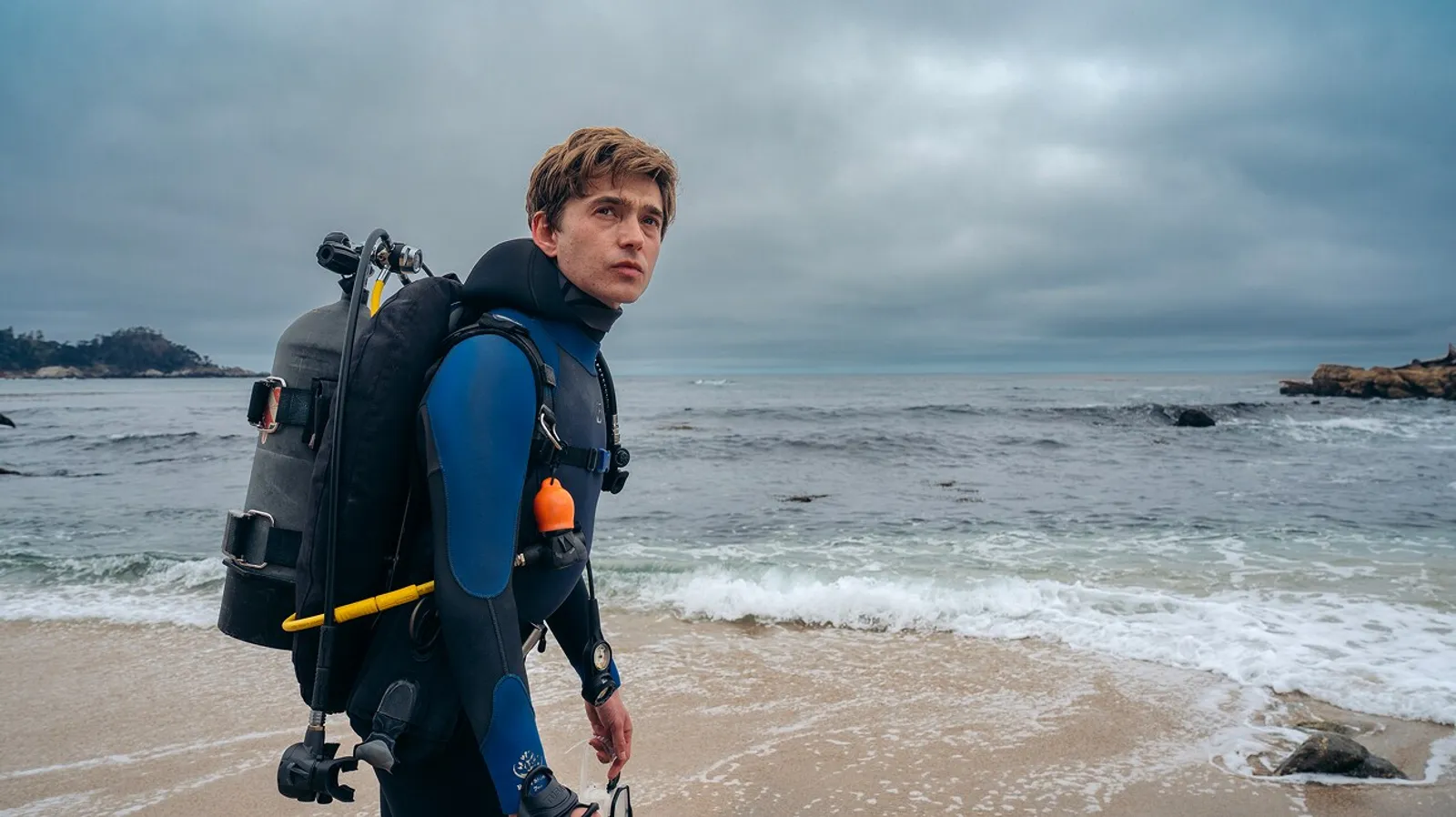
Jay Gardiner (Austin Abrams) returns to the Monterey area after the death of his father, Mitt (Josh Brolin), a local diving legend. Their relationship was difficult, shaped by Mitt’s intense personality and the expectations he placed on his son. Jay is left with memories that contain useful lessons as well as pain. Searching for some form of closure, he decides to dive off the California coast to recover his father’s remains.
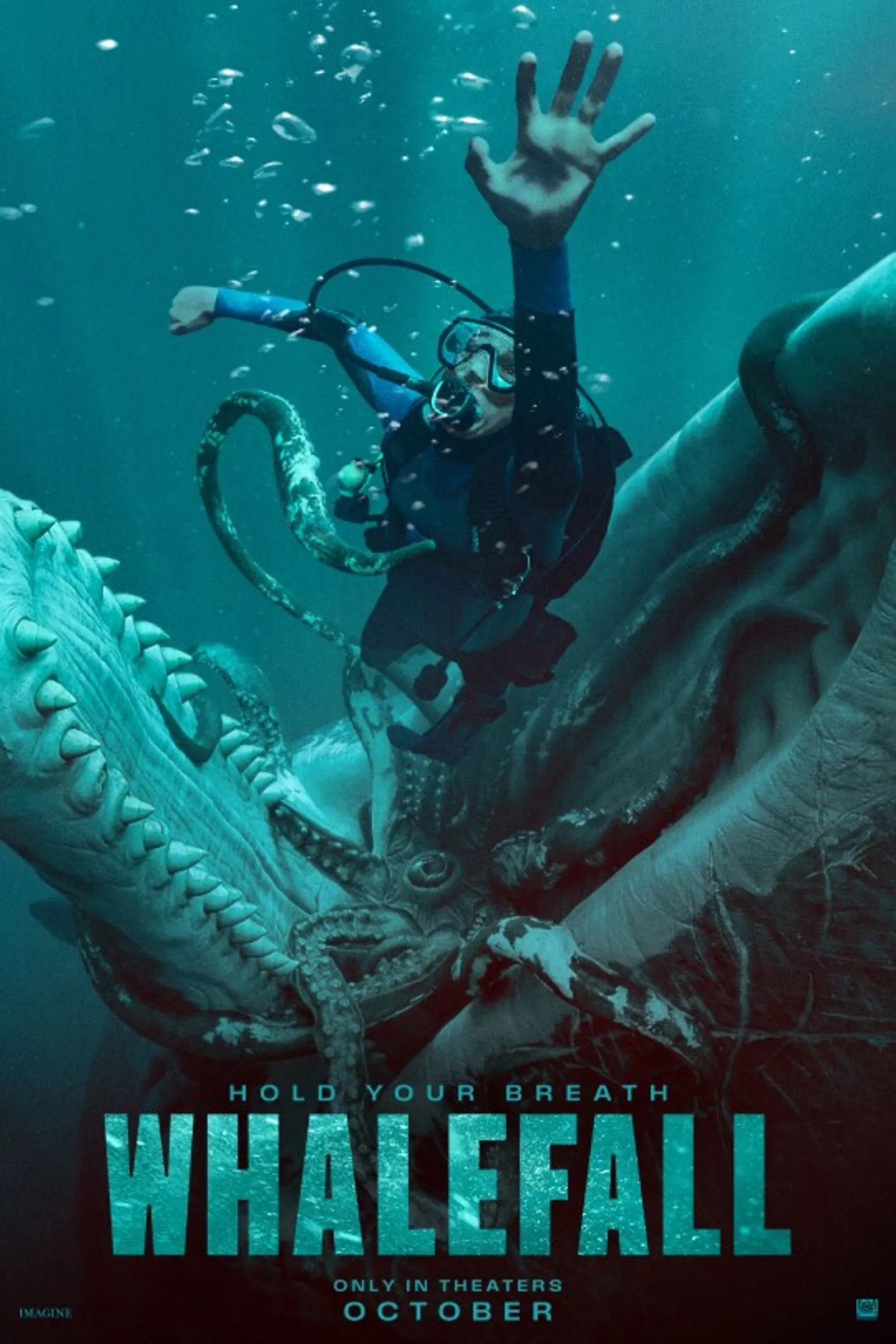
The excursion becomes a nightmare when a huge sperm whale pursuing a giant squid swallows Jay. What begins as a solitary journey through open water turns into a crisis inside a giant living body. Jay cannot simply surface, swim toward a distant light or rely on a familiar route back. Every piece of equipment he carries has limits, and the most urgent is his oxygen tank.
The official synopsis gives Jay approximately an hour of air. The central suspense comes from watching him think through a series of increasingly impossible decisions. The environment feels alien, but his reactions remain human: fear, disbelief, flashes of determination and the struggle to stay calm even when the body wants to panic.
The film repeatedly returns to Jay’s memories of Mitt. Its premise is not just that an inexperienced man must learn to survive; it is that a son must recognise the value of knowledge inherited from someone he was still angry with. Duffield asks viewers to see the physical trap and the unresolved family relationship as parts of one emotional journey.
None of those details reveal the escape mechanism or the ending. They explain why the movie alternates between claustrophobic present-tense peril and scenes from Jay’s life. Whether that structure works for you will depend on how much room you want a survival thriller to leave for reflection.
Sixty minutes of air: why the countdown matters
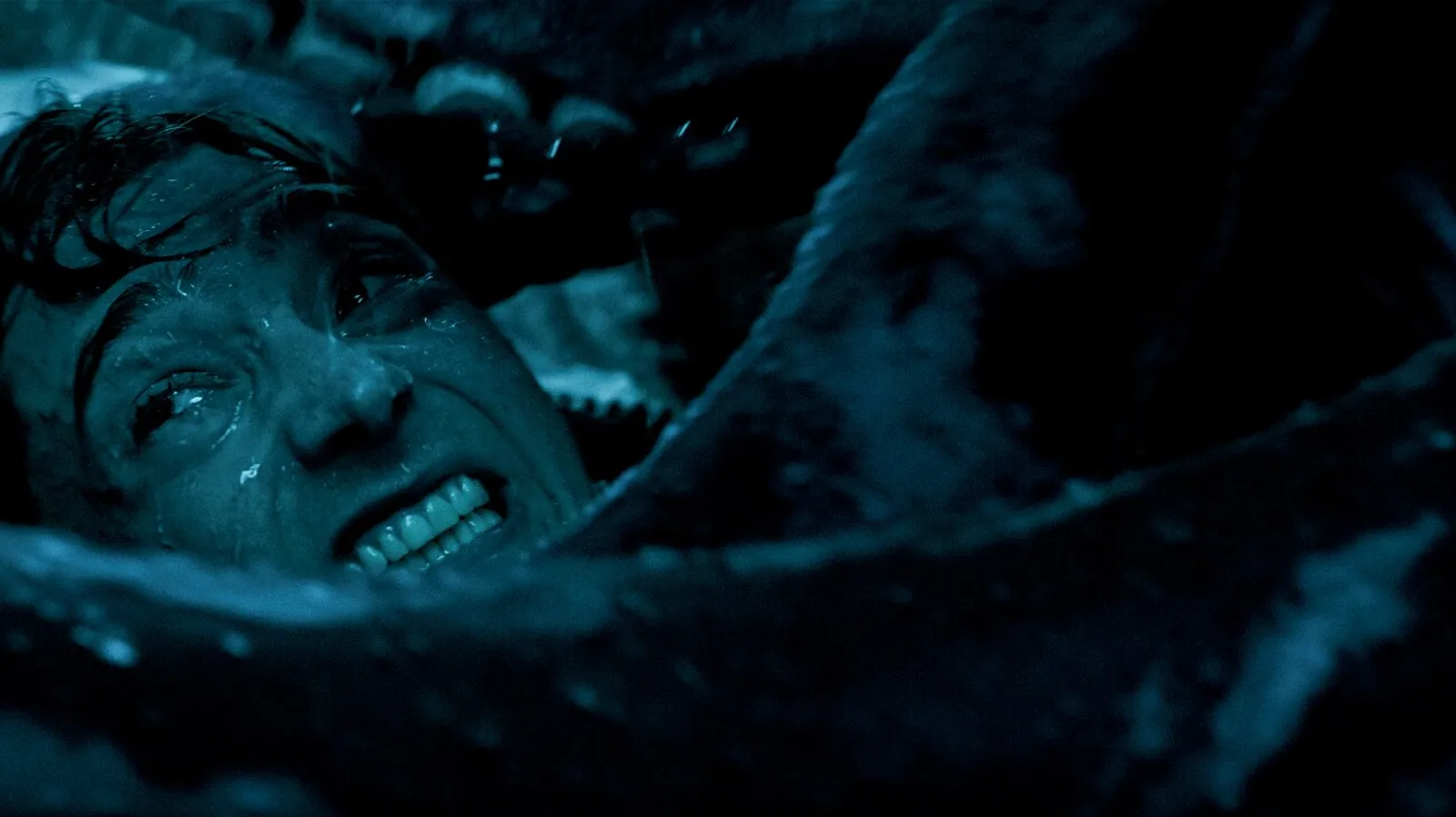
A countdown is an old thriller technique, but it works because everybody understands the difference between unlimited time and a resource that is disappearing. The oxygen tank gives Jay a visible boundary. Every movement, delay and moment of indecision costs something. Rather than waiting for the whale to attack again, he is forced to make choices under a deadline.
The setting changes the usual mechanics of an underwater survival story. Jay is no longer merely lost at sea; he is inside an unstable, enclosed organism. There is no reassuring geometry, no predictable corridor and no easy way to understand what lies ahead. It is a living space, where a place that seems briefly safe may become dangerous again in seconds.
Sound also helps tell the story. Breathing through equipment, liquid movement and the textures of the surrounding body make the environment uncomfortable before anything dramatic happens. When the audience cannot see very far, even a small disturbance can create considerable dread. The idea of being inside an animal is strange enough that the film does not need to invent a parade of separate monsters.
There is an important distinction between cinematic credibility and zoological accuracy. A realistically filmed environment can persuade us to accept an outrageous fictional event for the duration of a story. It does not follow that a person could survive these events in the real anatomy of a sperm whale. The production uses biological research in service of heightened suspense, not a scientific demonstration.
Austin Abrams and Josh Brolin: a story about inherited lessons
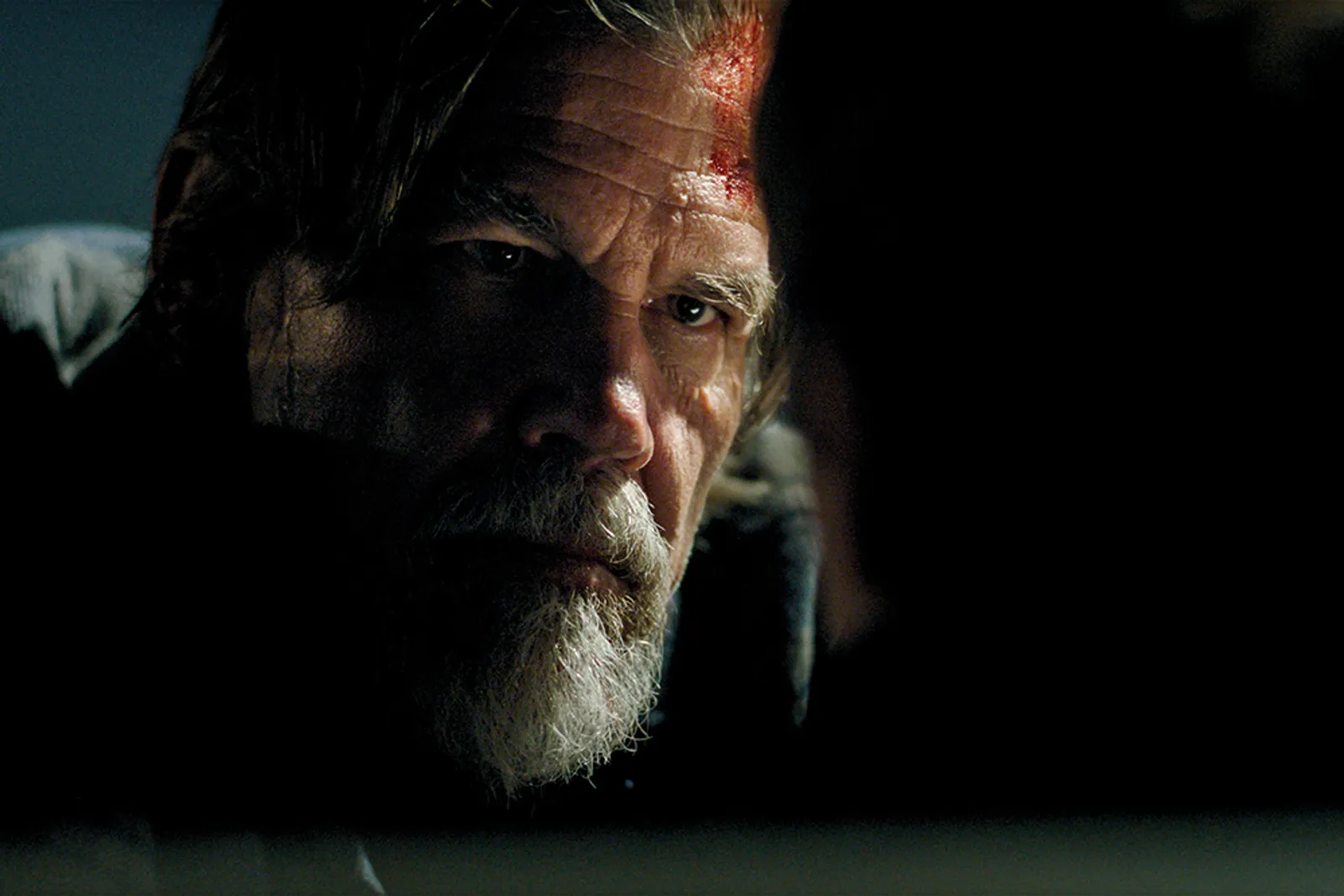
The main emotional challenge is Jay’s relationship with Mitt. The father is gone, but his demanding presence continues through memory. That is a more interesting obstacle than a simple portrait of a perfect parent whose wisdom arrives conveniently when needed. Lessons that once felt harsh or controlling may still be useful, and recognising that usefulness does not require Jay to pretend the relationship was easy.
Brolin’s part provides the force and complexity of the remembered father; Abrams must carry most of the immediate physical ordeal. Their scenes operate in different emotional registers. Mitt can occupy a room and command attention, while Jay spends much of his present-tense story struggling to find enough room even to move. That contrast gives the flashbacks a function beyond explaining who taught the diver his skills.
Grief can create conflicting emotions: affection, anger, guilt, relief and a desire for conversations that will never happen. The film makes those tensions part of the character’s decision-making. It suggests that growing away from a parent does not mean erasing everything they taught you. A person can reject someone’s cruelty while still carrying forward their knowledge.
In Reuters’ premiere coverage, the filmmakers and actors describe the father-son connection as central to the project. That matters when setting expectations: the drama is not an accidental detour from a ninety-minute monster chase. It is the reason this extraordinary ordeal exists as a story.
How did the filmmakers build the inside of a whale?
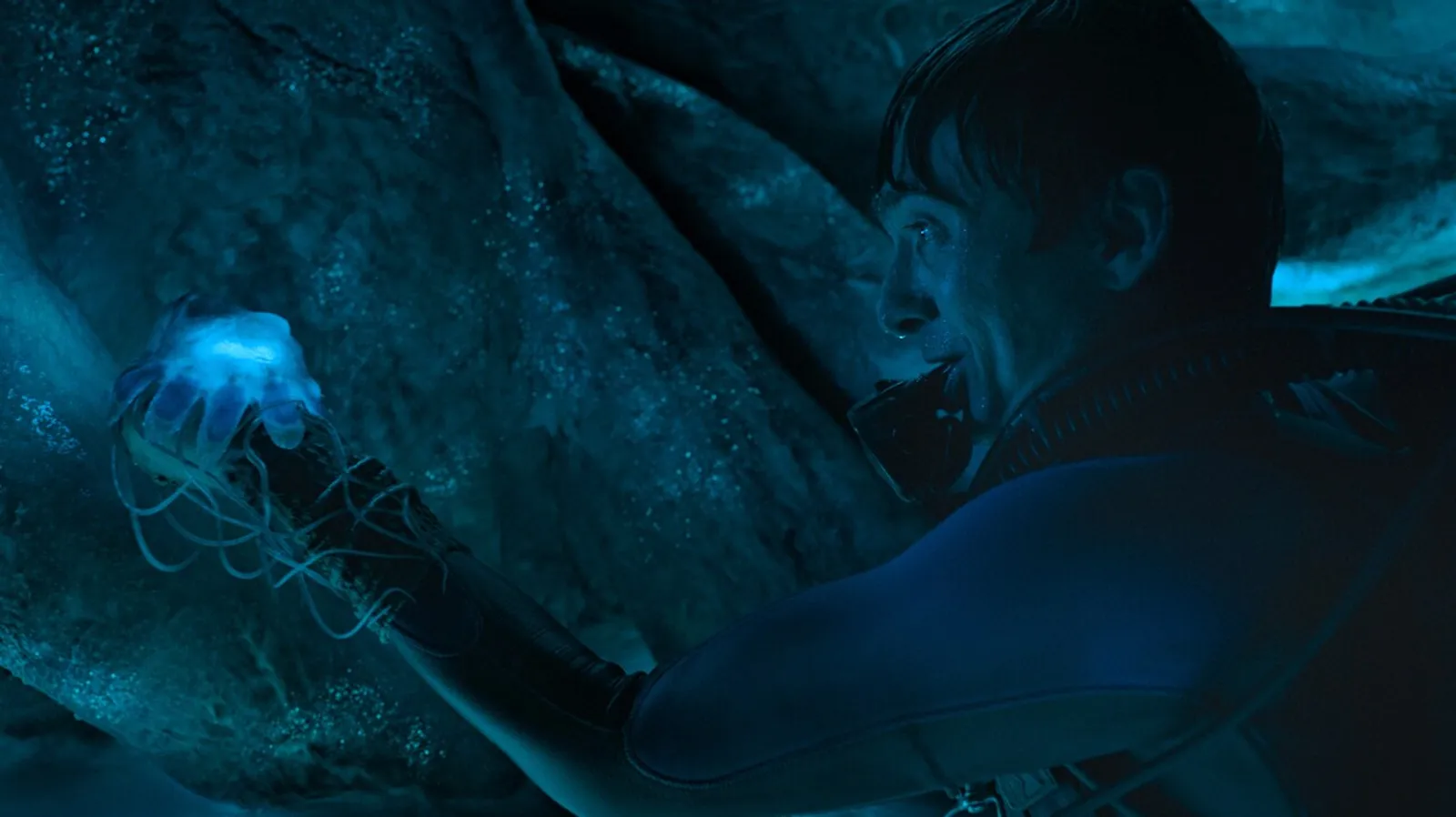
Turning a sperm whale’s interior into a film set is a difficult design problem. An ordinary cave would feel too familiar, but an entirely digital void might prevent viewers from understanding the character’s movements. The production combined practical spaces, physical materials and computer-generated extensions to make the setting both strange and readable.
Disney’s official production feature describes a crew working inside a constructed whale on a soundstage in California. For Abrams, that meant having real surfaces to touch and resist, even when the final world would be transformed by visual effects. Physical interaction is especially valuable for a film in which the lead actor has to communicate so much through movement and breathing.
Production designer Ramsey Avery and the visual-effects department also researched whale biology. As discussed in Entertainment Weekly’s making-of interview, the process involved elaborate rigs, lighting strategies and careful decisions about how the fictional environment should behave on screen. The result borrows anatomical ideas without claiming to reproduce a survivable journey into a real stomach.
Small pockets of light provide the most expressive images. Shadows make the surrounding space hard to judge, while strange organic colors suggest a world that should never be accessible to human eyes. This visual approach pushes the thriller toward body horror, although the central story remains the character’s struggle for survival and emotional resolution.
Whalefall (2026) cast and characters
The cast includes several recognised performers, but this is primarily a film about isolation. The central character must sustain the suspense even when nobody else is present in the scene. The studio confirms the following participants; where it has not provided a complete character description, it is better not to invent one.
| Performer | Role / involvement |
|---|---|
| Austin Abrams | Jay Gardiner, the diver at the heart of the survival story |
| Josh Brolin | Mitt Gardiner, Jay’s father |
| Elisabeth Shue | Supporting cast |
| John Ortiz | Supporting cast |
| Jane Levy | Supporting cast |
| Emily Rudd | Supporting cast |
Abrams must carry the physical experience of the film with relatively little normal dialogue while trapped. Other performers help build a world of family memories, relationships and consequences outside the immediate ordeal. That design gives the audience emotional information while keeping the present-tense action focused on one person.
Whalefall and Daniel Kraus’ 2023 novel
Daniel Kraus wrote the original novel, published in 2023, and joined Duffield in writing the screenplay. The collaboration gives the film a direct connection to the source material rather than merely borrowing the central gimmick. Both versions use an impossible physical experience to explore grief, responsibility and the difficult legacy of a parent.
Film and prose handle internal conflict differently. A book can explain a character’s thoughts directly; a movie needs gestures, images, flashbacks, sound and performance to accomplish something similar. The structure of Whalefall reflects that challenge. Its shifts into Jay’s past are as much an adaptation choice as they are a storytelling preference.
Readers familiar with the novel should expect the central ideas to be recognisable without assuming the details of every scene are identical. Newcomers need not read the book before buying a ticket; the movie provides its own introduction to Jay, Mitt and the predicament.
What does the title Whalefall mean in real life?
In marine science, a whale fall is the body of a dead whale sinking to the seafloor. Such a carcass can sustain deep-sea creatures for a long time, providing food and a physical habitat as it changes. The term has nothing to do with a whale physically falling onto a diver.
The US National Oceanic and Atmospheric Administration explains how whale remains feed scavengers, microbes and a succession of marine communities. It is an extraordinary natural process that turns death into resources for other forms of life.
For a film about a deceased father whose lessons might help his son survive, that title carries an obvious poetic resonance. Something can be gone and yet continue to shape what happens next. The metaphor adds meaning without converting the survival premise into an accurate account of whale physiology.
Whalefall reviews: a daring idea with divided responses
The first critical reactions reveal a striking split. Many writers appreciate the original predicament, the impressive physical environment and Abrams’ committed performance. Others question whether the repeated returns to the father-son story deepen the movie or merely disrupt the countdown. Both responses are worth considering because the film deliberately combines two very different kinds of urgency.
Tom’s Guide praised the immersive suspense and the audacity of the concept, while acknowledging that some family scenes slow the momentum. The Guardian was much less convinced by the emotional storytelling, finding the visual invention stronger than the drama. These assessments explain why an unusual concept does not automatically produce a universally loved film.
Viewers who enjoy continuous action may be frustrated whenever a flashback interrupts a moment of immediate danger. Those drawn to stories about grief could value the emotional interruptions as the part that distinguishes Whalefall from a more conventional creature feature. We do not present a made-up personal screening score or confuse a promotional quote with critical consensus.
Is Whalefall (2026) worth watching?
It is worth considering if you enjoy claustrophobic survival films that have an emotional story beneath the spectacle. The setting is unlike a typical ocean thriller: the danger surrounds Jay on every side, and the limited air supply makes each choice matter. Its commitment to practical and digital production design offers the kind of unusual cinematic environment that benefits from a large screen.
There are also sensible reasons to hesitate. Close quarters, restricted breathing and organic textures could be unpleasant for some viewers. Its rhythm alternates between intense physical danger and memories of a troubled family relationship, which may not suit anyone looking for ninety minutes of uninterrupted action. Treat it as a survival drama with horror-adjacent imagery, not a wildlife documentary.
For readers who want a film with a genuine point of difference, the combination of an outrageous setup and a personal emotional question makes this one of October’s more curious releases. Whether its emotional ambition succeeds for you is part of what makes the movie worth discussing afterward.
Where to watch Whalefall (2026) legally
On October 19, 2026, the confirmed viewing route is the theatrical release that began October 16. The official 20th Century Studios page offers cinema information, while Disney’s guide describes the current run as theater-exclusive. We found no official date that would justify claiming the film is already available with a streaming subscription.
Disney’s September press release links to the official YouTube trailer. That is a promotional video, not a free copy of the feature. Regional theater access, rentals and later home releases should be checked against authorised providers when they become available.
We also include Whalefall in our October 2026 horror movie and TV watchlist, which offers additional theatrical and streaming suggestions without treating this film as though it has already arrived on a subscription service.
Whalefall (2026): frequently asked questions
When was Whalefall released?
The film opened in US theaters on October 16, 2026. Other countries may have different release schedules.
What is Whalefall about?
Jay Gardiner searches for his deceased father’s remains off California, only to be swallowed by a massive sperm whale. With around an hour of air, he must find a way out.
Who plays Jay Gardiner?
Austin Abrams plays Jay, while Josh Brolin portrays his father, Mitt Gardiner.
Who directed the movie?
Brian Duffield directed and co-wrote the script with Daniel Kraus.
Is Whalefall based on a book?
Yes. It adapts the 2023 novel by Daniel Kraus, who also has a screenplay credit.
What is the running time?
Approximately 106 minutes, or 1 hour and 46 minutes.
Is Whalefall scientifically realistic?
The premise is highly fictional; anatomical research informed the design, but the dramatic journey is not a real-world survival guide.
What does a whale fall mean?
It is a dead whale descending to the seafloor and becoming a nutrient source and habitat for marine life.
Where can I stream Whalefall?
As of October 19, 2026, official information confirms a theatrical run but does not provide a streaming-subscription date.
Sources and editorial note
Movie facts: 20th Century Studios and Disney Press. Production details: Disney’s official production story and Entertainment Weekly’s design feature. Reviews: The Guardian and Tom’s Guide. Marine-science terminology: NOAA. All editorial analysis is spoiler-free and clearly distinguished from sourced factual claims.
Updated October 19, 2026. Captions acknowledge the original film materials; all photographs and promotional artwork remain the property of their rights holders.
2 thoughts on “Whalefall (2026) Review: Plot, Cast and Survival Thriller”