
An elegant birthday dinner becomes a gathering nobody can leave. The Storm (2026), the Swedish dark comedy from Josephine Bornebusch, premiered globally on Netflix on October 15, 2026. This spoiler-free preview brings together the confirmed release details, cast, official photographs and the central questions raised by its premise.
A trapped dinner party is an appealing dramatic setup because the emergency changes the meaning of ordinary manners. Being polite can postpone a difficult conversation when guests are free to go home. Once leaving stops being an option, the same polite routines may become part of the problem.
Contents
The Storm at a glance
Netflix presents The Storm as a Swedish feature film combining comedy and drama. Bornebusch wrote and directed it and also appears in the ensemble. The project is produced by WBITVP Sweden. Its official Netflix listing carries a TV-MA classification in the US-facing catalogue.
| Format | Swedish feature film |
| Genres | Dark comedy, drama |
| Writer and director | Josephine Bornebusch |
| Production | WBITVP Sweden |
| Netflix release | October 15, 2026 |
| Selected Swedish cinemas | October 2, 2026 |
| US-facing maturity label | TV-MA |
The theatrical and streaming dates are different. Netflix announced selected Swedish cinema screenings from October 2, followed by the global Netflix launch on October 15. That distinction matters if you have already seen references to an earlier premiere: they do not necessarily contradict the streaming announcement.
The Storm release date and where to watch
The Storm premiered globally on Netflix on October 15, 2026, and is now available to stream. Netflix’s Media Center lists 7:00 AM GMT for the United States launch, equivalent to midnight Pacific Daylight Time on that date. The company describes the streaming release as global; the title page remains the best place to check your local catalogue.
Updated October 15, 2026: The Storm is now available on Netflix. This spoiler-free guide covers the official premise, cast, imagery and trailers; it does not claim a full first-hand viewing or invent plot twists. There is no invented ending, scene-by-scene recap or numerical verdict attached to that preview.
If you are deciding when to watch The Storm, distinguish a release announcement from a particular account’s playback options. Audio tracks, subtitles and access are best checked on the title page available to you. A translated title or differently displayed maturity label can also vary by region without indicating a different film.
The Storm is streaming now on Netflix: October 15 update
The Storm arrived on Netflix globally on October 15, 2026. The Swedish dark comedy had already played in selected Swedish theaters beginning October 2, so those are two separate releases rather than conflicting dates. Netflix’s US Media Center confirms the October 15 streaming launch. Check your local Netflix listing for available languages, subtitles and maturity ratings.
The story follows Filip, who hosts his 45th birthday dinner at a recently purchased, lavish farm in northern Sweden. Guests expect an evening of celebration and social rituals, but a violent storm cuts off their exit. As anxiety builds, hidden tensions and old grievances surface. Writer-director Josephine Bornebusch, who also appears in the ensemble, uses an enclosed space to explore the difference between the image friends present to one another and the feelings they struggle to acknowledge.
Cast and creators: Bornebusch is joined by Gustaf Skarsgård, Aliette Opheim, Filip Berg, Jonas Karlsson, Johan Rheborg, Christopher Wagelin, Sara Shirpey, Gizem Erdogan, Henrik Dorsin, Nils Wetterholm and Nicole Levin. The available trailer emphasizes awkward confrontations, escalating pressure and the uncertain balance between comedy and drama rather than offering a conventional disaster-film spectacle.
For official stills and release details, see Netflix’s trailer announcement and its Media Center listing. Three stills from the film are already displayed in this guide, credited to Johan Paulin and Susanne Salavati / Netflix. Our text remains a spoiler-free release guide, not a claim to have independently watched and reviewed the finished film.
The premise without ending spoilers
Filip invites close friends to celebrate his 45th birthday at a newly purchased estate in northern Sweden. A severe storm traps the group together. The gathering’s carefully maintained social appearance begins to unravel as tensions and secrets emerge. That is the situation described in Netflix’s official synopsis.
The Storm offers two pressures at once: an external event that prevents departure and an internal network of relationships that makes remaining together uncomfortable. The weather does not have to explain every disagreement. Its dramatic purpose is to remove an easy escape from conversations the characters might otherwise avoid.
One useful way to read the premise is to consider what a celebration asks people to perform. Guests are expected to affirm the host, enjoy the setting and respect the occasion. A birthday dinner therefore carries a social script before anything goes wrong. Disruption becomes interesting when that script no longer contains everyone’s actual feelings.
The official summary leaves the specific revelations and resolution open. It does not establish a murder investigation or identify a secret villain. Viewers looking for a conventional whodunit should not assume that a confined group and concealed information automatically mean the film belongs to that format.
Why the dinner-party setting matters
A shared table creates an unusually clear map of relationships. People can speak to the whole group while really addressing one person. Silence can become a response; a joke can test how far a disagreement is allowed to go. These are general possibilities of the setting, rather than claims about unseen scenes.
The Storm also places its gathering inside an affluent environment. As an interpretive starting point, that contrast invites a question: how much protection can comfort actually provide? A beautiful property may organise a pleasant evening, but it cannot guarantee that the people inside feel secure with one another.
After watching, pay attention to who is able to change the subject and whose discomfort becomes the group’s entertainment. Those small shifts can reveal authority more precisely than a direct explanation of each friendship. Ensemble comedy often becomes sharper when social power is visible in everyday conversational choices.
There is another distinction worth keeping in mind: embarrassment is not the same as danger. A dark comedy can move between them, but the transition needs a purpose. Discussing when the film asks you to laugh, worry or reassess someone can be more revealing than counting how many secrets are disclosed.

Cast and creative team
The announced ensemble includes Gustaf Skarsgård, Aliette Opheim, Filip Berg, Josephine Bornebusch, Jonas Karlsson, Johan Rheborg, Christopher Wagelin, Sara Shirpey, Gizem Erdogan and Henrik Dorsin. Netflix’s production announcement also names Nils Wetterholm and Nicole Levin. Character assignments should not be guessed from the order of that list.
Bornebusch’s combined writing, directing and acting credits make her a central creative presence. Producer Sofie Palage and cinematographer Susanne Salavati are named in the official production information. These credits help identify the film accurately among other works sharing the generic English title The Storm.
The cast list is useful as a guide to the ensemble, but familiar names do not settle the question of tone. Chemistry depends on timing, listening and how a scene makes room for competing reactions. Those qualities need to be assessed through the complete film rather than inferred from a publicity photograph.
What the official images show
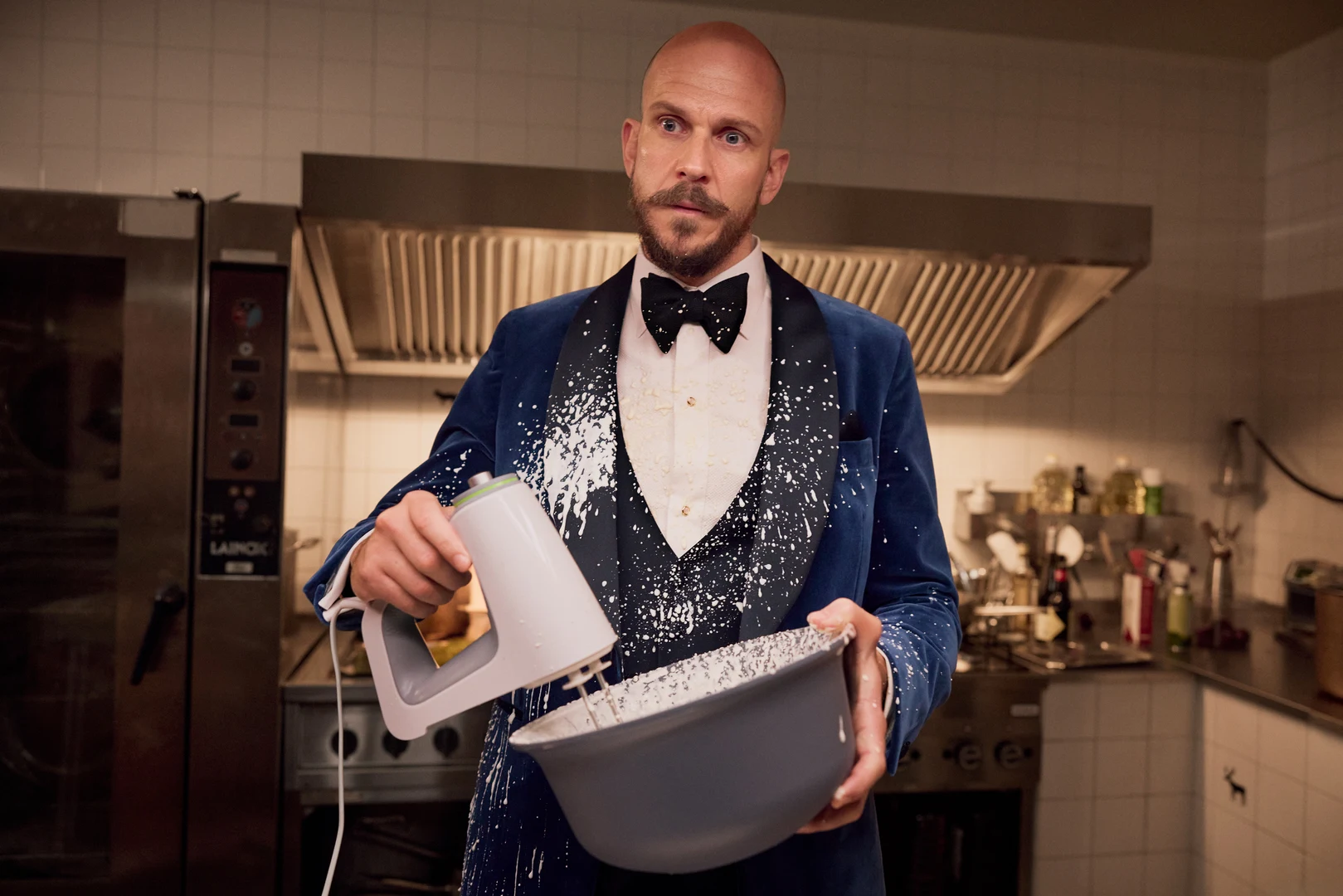
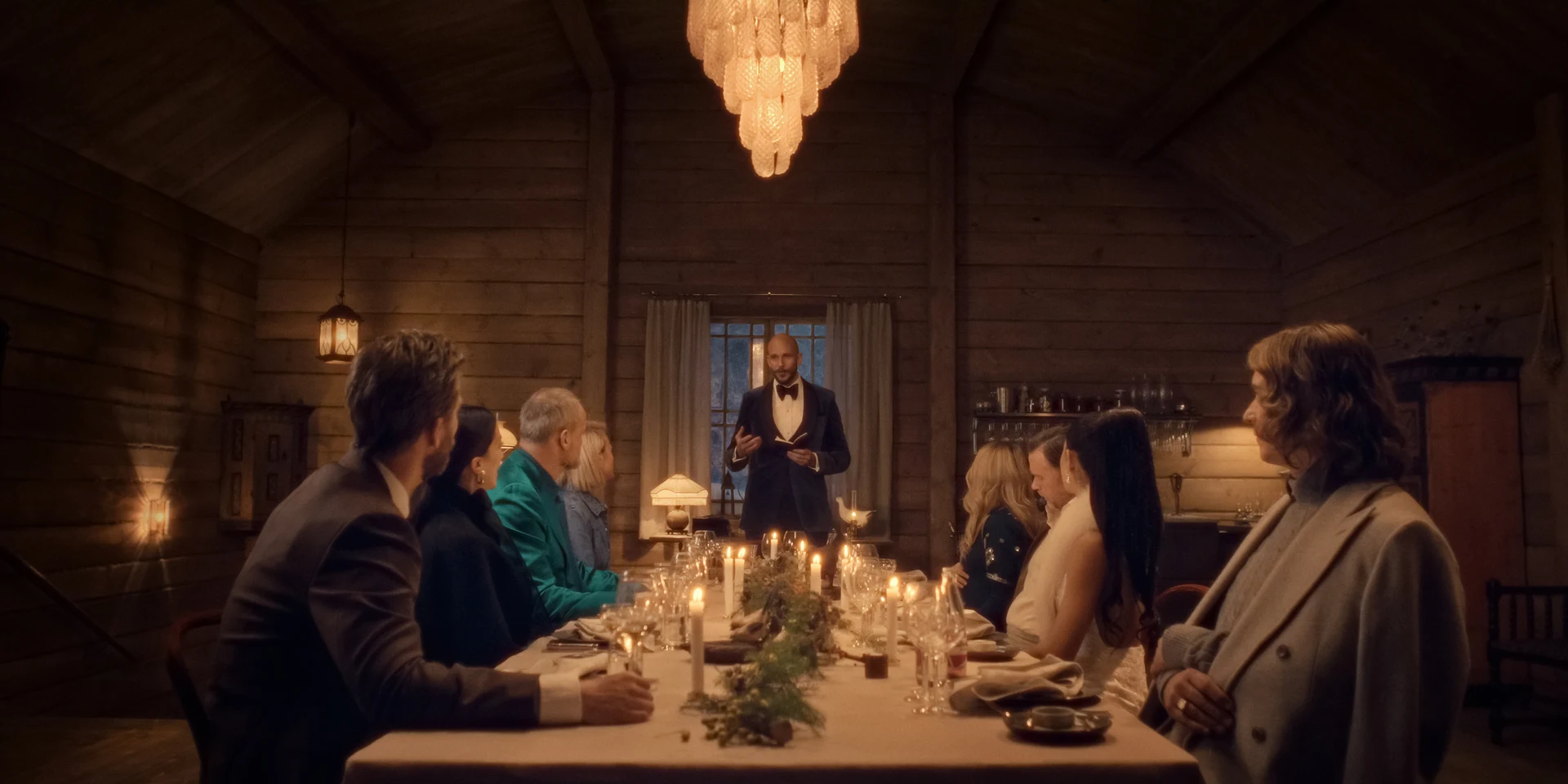
The three photographs included here come from the image collection linked in Netflix’s announcement. Two are credited to Johan Paulin and one to Susanne Salavati. They show a formal figure in a kitchen, two people in a richly furnished interior and a group seated around a candlelit dinner table.
These images support a concrete impression of the promoted environment: domestic luxury, formal clothing and shared interior space. They do not establish the chronological order of scenes. A publicity still can isolate a gesture from its surrounding dialogue, so the preview avoids assigning motives solely from an expression.
The Storm has an official trailer, linked through Netflix’s announcement. It is useful for judging the advertised rhythm and atmosphere. As with any trailer, an edit assembled to sell a premise should not be treated as a complete statement of how the finished film develops that premise.
Dark comedy and friendship: what to look for
The most productive question is not simply whether these people are good friends. It is what kind of friendship they are maintaining. Familiarity can make someone attentive to another person’s needs, but it can also give them very specific knowledge of how to embarrass or silence that person.
In a confined ensemble story, repetition can become revealing. A joke that initially feels harmless may acquire another meaning when the surrounding relationships are clearer. Conversely, a tense exchange may look less absolute once another perspective is available. Watching for that movement helps keep an interpretation open.
The Storm’s premise also raises the difference between honesty and aggression. Speaking without restraint does not automatically mean speaking truthfully or fairly. After viewing, consider whether revelations help characters understand each other or merely allow them to redirect their own discomfort toward someone else.
None of those interpretive possibilities guarantees what the film ultimately does. They provide a way to discuss its announced ingredients without manufacturing a plot. A useful preview should prepare questions that the viewing can answer, rather than fill in answers before the film has had a chance to speak.
Who might enjoy The Storm?
The Storm is worth considering if you like ensemble dark comedy, uncomfortable social situations and stories driven by changing relationships. Its official genre information points toward a mixture of humour and drama. The weather setup should not be mistaken for a promise of a large-scale disaster spectacle.
Viewers who prefer a clearly defined detective puzzle may want to watch the trailer first. The available official description centres on friendship, secrets and a gathering under pressure. A confined location can serve many genres, and this title should be approached through its own announcement rather than assumptions from another film.
For more films and series on KINOLIST, see the Tenzing preview. Readers interested in an ensemble series can also explore our Small Prophets guide. These offer different formats and premises rather than direct substitutes for the same experience.
Frequently asked questions
Is The Storm a film or a series?
Netflix identifies it as a feature film. There is no episode schedule to follow.
When does it arrive on Netflix?
The film began streaming globally on Netflix on October 15, 2026. Selected Swedish theatrical screenings began earlier, on October 2.
Is this an English-language production?
Netflix identifies the project as Swedish. Check the available audio and subtitle options on your regional title page instead of assuming a particular dubbed track.
Does this preview reveal the ending?
No. It explains the official setup and offers discussion points without reconstructing the revelations or resolution.
Official sources and editorial scope
Updated October 15, 2026. Release and production information comes from Netflix’s first-look announcement, its trailer and theatrical-release announcement, the Media Center and the official title page. Images: Johan Paulin / Susanne Salavati / Netflix.
The Storm, now available on Netflix, begins with a social ritual that is supposed to bring people together and an event that makes togetherness unavoidable. That combination is the clearest reason to investigate its dark-comedy premise. The thematic discussion above is an editorial reading of the announced setup, not a claim to have reviewed the full film.