
OJ’s Accomplice (2026) is a two-part Peacock documentary about the Nicole Brown Simpson and Ron Goldman murder case. Learn about the November 1 release, two episodes, participants, official sources and where to stream online. The program’s accomplice theory is an allegation, not a proven legal finding.
OJ’s Accomplice: Peacock’s new two-part documentary
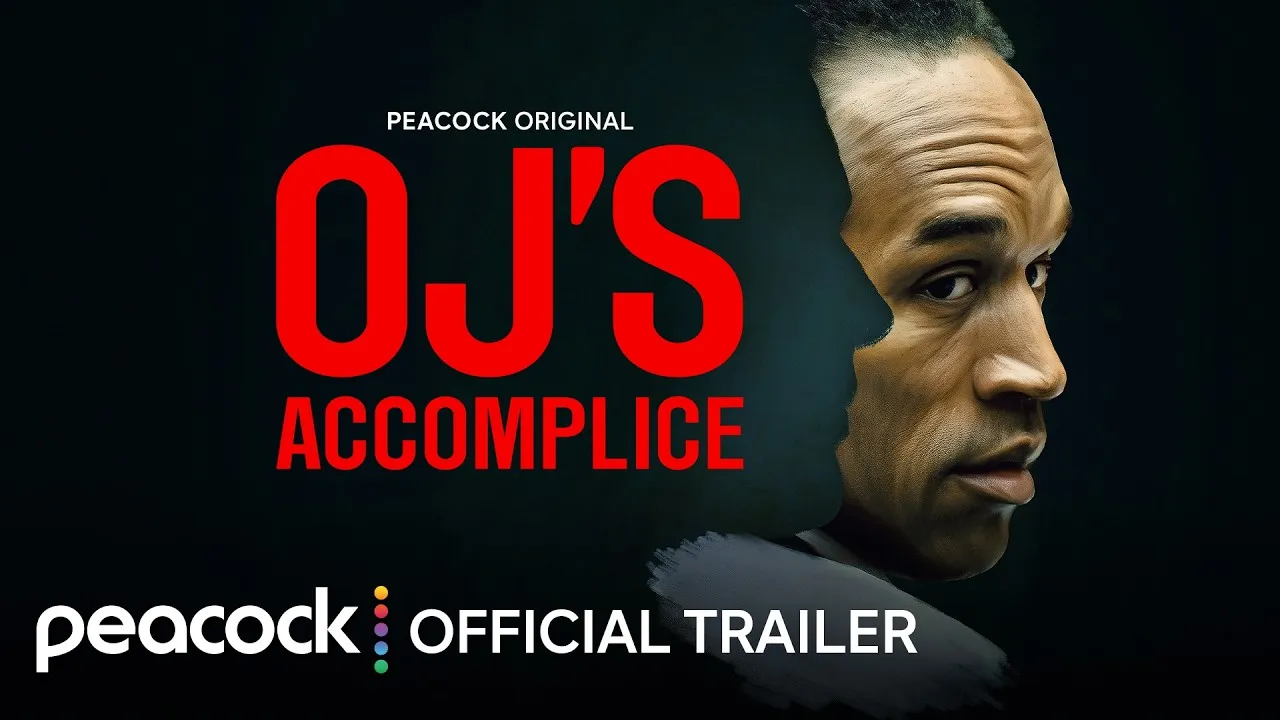
OJ’s Accomplice is a two-part true-crime documentary that premiered on Peacock on November 1, 2026. It revisits the murders of Nicole Brown Simpson and Ron Goldman in June 1994 and examines the producers’ theory that O.J. Simpson might not have been the only person involved. The program uses archival material, fresh interviews and testimony from people linked to the original investigation, while promising to reexamine evidence that audiences may think they already understand.
The title is deliberately provocative, but it should not be treated as a legal finding. The documentary advances a theory and presents material that the filmmakers consider significant. Whether its claims withstand independent scrutiny is a separate question. Peacock’s official synopsis frames the possible involvement of another person as a possibility, not a settled identification of someone proved guilty.
The series consists of two episodes, each around fifty minutes long. Peacock lists them as Blood and Blind Spots and Partner in Crime. This guide summarizes the premiere, the people interviewed, the distinction between historical legal outcomes and new allegations, and where the documentary can be streamed in supported regions.
OJ’s Accomplice release date, platform and episode information
| Title | OJ’s Accomplice |
|---|---|
| Year / platform | 2026 / Peacock |
| Premiere | November 1, 2026 |
| Format | Two-part true-crime documentary |
| Episodes | Blood and Blind Spots (49m); Partner in Crime (53m) |
| Rating | TV-MA |
| Creators / directors | Ari Mark and Sumit David |
| Production company | Ample Entertainment |
| International distributor | Sphere Abacus |
| Subject | The 1994 murders of Nicole Brown Simpson and Ron Goldman, and the producers’ disputed theory of an accomplice |
What does OJ’s Accomplice investigate?
The documentary revisits the violent deaths of Nicole Brown Simpson and Ron Goldman on June 12, 1994. The investigation that followed became one of the most intensely covered legal stories in modern American history, with extensive television reporting, public debate and a nationally followed criminal trial.
According to producer Ample Entertainment and international distributor Sphere Abacus, the new program questions whether the conventional public narrative left out possible participation by another person. Its promotional material highlights eyewitness accounts and conversations with people connected to Simpson’s circle. These are claims presented by a production, and the precise meaning of any newly introduced evidence requires careful evaluation.
A useful overview should separate the documentary’s question from a conclusion. The release of a television series cannot establish criminal responsibility. The people killed were real, the legal history is documented, and accusations about any previously uncharged individual need stronger support than a dramatic trailer.
OJ’s Accomplice episode guide: Blood and Blind Spots and Partner in Crime
The official Peacock episode list gives the first installment the title Blood and Blind Spots. Its description says the Los Angeles Police Department focused on Simpson and that previously unseen evidence may suggest he was not acting alone. Peacock lists a running time of forty-nine minutes. The wording leaves open whether that argument is persuasive once all relevant material has been considered.
The second episode is called Partner in Crime and runs approximately fifty-three minutes. Peacock describes interviews with people in Simpson’s circle that explore the possible identity of an alleged co-conspirator. This is not equivalent to an independent finding of guilt. The documentary’s structure uses the first part to revisit investigative gaps and the second to explore its specific theory.
OJ’s Accomplice uses a two-part format that is relatively compact compared with longer documentary series about the case. Viewers can follow the argument in a short sitting, but should remember that compression also means the filmmakers must select which documents, responses and interviews to include.
What happened in the original criminal trial?
O.J. Simpson was charged in connection with the murders of Nicole Brown Simpson and Ron Goldman. In October 1995, a jury acquitted him of the criminal charges. A criminal acquittal means the prosecution did not obtain the required guilty verdict; it does not prove every possible historical theory, and it should not be rewritten as a conviction.
In a separate civil case, Simpson was later found liable for the deaths. Criminal and civil proceedings have different standards of proof and legal consequences, so it is important not to merge their results. The documentary does not overturn either verdict by airing interviews or advancing a new interpretation.
Simpson died in 2024, which also limits the possibility of a new personal response from him. The documentary draws on archives and other people’s recollections rather than a present-day interview with its central subject. For responsible coverage, the historical record remains essential context.
OJ’s Accomplice interviews and previously unheard accounts
The documentary’s announced participants include Kato Kaelin, a familiar witness from the original trial, and Tanya Brown, Nicole Brown Simpson’s sister. Publicity also identifies former defense investigator Pat McKenna, lead detective Tom Lange and former DEA agent Robert Brisolari. Their perspectives come from different positions and backgrounds and should not automatically be assumed to agree.
The documentary additionally references people formerly connected to Simpson’s social circle and a newly identified eyewitness. Producer statements describe firsthand information that, according to the team, has not previously been presented together in this way. That claim tells viewers what the program intends to offer but does not itself validate every account.
Eyewitness memories are subject to limitations, especially when people are describing events more than three decades in the past. A compelling television interview may be important evidence of what a person says or remembers, but a responsible audience should also consider contemporaneous records, corroboration and alternative explanations.
Kato Kaelin and Tanya Brown’s perspectives
Kato Kaelin became widely known during the original trial and remains a prominent public reference point for anyone revisiting the events surrounding Simpson. His participation offers a connection to people and circumstances discussed at the time, but a new interview should still be evaluated on its specific content rather than his name recognition.
Tanya Brown brings the perspective of Nicole Brown Simpson’s family. That voice matters because sensational media coverage can reduce victims to supporting characters in a story about an accused celebrity. Including a family member helps viewers remember that the deaths had lasting consequences far beyond courtroom arguments.
The experience of families and witnesses should be treated with care. Even where a documentary explores a disputed theory, coverage should avoid turning the victims into props or suggesting that an interviewee has endorsed claims that were not actually made.
Ari Mark, Sumit David and Ample Entertainment
OJ’s Accomplice was produced by Ample Entertainment, with Ari Mark and Sumit David credited as directors and executive producers. Sphere Abacus handles international sales and distribution. The production team described an extended effort to revisit the case through interviews and fresh investigation.
The existence of a year-long investigation and substantial production effort is part of the project’s background, not a guarantee that its central interpretation is correct. Documentary journalism can uncover valuable details, but audiences need to understand how sources were evaluated and whether contrary evidence has been addressed.
Peacock originally announced a later release window before moving the premiere to November 1. This explains why older industry reports may list December 2026. The updated official Peacock listing and its trailer should take priority over earlier schedules.
Why the case remains so widely discussed
The 1994 murders and subsequent trial took place during a period of expanding cable television coverage. The proceedings became part of American popular culture, with legal strategy, racial tensions, policing, celebrity and the treatment of violence against women all receiving extraordinary attention.
Interest in the case has continued through books, dramatizations, archival series and new documentaries. Different projects have focused on legal strategy, journalism, social conditions or personal histories. A documentary proposing another participant in the murders enters a crowded field and must therefore explain what genuinely distinguishes its evidence.
The temptation is to treat any new headline as a final answer. That would be a mistake. The more familiar the public is with a story, the more important it becomes to check whether a revelation is a new fact, a fresh witness interpretation or a longstanding theory presented in a different format.
How to evaluate the documentary’s claims
Start with the exact nature of what is asserted. Does an interviewee say they directly witnessed an event, repeat something heard from another person, or offer a later interpretation of old material? These forms of testimony carry very different evidentiary weight. A documentary that moves quickly between them can make distinctions difficult to recognize.
Next consider timing and independent support. A claim recorded many years after an event can still matter, but it should be assessed against documents, physical evidence and other statements. Viewers should watch for what evidence is shown directly and which conclusions rely on narration or editing.
Finally distinguish legal outcomes from television theories. The new series can make an argument, but it cannot on its own establish that a named individual participated in homicide. This article deliberately avoids naming a hypothetical accomplice as a confirmed perpetrator or claiming the documentary has solved the case.
Photography, archival footage and presentation
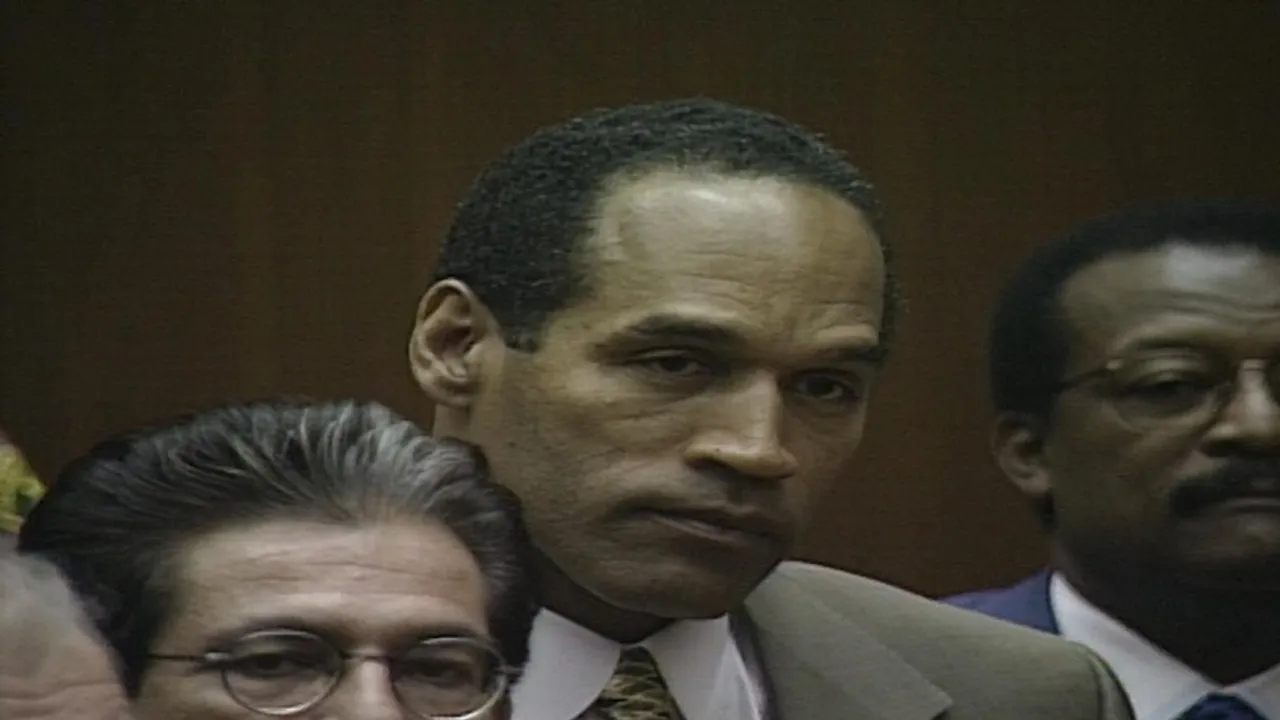
Peacock’s promotional material uses familiar courtroom and case imagery alongside newly recorded interviews. The archive supplies historical context while the present-day footage emphasizes the series’ attempt to revisit the evidence. The difference between a historical picture and a frame from the documentary matters: captions should make the source of each image explicit.
The two-part format is built for streaming, but production choices will shape the effect of the evidence. Music, editing and the order of interviews can create a strong sense of discovery even when the original documents remain ambiguous. Viewers interested in careful evaluation may want to consult the source material beyond the documentary itself.
An important ethical issue in OJ’s Accomplice is the portrayal of victims. Nicole Brown Simpson and Ron Goldman were people with families and friends; coverage should respect them and avoid glorifying violence or treating speculation about their deaths as entertainment detached from human consequences.
Where to watch OJ’s Accomplice online
Peacock’s official listing shows both episodes available as part of Season 1: Blood and Blind Spots, forty-nine minutes, and Partner in Crime, fifty-three minutes. The documentary premiered on November 1, 2026, and is classified TV-MA. The listed streaming destination is Peacock in the United States.
To watch legally, visit the official Peacock page or app and check the subscription options available to your account. Regional access is important: Peacock operates under different licensing arrangements outside the United States, and this guide does not claim a Russian dub or an international release that has not been confirmed.
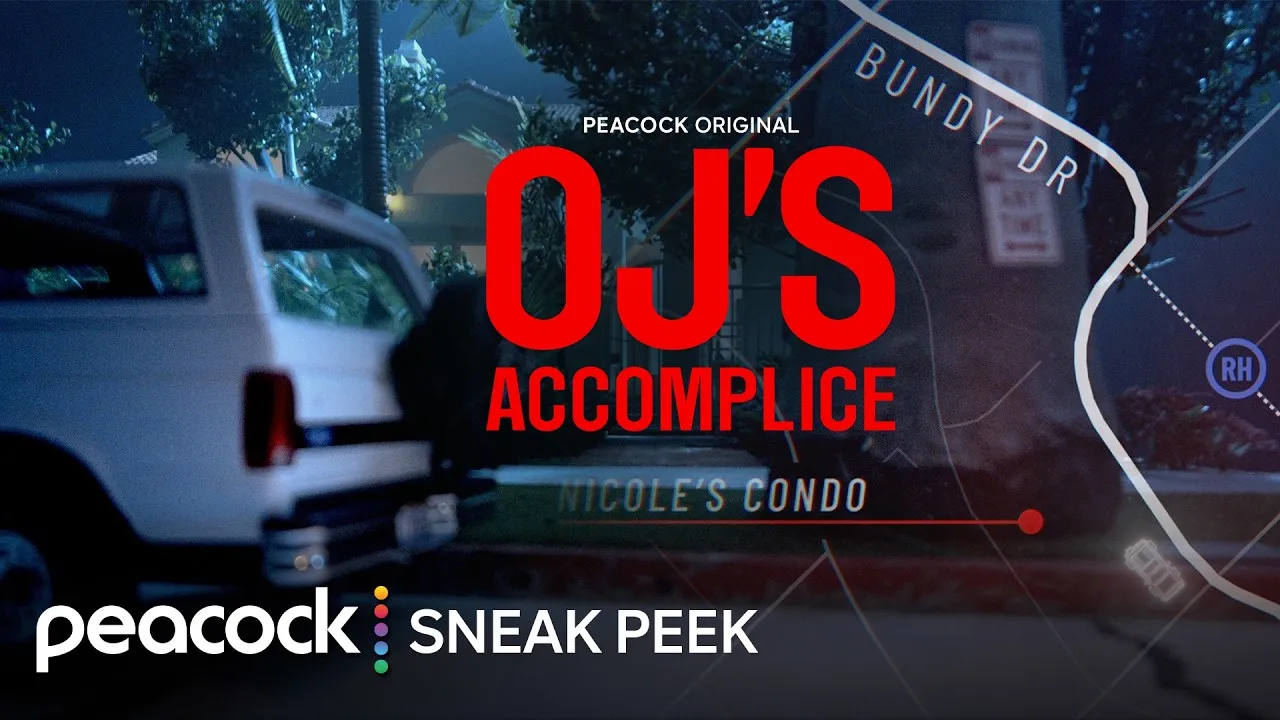
The network also published an official trailer and a first-look video in late October. They can help viewers understand the documentary’s tone before subscribing. Neither promotional video should be treated as a substitute for the full evidence, context and interviews shown in the episodes.
Is OJ’s Accomplice worth watching?
People interested in American legal history, documentary storytelling and the public life of the Simpson case may find OJ’s Accomplice useful for understanding how its creators challenge one influential interpretation. It brings together interviews with several people connected to the earlier investigation and presents a compact argument across two episodes.
The strongest reason to watch is the opportunity to hear what specific witnesses and investigators say, not the expectation that a streaming platform can resolve a decades-old murder case. Viewers should maintain a distinction between historical facts, sworn testimony, memories and new claims.
This guide is not an endorsement of any unproven accusation. It is a release and content overview intended to help readers decide whether the two-part documentary is relevant to their interests, while preserving the difference between the program’s central thesis and established legal history.
Related true-crime and investigative stories
Readers exploring the questions raised by OJ’s Accomplice may also be interested in our guide to The One About Matthew Perry, another documentary that revisits a real person’s death and the way it is discussed publicly. For a scripted treatment of a famous historical criminal case, see Monster: The Lizzie Borden Story. Our UNABOMBER movie guide looks at another production drawing on real criminal history. These are different productions, not evidence for the claims made in this Peacock documentary.
As OJ’s Accomplice revisits a contested interpretation of a notorious case, viewers should compare what the interviewees say with verified court outcomes. Its central question remains a documentary allegation, not a new legal verdict.
Frequently asked questions
Where can I watch OJ’s Accomplice online?
Peacock carries Season 1 in the United States. Both episodes are listed on the official Peacock streaming page.
When did the documentary premiere?
Sunday, November 1, 2026. Earlier industry announcements named December, but the release was moved forward.
How many episodes are there?
Two: Blood and Blind Spots (49 minutes) and Partner in Crime (53 minutes).
Who produced the documentary?
Ample Entertainment produced the series. Ari Mark and Sumit David are listed as directors and executive producers.
Which people are interviewed?
Promotional material lists Kato Kaelin, Tanya Brown, Pat McKenna, Tom Lange and Robert Brisolari among the participants.
Does the documentary prove there was an accomplice?
No legal conclusion follows from a documentary release. It raises a theory and presents interviews and evidence that viewers can evaluate critically.
What happened in the original Simpson cases?
A jury acquitted Simpson of murder charges in a 1995 criminal trial; a later civil jury found him liable for the deaths.
Is the series suitable for children?
No. Peacock rates it TV-MA and it deals with real homicides and distressing historical material.
Official sources: Peacock: episode list and streaming, Sphere Abacus: official distributor description, Peacock official trailer, Peacock first look.