
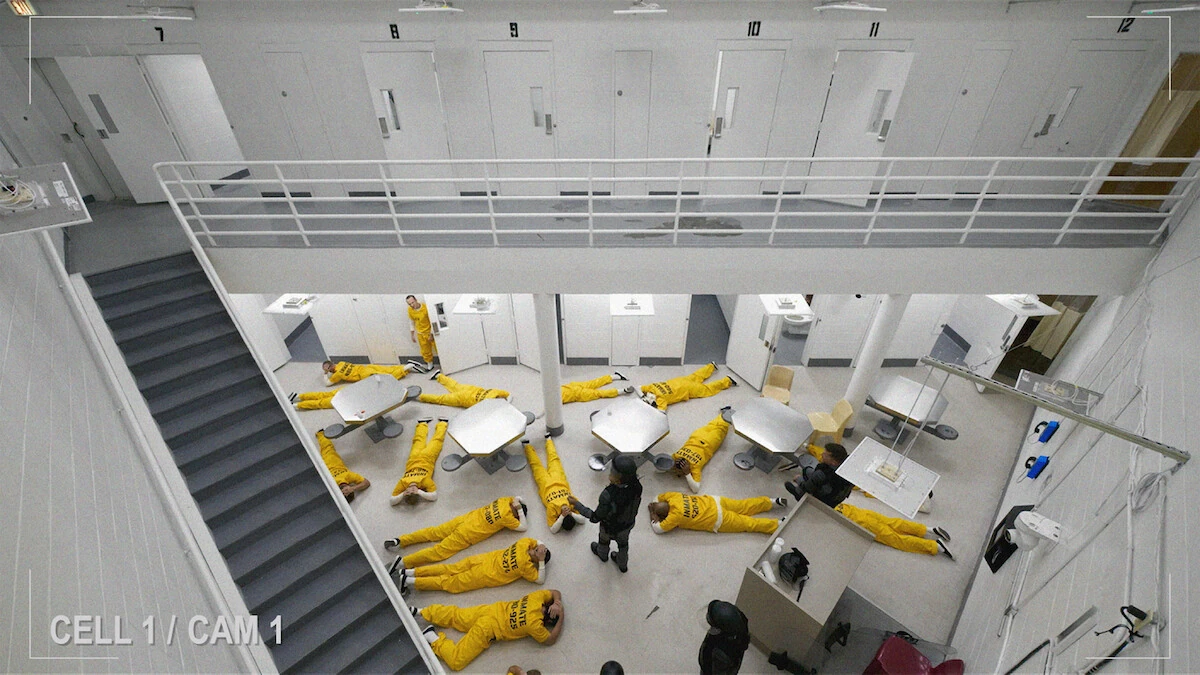
NETFLIX REALITY · POWER, RULES & RESISTANCE
Who do you become when the uniform gives you power?
Thirty volunteers enter a prison setting and take opposing roles. A six-part series revisits a notorious premise, with the tension between authority and personal responsibility at its centre.
Format · Participants and experts · Historical context · Viewing guide
The New Stanford Prison Experiment arrived on Netflix on October 21, 2026, with six episodes. The premise is immediately uncomfortable: volunteers enter a real prison setting and receive roles that divide them into people who enforce rules and people expected to obey. The series asks how long personal principles survive when a group starts defining what is normal.
This spoiler-free guide explains the format, the expert panel and the historical controversy behind the title. It examines the questions raised by the setup without inventing episode outcomes or presenting a television production as a settled verdict on human behaviour.
Inside this guide
The New Stanford Prison Experiment: what is the format?
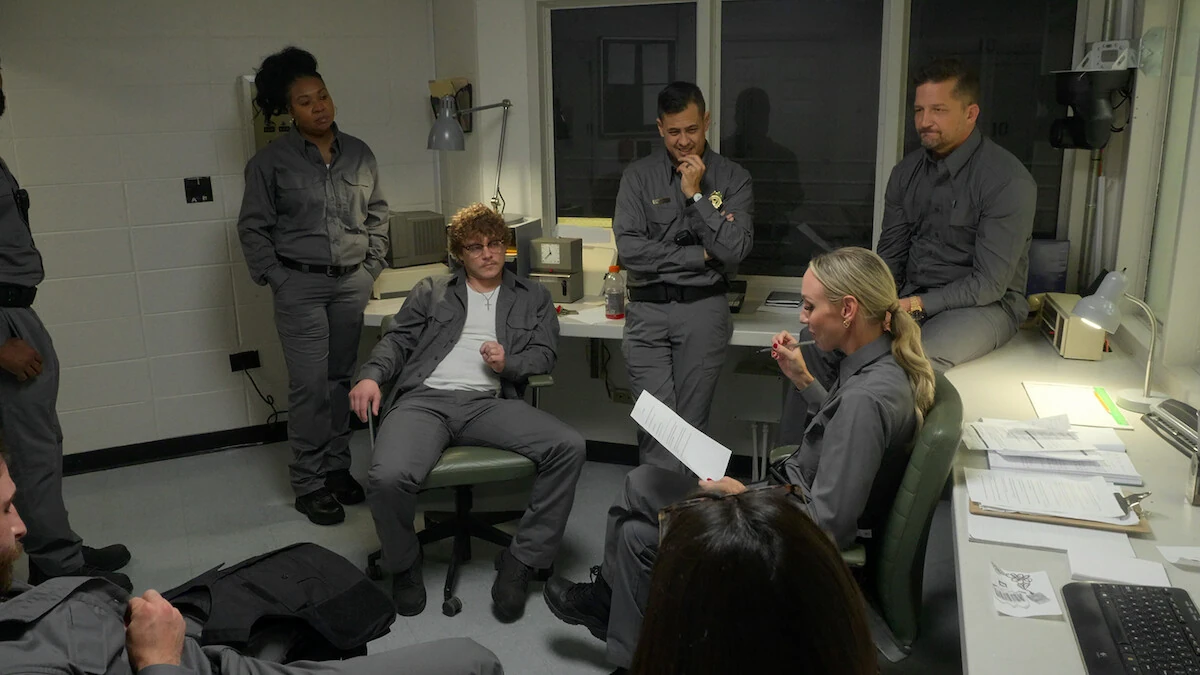
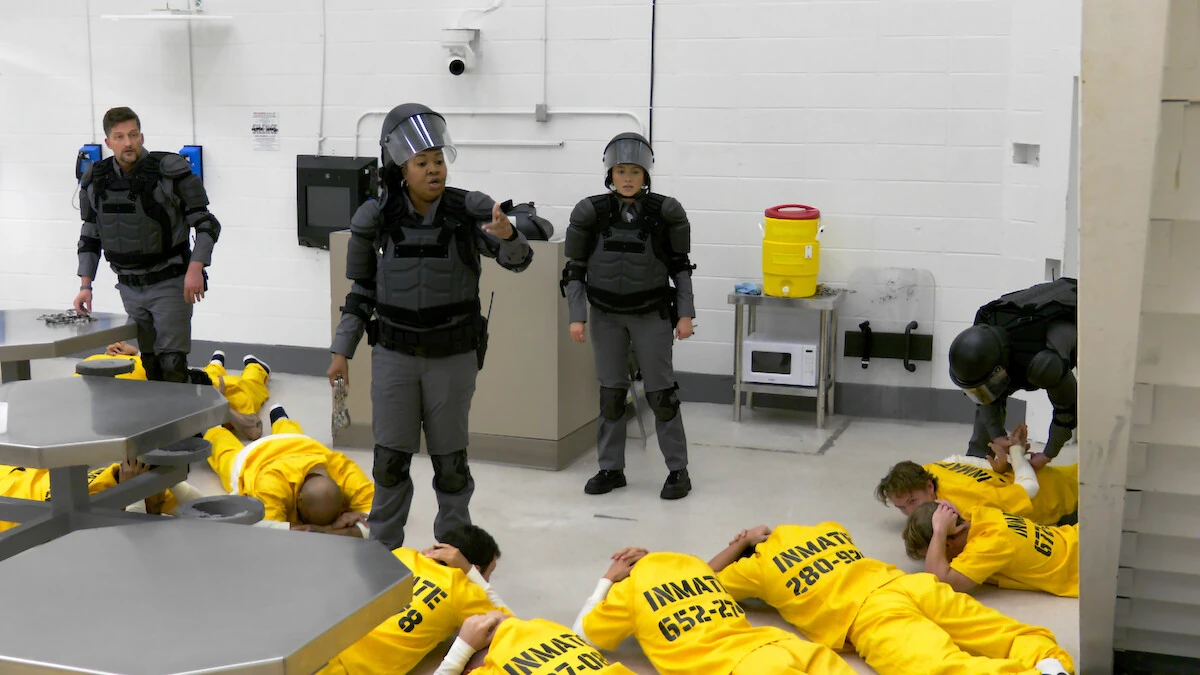
Netflix describes an unscripted series in which 30 willing participants enter a prison for a planned two-week period and are assigned guard or prisoner roles. The official synopsis centres on the pressure created by hierarchy, group identity and control.
The important conflict is not simply between two teams. A rule can appear reasonable to the person enforcing it and humiliating to the person receiving it. Once other people are watching, backing down may start to feel like losing authority, while cooperation may be mistaken for weakness. Those possibilities make the premise more complicated than a competition with a scoreboard.
It also puts ordinary choices under pressure. Who speaks for a group? Who challenges a decision? Does keeping the peace mean accepting unfair treatment, or can refusing to participate become its own form of influence? These are useful questions for watching the series without assuming that a uniform explains every action.
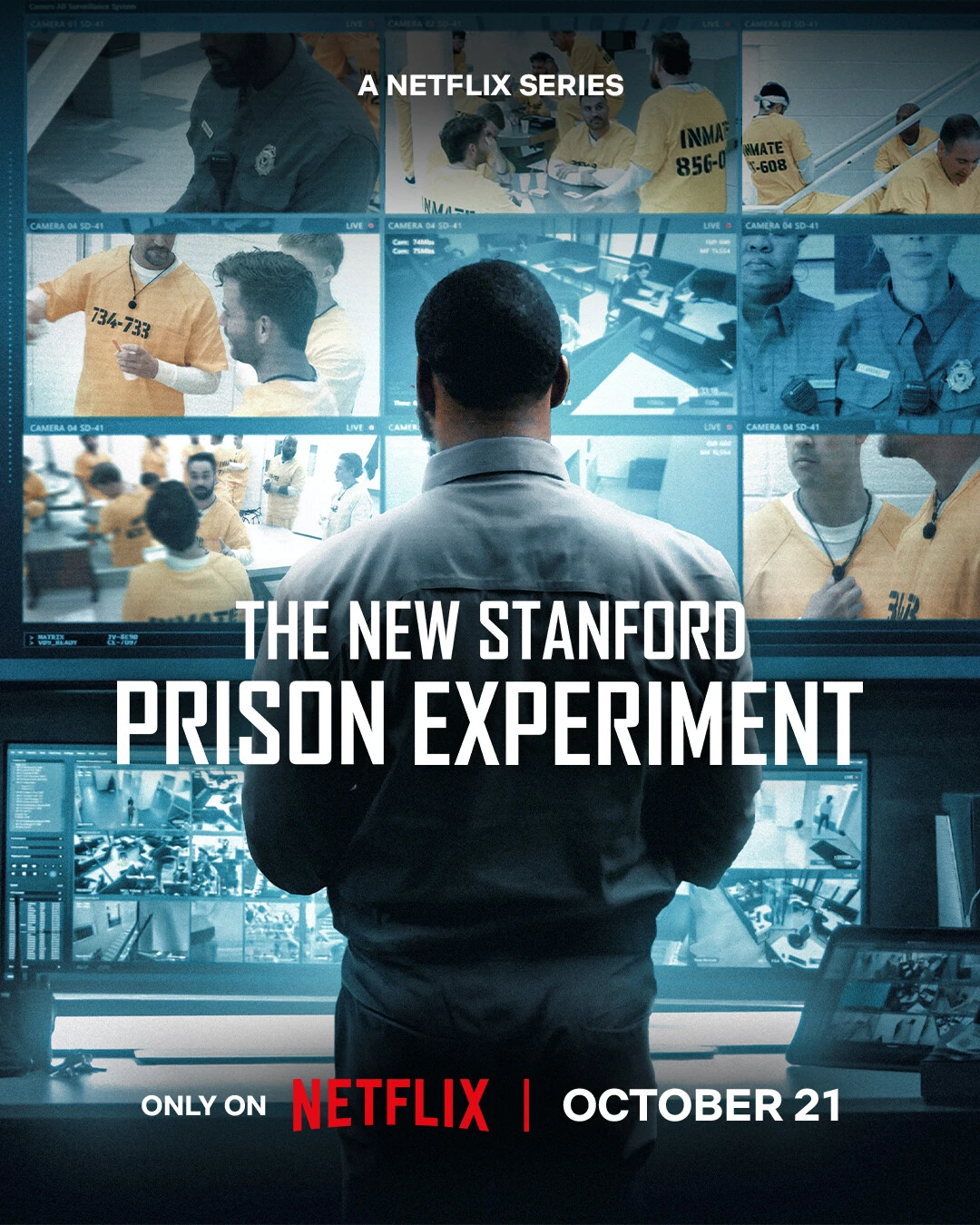
Who takes part in The New Stanford Prison Experiment?
In their interview with Variety, executive producers Jane Lipsitz and Dan Cutforth describe a group drawn from different backgrounds. The reported initial division is eight guards and 22 prisoners, with guard duties organised into shifts. These are volunteers participating in the production, rather than actors playing a scripted drama.
Different experiences matter to the premise because people do not arrive as blank slates. They bring assumptions about fairness, punishment, leadership and the point at which a person should object. A disagreement can therefore come from a clash of values, an immediate practical problem or the pressure to remain loyal to the group.
For viewers, it is worth resisting the temptation to divide everyone instantly into heroes and villains. Ask what information a person has, which choices appear available and what the group rewards. That approach makes the question of responsibility sharper: explaining a situation does not automatically excuse what someone does within it.
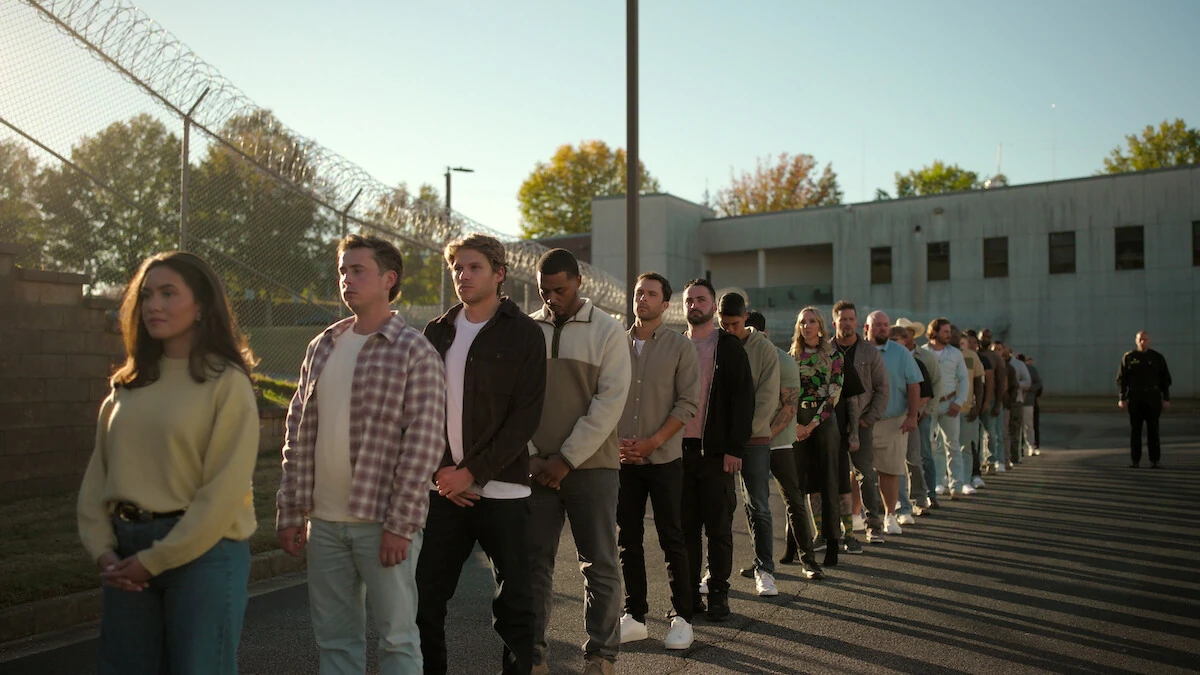
Who are the experts watching the series?
| Expert | Background |
|---|---|
| Alison Wood Brooks | Harvard behavioural scientist |
| Trymaine Lee | Pulitzer Prize-winning journalist |
| Michael Cantrell | Former federal corrections professional |
The official Netflix guide introduces these three observers. Their backgrounds offer different ways of discussing the same encounter: behaviour, social context and the practical workings of a correctional environment.
An expert explanation can help identify a pattern, but viewers can still distinguish interpretation from something directly shown. A short disagreement may be part of a much longer relationship; an edited sequence is not the whole two weeks. The interesting discussion begins when a confident explanation is tested against details that complicate it.
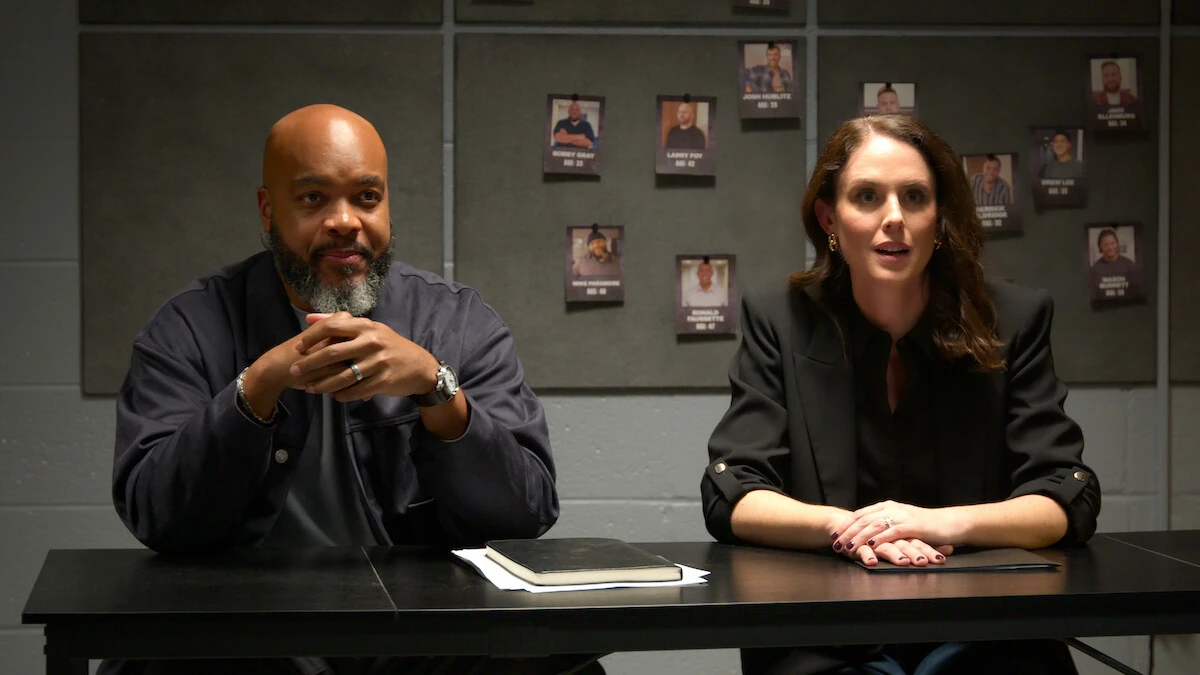
Where was the series filmed?
Variety identifies the location as a decommissioned section of the Adult Detention Center in Cherokee County, Georgia, within a working prison facility. Its producer interview also describes remote cameras and the separation of the production environment from the ordinary presence of a camera crew.
The physical setting changes the emotional frame. Doors, uniforms and regulated movement can make a rule feel heavier than it would in an ordinary room. At the same time, participating in a production is different from serving a sentence: the setting alone does not make the two experiences interchangeable.
How does it connect to the 1971 Stanford prison experiment?
The original study was led by psychologist Philip Zimbardo at Stanford. The Stanford Historical Society’s account records that 24 male college students were selected and that the planned two-week simulation ended after six days amid concern about how participants were being treated.
Its legacy includes a substantial argument about what the study can actually demonstrate. In a 2019 archival investigation published in American Psychologist, researcher Thibault Le Texier challenged its scientific validity, examining instructions to guards, weaknesses in data collection and participants’ awareness of the situation.
That background changes how to approach the new programme. The historical title supplies a provocative question; it does not supply a conclusion that viewers must accept. A television series can prompt discussion about power while leaving the quality of the underlying explanation open to scrutiny.
What safeguards do the producers describe?
Netflix’s interview with Jane Lipsitz describes informed participation, psychological screening, an option to withdraw using a safe word, and access to psychological support. These are the production’s stated precautions, rather than an independent assessment of every participant’s experience.
The distinction matters because a controlled environment can still feel stressful. When watching, consider whether someone can object meaningfully, whether the rules are understandable and whether a person’s wish to leave is treated seriously. The ability to stop is part of the situation, not a minor detail outside it.
What makes the new series worth discussing?
The strongest question in The New Stanford Prison Experiment is not whether a bad person can behave badly. It is how a group decides that a particular action is acceptable, necessary or simply somebody else’s responsibility. Small compromises can be more revealing than a dramatic confrontation.
Look at the language used to defend a decision. “Those are the rules” can describe a genuine limit, or it can prevent a person from examining a choice. Likewise, a protest can express principle, anger or a strategic attempt to gain influence. The setting encourages viewers to examine those possibilities rather than assuming one explanation always fits.
The format also raises a question about the audience. Watching a tense interaction can create a desire for the next escalation, even while we recognise that escalation may be unpleasant for the people involved. Being aware of that tension is a more useful starting point than treating the programme as a simple test that people either pass or fail.
This makes the series a potential choice for viewers interested in reality television, institutional power and arguments about personal responsibility. It is less suited to anyone looking for a light competition or a fictional prison thriller. The appeal lies in the premise and the discussion it creates; this guide does not claim to have independently verified every production decision or reviewed unseen outcomes.
Release date, six episodes and where to watch
Netflix confirms that The New Stanford Prison Experiment launched with six episodes on October 21, 2026. The platform now describes it as streaming. This is a series about a contemporary group of volunteers, not a release of footage from the 1971 study.
| Viewing detail | Confirmed information |
|---|---|
| Season 1 release | October 21, 2026 |
| Episode count | 6 |
| Official service | Netflix |
| Format | Unscripted social-experiment series |
| Regional details | Check local availability, classification, audio and subtitles on the title page |
Use the official Netflix title page to check the season in your country. Local classifications and available languages can vary, so one regional listing should not be treated as a worldwide guarantee.
For another view of group behaviour in entertainment, see our Love Is Blind Season 11 guide. If you prefer fictional tension, our Phony guide explores a different premise built around suspicion and uncertainty.
The New Stanford Prison Experiment: frequently asked questions
When did The New Stanford Prison Experiment come out?
The Netflix series launched on October 21, 2026.
How many episodes are there?
Season 1 contains six episodes.
Is it a scripted prison drama?
Netflix classifies it as reality television. Volunteers take assigned roles within a production, rather than performing a scripted fictional drama.
How many people participate?
The announced format involves 30 volunteers. Producer interviews report an initial division of eight guards and 22 prisoners.
Who are the expert observers?
Alison Wood Brooks, Trymaine Lee and Michael Cantrell bring behavioural-science, journalism and corrections experience.
Where was it filmed?
Variety’s producer interview identifies a decommissioned section of the Adult Detention Center in Cherokee County, Georgia.
Is this the original Stanford prison experiment?
No. This is a contemporary series inspired by the earlier premise. The 1971 study took place at Stanford and ended after six days.
Could participants leave the production?
The producers describe a safe-word procedure for withdrawal and access to psychological support.
Does the programme prove that power always corrupts?
That would be too broad a conclusion to draw from an edited television series. Its premise raises questions; the original study’s scientific validity has also been challenged.
Where can I watch it?
Check The New Stanford Prison Experiment on Netflix, including your region’s availability and language options.
Updated October 21, 2026. Release and format checked against Netflix; production context against the producers’ Variety interview; historical context against Stanford and published research. Official images: Netflix. Participant outcomes and the ending are not revealed.