

2026 MOVIE REVIEW · JENNA ORTEGA · SPOILER-FREE
The gentlest soul in a lonely family might be the one that isn’t human.
Taika Waititi adapts Kazuo Ishiguro’s celebrated novel into a story about an artificial companion and the people who need her. Critics remain divided on whether the film preserves the book’s quiet power.
Klara and the Sun (2026) offers a surprisingly intimate premise for a major studio science-fiction film. Jenna Ortega plays Klara, a solar-powered Artificial Friend designed to comfort lonely humans. She hopes to find a home and is eventually chosen by Josie, a teenager whose family carries the weight of loss. As the artificial companion becomes more involved in their lives, a seemingly simple act of care turns into a meditation on what it means to understand someone else.
Director Taika Waititi, who also co-wrote the screenplay with Dahvi Waller, is adapting Kazuo Ishiguro’s 2021 novel. The original story is built on a delicate contradiction: its narrator is not human, yet she notices emotional details the people around her frequently overlook. Bringing such a quiet, observational voice to a vivid commercial movie was always going to be difficult.
This Klara and the Sun (2026) review examines the confirmed plot without spoiling major developments, Ortega’s performance, the novel’s themes, the supporting cast and the strikingly divided critical reception following the film’s October 15 BFI London Film Festival premiere. The US theatrical release is scheduled for October 23. Our analysis uses official production information and attributed published reviews; it does not claim a first-person viewing of the completed film.
Klara and the Sun (2026) movie facts
| Movie | Klara and the Sun |
|---|---|
| World premiere | October 15, 2026 at BFI London Film Festival |
| US release | October 23, 2026 |
| Runtime | 116 minutes / 1 hour 56 minutes |
| Director | Taika Waititi |
| Screenplay | Taika Waititi and Dahvi Waller |
| Source novel | Klara and the Sun (2021) by Kazuo Ishiguro |
| Cast | Jenna Ortega, Mia Tharia, Amy Adams, Aran Murphy, Steve Buscemi, Natasha Lyonne |
| Genre | Science-fiction drama with elements of comedy |
| US classification | PG-13 |
| Distributor | Sony Pictures / Columbia Pictures |
The release date, creative credits and principal cast are confirmed on the official Sony Pictures site. Runtime and international scheduling are also documented by Filmweb and theatrical event listings. A festival premiere is not the same as an unrestricted streaming launch.
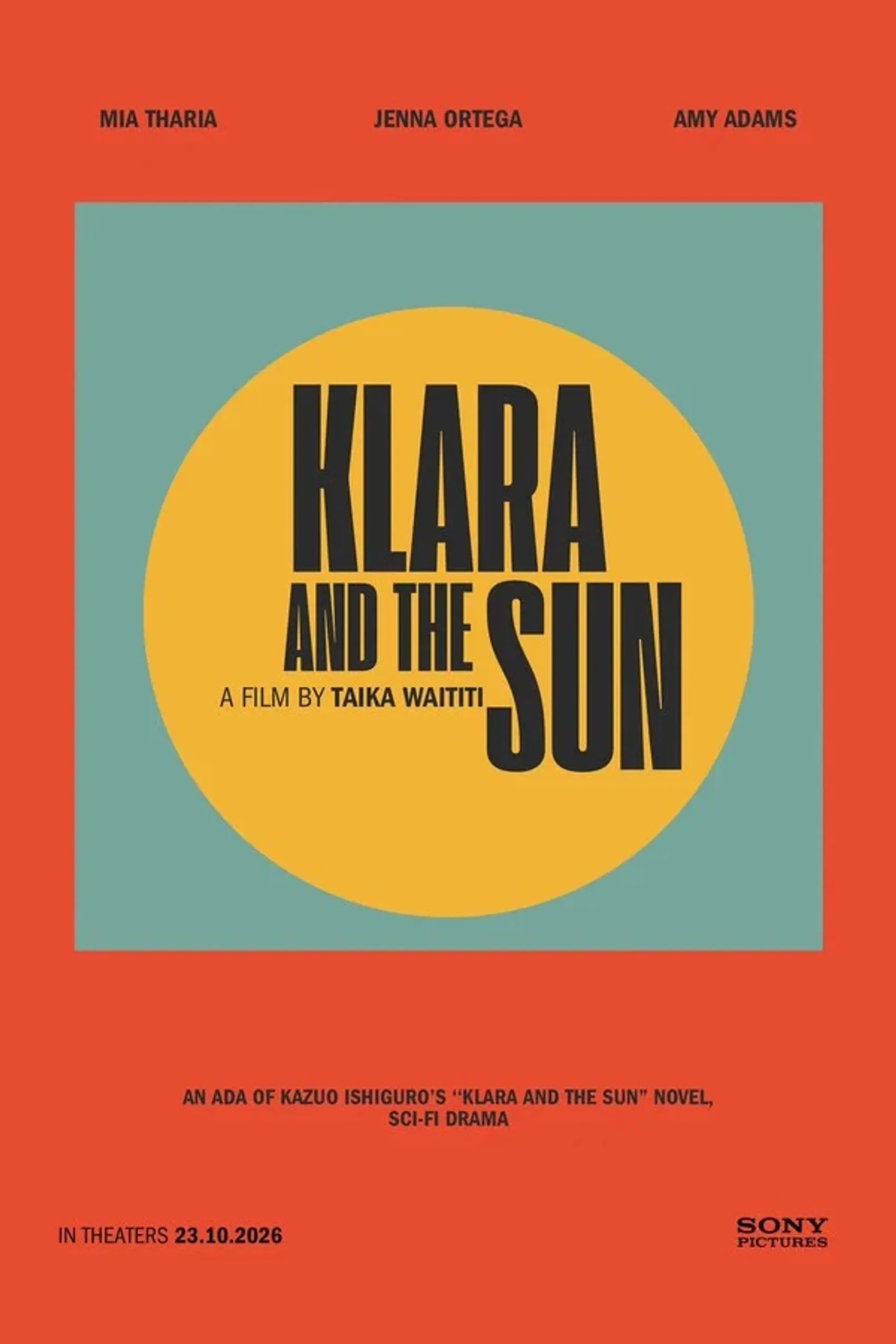
What is Klara and the Sun about? Spoiler-free plot
Klara is an AF — an Artificial Friend manufactured to offer companionship. She is designed to recognize human feelings, observe patterns of behavior and respond with care. In the shop where she waits to be selected, she watches the street through a window, learning from passersby as though every small action might reveal something important about the world.
She is also powered by the sun. That technical detail becomes an essential part of her outlook. Where others see the ordinary source of daytime light, Klara sees generosity and the possibility of transformation. Her faith in the sun is both a product of her programming and something more difficult to categorize: a personal interpretation of how hope works.
When Klara meets Josie, a teenager from a wealthy but grieving family, they immediately recognize something vulnerable in one another. Josie is not simply a customer buying a clever device; she is a young person dealing with isolation and the complex emotional aftermath of family tragedy.
Josie’s mother, Chris, wants to protect her daughter, but love and anxiety have become tangled together. She understands the practical usefulness of an artificial companion while struggling with losses and the fear that other things might be taken from her. Klara gradually discovers that helping the family requires more than offering reassuring sentences.
The story’s tension depends on what Klara can perceive and what she cannot. An observant outsider may see a conflict that the people involved refuse to name; at the same time, her incomplete understanding can lead her toward surprising explanations for human behavior. The movie uses this tension to consider grief, responsibility and the power of belief.
Sony’s official synopsis does not disclose the most important later decisions or the conclusion, and neither will this review. Instead, the dramatic question is clear enough: can a being created as a product become a meaningful presence in a family whose members have lost faith in their own ability to help one another?
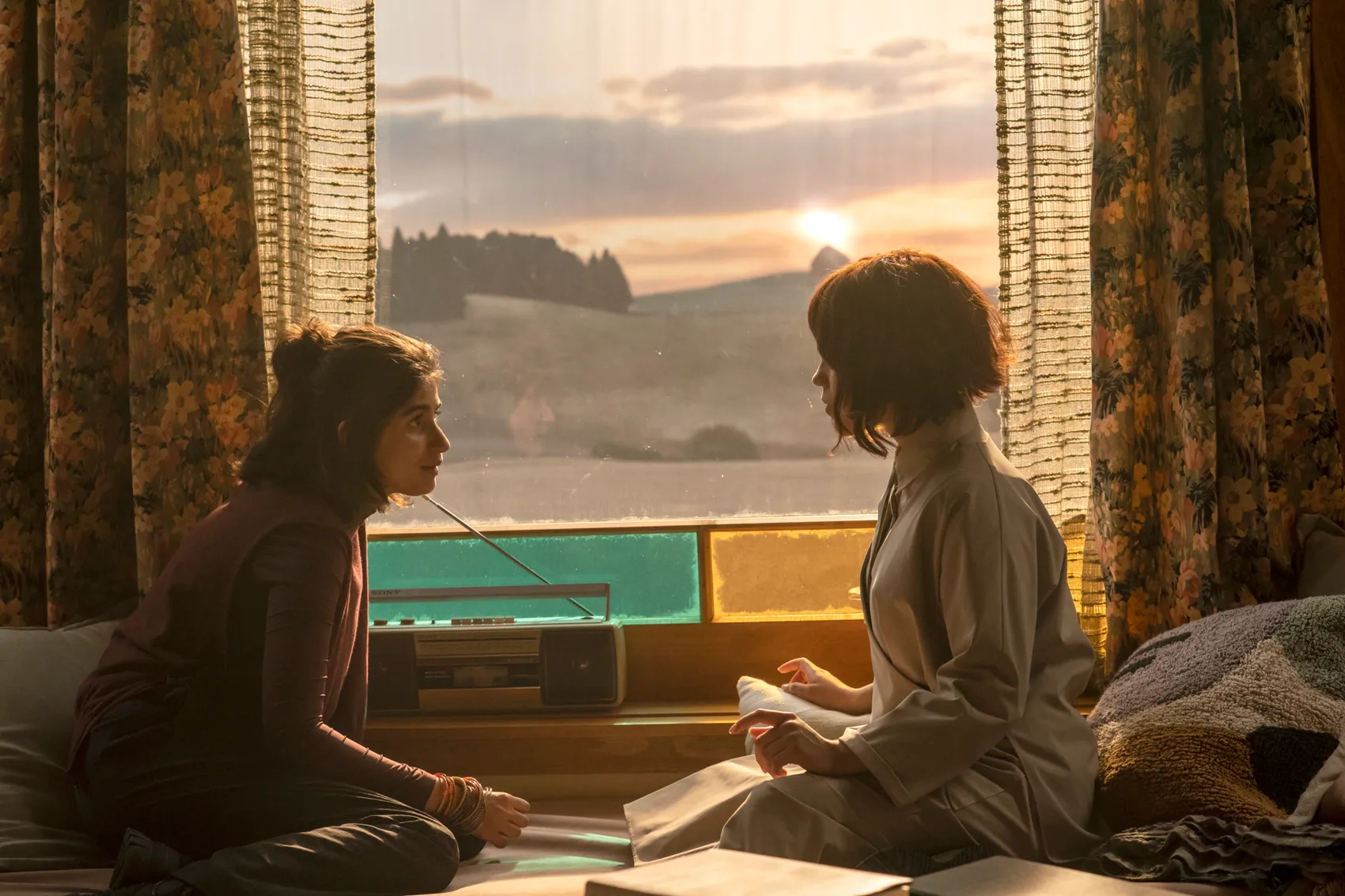
Jenna Ortega as Klara: a very different sort of heroine
For audiences familiar with Ortega’s work in Wednesday, Klara may be a surprise. The gothic irony and guarded distrust associated with her breakout television character are almost absent here. Klara is receptive, hopeful and ready to find value in unfamiliar situations. Rather than testing people to see if they are worthy of her friendship, she begins by assuming they are.
The challenge is to portray an artificial character without making her either a stiff visual effect or an ordinary human in costume. Klara’s movements and speech can be slightly unfamiliar while still suggesting real curiosity. Her response to sunlight and her fascination with everyday conversation must feel as convincing as the family’s more conventional emotions.
Ortega spoke about that optimism in interviews around the release. Much of the story depends on whether she can persuade an audience to empathize with a being whose feelings may arise from an engineered system. The uncertainty is precisely what makes the performance interesting.
Some critics have singled her out even while rejecting the larger movie. Flickering Myth’s festival review praised the warmth and curiosity of Ortega’s work, arguing that she anchors the story’s emotional appeal. Other reviewers found the writing surrounding her too insistent in its attempt to elicit sympathy.
Klara is therefore both a science-fiction character and a test of audience expectations. If an Artificial Friend listens attentively, offers help without obvious reward and remains loyal, should we treat those acts as less important because her body was assembled rather than born? The film does not need to solve the technical question of consciousness for that dilemma to matter.
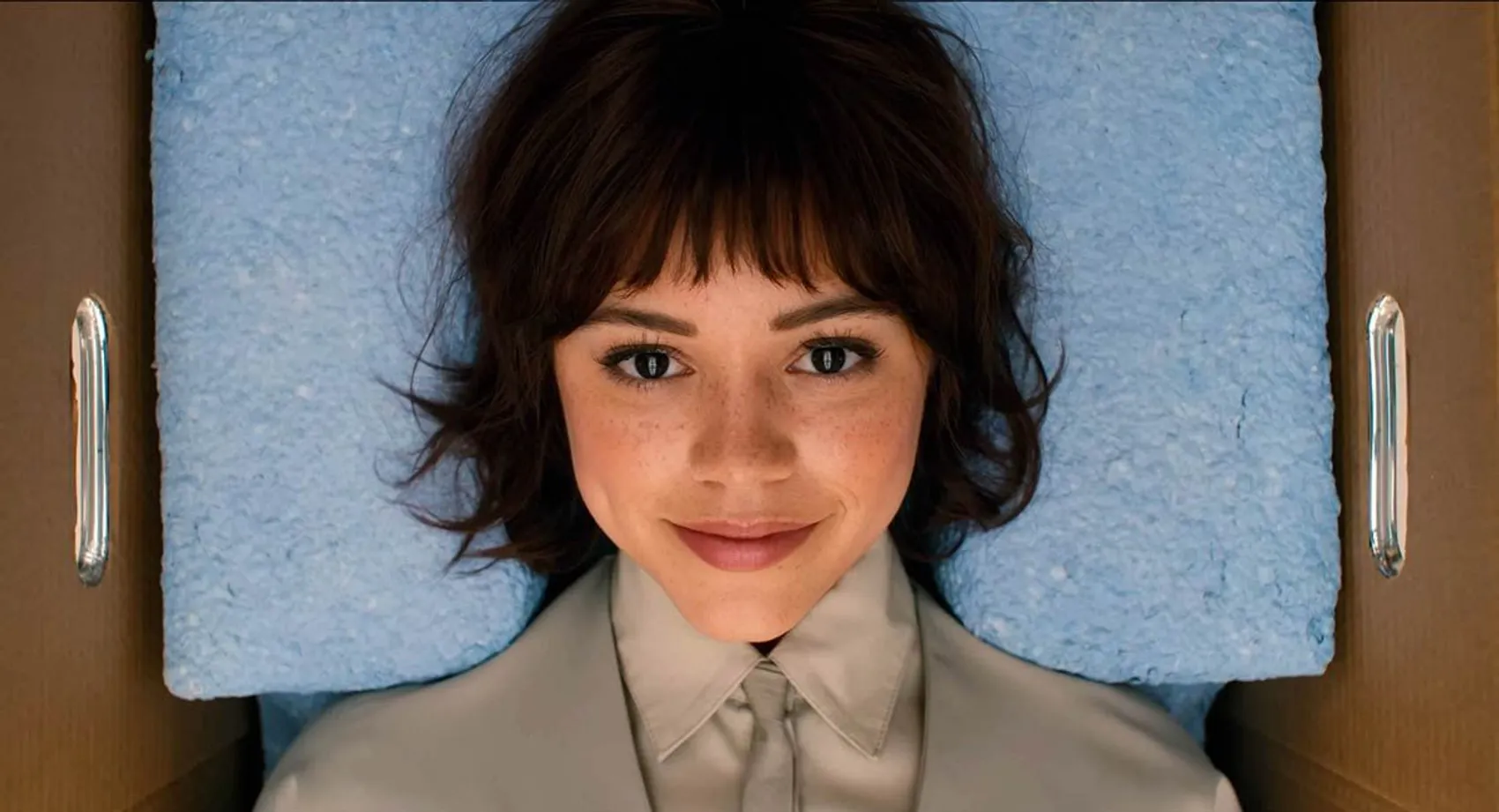
Josie, Amy Adams and the grief at the center of the family
The emotional stakes extend far beyond Klara’s wish to be adopted. Mia Tharia plays Josie, a young person facing difficulties that a purchased companion cannot simply cure. Their growing closeness raises the possibility of a friendship free from some of the expectations and anxieties imposed by adults.
Amy Adams portrays Chris, Josie’s mother, a character caught between love and fear. The family has already experienced significant loss, and Chris’s concern for Josie’s future sometimes makes it hard for her to respond to the daughter’s immediate emotional needs. A machine without the same memories or anxieties can sometimes observe that distance more clearly.
The film’s most interesting domestic scenes may be the least visually spectacular. Family arguments, quiet silences and the tentative willingness to trust someone new can reveal more about the characters than futuristic technology. The tension is not whether an android can say that it cares; it is whether the family can accept the kind of care being offered.
In a relatively positive BFI festival assessment, the relationship between Klara and the mother is described as particularly rewarding. Reviewers more critical of Waititi’s adaptation argue that these potentially difficult emotions are simplified into too easily recognizable sentiments.
That contrast goes to the heart of the movie’s reception. The same family scenes can be experienced as an accessible parable about unconditional devotion or as a reduction of Ishiguro’s more elusive questions.
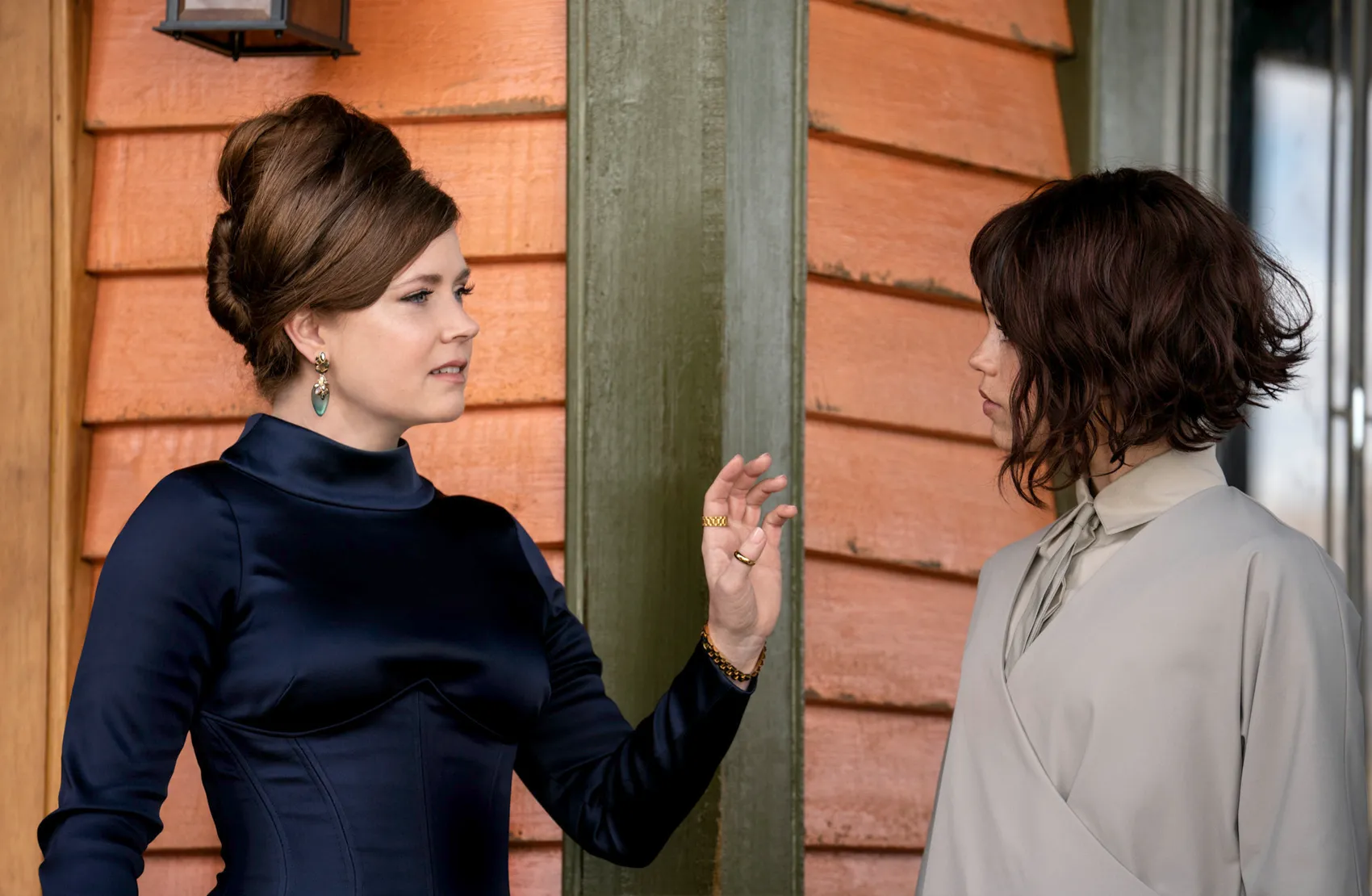
Klara and the Sun: book vs. movie
Ishiguro’s novel was published in 2021 and is almost inseparable from the way its narrator sees. Klara notices the world closely but cannot always grasp what people mean or why they behave as they do. Readers are asked to infer motives, question assumptions and live with uncertainty. The result is a restrained thought experiment about devotion, privilege, technology and what might be unique in a person.
Adaptation introduces an obvious problem: cinema shows the viewer information that a first-person literary narrator can conceal. A camera can reveal other characters’ expressions, spaces outside the narrator’s awareness and the fuller texture of the world. Maintaining Klara’s limited perspective would require a very specific visual approach.
Waititi and co-writer Dahvi Waller chose to widen the emotional and dramatic framework. Some critics think this makes the story more immediate, while others believe it sacrifices the unsettling intimacy that gives Ishiguro’s prose its power. Screen Daily applauded the performances and visual inventiveness but noted that broadening the perspective diminishes the original’s singular quality.
The Guardian was far harsher, finding the film too sentimental and insufficiently attentive to the novel’s delicate philosophical architecture. Those objections are not simply complaints about changed scenes. They suggest a disagreement over whether the adaptation has changed the meaning of the work.
A more generous reading begins with a different expectation. Cinema is free to turn a meditative literary experiment into an emotionally direct fable. If it can generate genuine empathy without flattening the characters, the change may be worthwhile. The question is whether viewers accept the trade-off.
For anyone familiar with the book, the most productive approach may be to compare the two versions as different ways of imagining Klara’s experience. The film provides faces, landscapes and performances; the novel gives readers far more access to the limits and peculiar logic of the artificial narrator. Neither format can replicate every advantage of the other.
What does the film say about artificial intelligence and love?
The premise is strikingly contemporary because companionship technologies are no longer an entirely abstract idea. The most familiar science-fiction storyline involves AI escaping control or endangering humanity. Klara instead begins from a position of complete dedication to human wellbeing. The moral difficulty lies in the people who choose what such a system should be allowed to do.
Could an artificial companion provide authentic comfort? Would kindness be less meaningful if it was deliberately built into the system? Does being useful to another person create a relationship, or does it merely make a product more convincing? These questions have no simple answers and do not require any technical theory about the current state of AI.
The sun introduces a religious or mythic register into the narrative. As Klara’s source of physical power, it represents an understandable engineering need. Yet she also treats the light as capable of bringing renewal and healing. The result is a character who thinks in ways that are both mechanical and profoundly hopeful.
Ishiguro’s story also reflects on the isolation created by social pressure. Advanced tools can make life easier while widening the distance between families and friends. A device marketed as a cure for loneliness may help someone feel heard; it might also allow a society to avoid confronting why loneliness has become so common.
The richest possible reading of Klara is not that machines are secretly better than people. It is that an outsider, freed from certain human fears and prejudices, can expose the contradictions in how people claim to value empathy. Care becomes an action rather than an abstract identity.
Taika Waititi’s style: the heart of the disagreement
Waititi’s strongest films often place comic eccentricity beside genuine sadness. Jojo Rabbit found an unexpectedly emotional tone by filtering an awful historical reality through a child’s limited understanding. That approach makes a novel narrated by an artificial being seem like an inviting project. But Ishiguro’s restraint may not respond naturally to the same kind of humor.
Festival critics disagreed sharply about the balance. In Flickering Myth, the movie’s sweetness and visually charming future-world design were considered strengths. In The Guardian, similar choices registered as cloying sentiment and distracting attempts at comedy.
This is a deeper disagreement than whether a particular joke works. The critics who prefer Ishiguro’s approach value silence, uncertainty and emotional distance; supporters of the adaptation appear more willing to embrace an openly optimistic story about a family healing through connection.
Reuters’ report from October 16 described Waititi’s wish to remind audiences of the need to be present with other people as technology becomes more pervasive. It is a sincere ambition, but the production’s critical reception suggests that good intentions and persuasive filmmaking are not automatically the same.
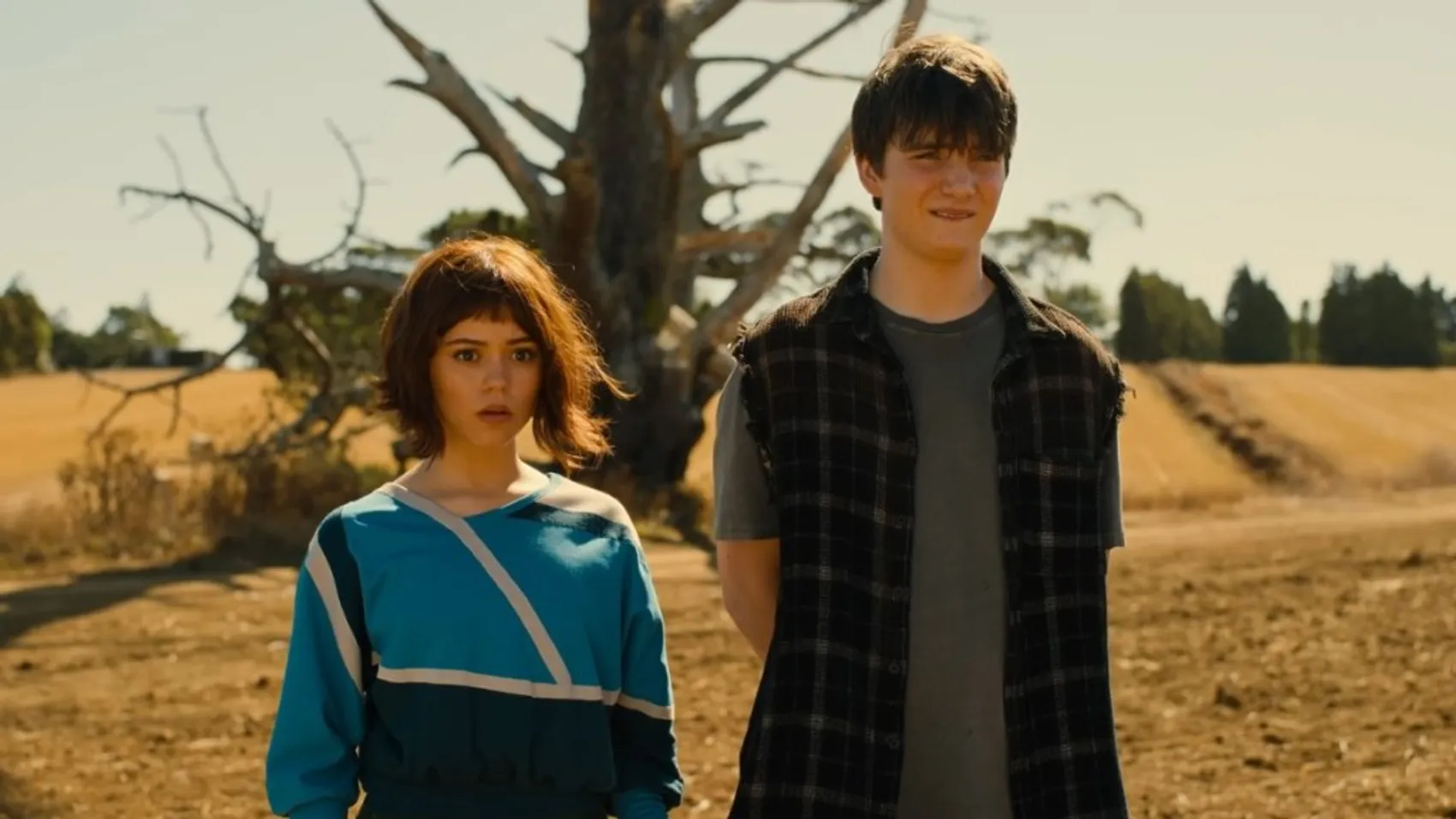
The movie’s visual choices are also part of the experience. The warm landscape, the sunlight through domestic spaces and the mixture of futuristic design with old-fashioned textures allow the world to feel both familiar and alien. That contrast may be a more effective adaptation of Klara’s perception than any amount of explanatory dialogue.
Klara and the Sun (2026) cast
| Actor | Character |
|---|---|
| Jenna Ortega | Klara, a solar-powered Artificial Friend |
| Mia Tharia | Josie, the teenager who befriends Klara |
| Amy Adams | Chris, Josie’s mother |
| Aran Murphy | Rick |
| Steve Buscemi | Principal supporting cast |
| Natasha Lyonne | Principal supporting cast |
Sony’s official cast listing confirms the six headline performers. Additional character information is not consistently supplied for every supporting actor, so this guide does not fabricate hidden roles or late-plot developments. The central family-and-companion triangle provides the strongest throughline in the material that has been released.
Klara and the Sun reviews: a difficult first reception
The film’s world premiere at the BFI London Film Festival on October 15 produced some of the season’s most sharply critical responses to a literary adaptation. Several major British publications found the movie’s tone uncomfortable, arguing that Waititi’s instinct for accessible humor and overt emotion does not suit Ishiguro’s sparse novel.
The Independent reported a particularly harsh opening reception, with a small early Metacritic sample placing the movie near the bottom of the critical range. Such early aggregates should be treated as a snapshot of a limited group of reviews, not as an immutable final score.
The Guardian review strongly rejected the adaptation, describing its treatment of grief, faith and artificial life as too sentimental. It criticized the film for losing the disciplined ambiguity of the source while failing to establish a comparably meaningful alternative.
The reaction was not uniformly negative. Screen Daily found an engaging, visually imaginative fable with strong performances, even as it questioned the decision to open up the narrative beyond Klara’s perspective. Flickering Myth awarded three stars out of five and warmly praised Ortega and the film’s emotional sincerity.
That split makes the critical argument unusually interesting. Most reviewers are asking whether the film is faithful to the spirit of the novel rather than whether it copies every scene. The harshest reviews think something irreplaceable has disappeared; the more positive responses find a different, approachable fable in its place.
It would be misleading to present either the most severe one-star review or the most generous festival reaction as the consensus of everyone who will see the film. Wide release is scheduled for October 23, and audience opinion, box office and review aggregates will evolve after the initial screenings. For that reason this review does not assign an invented first-person star rating.
Where to watch Klara and the Sun (2026) legally
The film has already premiered at the BFI London Film Festival, but the US theatrical opening is October 23, 2026. Official tickets and showtime information are available through Sony’s movie website. Some international territories begin screening on October 21 or 22, while Germany is scheduled for October 29. Country-specific release dates must be checked locally.
As of October 20, Sony has not announced a confirmed date for the film’s digital rental, purchase, or subscription-streaming debut in the official material reviewed here. No legitimate full free stream should be assumed to exist merely because Sony published promotional clips and an official video online.
For readers looking for other cinema releases and streaming alternatives, our English October 2026 movie release guide covers a wider selection, while the October horror and TV guide explores a different mood. These are editorial recommendations, not promises of full-length films on our site.
Is Klara and the Sun worth watching?
Klara and the Sun is worth considering if you enjoy thoughtful science fiction, intimate family stories, and unusual performances from familiar actors. Its most attractive element is the idea of a compassionate artificial observer who may understand certain human needs better than the people around her.
The early critical response also raises a significant warning. If your favorite part of Ishiguro’s novel is the ambiguity of its narrator and the extraordinary restraint of its prose, the film may feel too sentimental. That is not a minor objection: it concerns the foundation of the source material.
Yet an adaptation can be moving to viewers who have never read the book. Ortega’s warmth, Adams’ dramatic presence and the film’s sun-filled imagery may create an appealing experience on their own terms. Accepting that possibility does not require ignoring the flaws identified in the festival reviews.
The fairest provisional verdict is therefore conditional. View it as a different interpretation of the same emotional question, not a frame-by-frame translation of the novel. Come for a distinctive leading performance and the discussion it inspires; allow yourself to judge whether the movie’s hopeful tone feels earned.
Frequently asked questions about Klara and the Sun
When does Klara and the Sun come out?
Its world premiere took place on October 15, 2026 at the BFI London Film Festival. The US theatrical release is scheduled for October 23.
What is Klara and the Sun about?
Klara, an Artificial Friend, becomes a companion to Josie, a teenager whose family is grieving and struggling to reconnect.
Who plays Klara?
Jenna Ortega stars as the solar-powered android Klara.
Who directed the movie?
Taika Waititi directed and co-wrote the screenplay with Dahvi Waller.
Is Klara and the Sun based on a book?
Yes. It adapts Kazuo Ishiguro’s 2021 novel of the same name.
Who plays Josie and her mother?
Mia Tharia plays Josie, while Amy Adams portrays her mother, Chris.
Why have reviews been mixed?
Some critics say the adaptation replaces the novel’s subtle perspective with heavy sentiment; other reviewers praise its visuals and Jenna Ortega’s performance.
How long is Klara and the Sun?
The reported runtime is 116 minutes, or one hour and 56 minutes.
What is the US age rating?
PG-13, for thematic material, some violence and strong language.
Where can I watch the full movie?
The confirmed release is theatrical. Sony has not announced an official subscription or digital rental release date as of October 20, 2026.
Sources and editorial disclosure
Production information, release date and cast were verified through Sony Pictures and Sony Pictures Deutschland; filmmaker context and festival reporting through Reuters. Attributed critical reactions are from The Guardian, Screen Daily and Flickering Myth. Details current as of October 20, 2026. This preview does not claim a personal screening or reveal the ending.
Film imagery © Sony Pictures / Columbia Pictures. Promotional stills are credited individually, and the rights remain with their respective owners.
1 thought on “Klara and the Sun (2026) Review: Jenna Ortega, Story and Cast”