
Blade Runner 2049 ending explained: Denis Villeneuve’s 2017 science-fiction sequel follows Officer K (Ryan Gosling), a replicant tasked with hunting other replicants, as he discovers evidence that a replicant once gave birth. What begins as a police investigation becomes a search for identity, purpose and a daughter hidden in plain sight. The final moments — K lying in the snow while Rick Deckard reunites with Dr. Ana Stelline — offer the movie’s emotional answer to the question of what makes someone human.
Full spoilers ahead. This guide explains whether K dies, who Deckard’s daughter really is, why the wooden horse matters, what the giant Joi advertisement means, and why the film ends with falling snow.
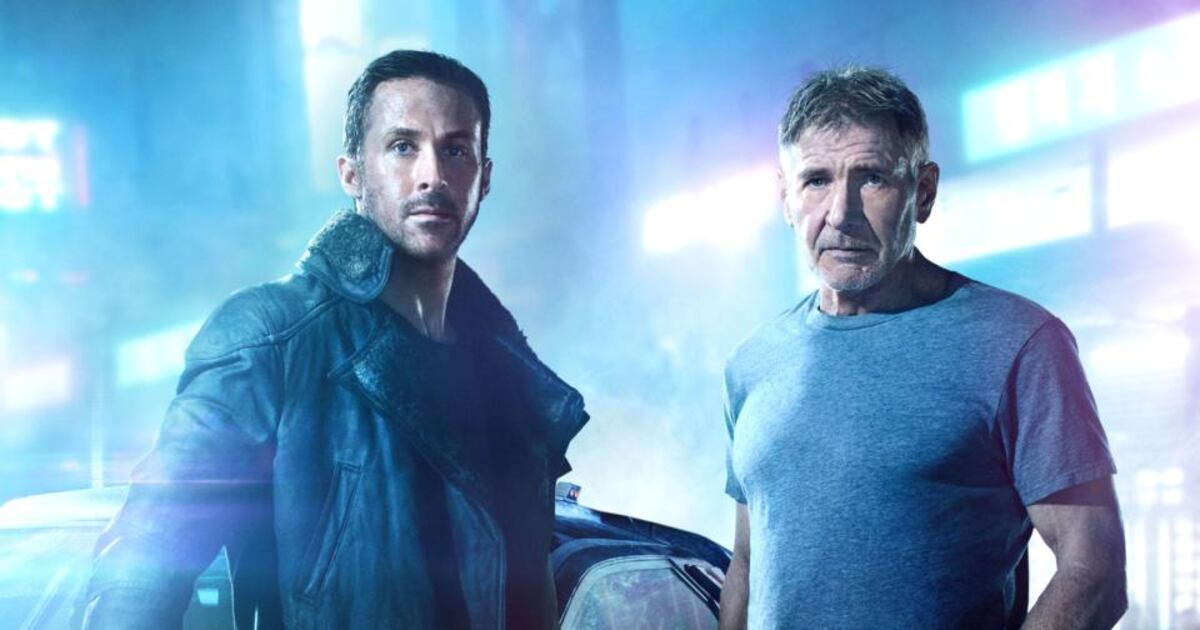
Blade Runner 2049 ending explained in brief
K is not the miracle child. He is a Nexus-9 replicant who has been given someone else’s genuine childhood memory. The child born to Rachael and Rick Deckard is Dr. Ana Stelline (Carla Juri), the memory designer K consults during his investigation. When K learns the truth, he chooses to save Deckard anyway. He defeats Luv, fakes Deckard’s death and brings him to Ana. K collapses outside in the snow, apparently dying from his injuries, while Deckard enters the laboratory to meet his daughter.
The crucial distinction is that K’s heroism does not depend on having a special biological origin. He becomes extraordinary through a choice he makes after learning he is not the person he hoped to be.
Who is K in Blade Runner 2049?
For readers searching for Blade Runner 2049 ending explained, K’s status as a replicant is central: his choices matter even after the mystery of his birth is resolved.
Officer KD6-3.7, known as K, works for the LAPD as a blade runner. He is a replicant designed to obey orders, and his job is to find and “retire” older replicants. His superior, Lieutenant Joshi (Robin Wright), trusts his obedience. But his investigation into Sapper Morton’s farm uncovers the remains of a female replicant who died in childbirth — something the powerful Wallace Corporation believes should be impossible.
That discovery threatens the established division between humans and replicants. If replicants can reproduce, they are not merely manufactured property; they can create families and pass on life. The evidence points to Rachael, the replicant who escaped with Deckard after the events of the original Blade Runner (1982).
Is K Deckard’s son? The wooden horse mystery
For much of the film, K believes he may be the missing child. He remembers hiding a carved wooden horse in a furnace at an orphanage. Later, he finds the same horse in the place he remembers. Because replicants usually receive implanted memories, the physical object makes his memory seem like proof of a real childhood.
Dr. Ana Stelline, who designs memories for replicants, confirms that the memory is authentic: someone truly lived it. K interprets this as evidence that he was born rather than manufactured. The story invites the viewer to accept the same conclusion, partly because science-fiction protagonists are so often secretly chosen ones.
But the film then overturns that assumption. Freysa, a leader of the replicant resistance, tells K that Rachael gave birth to a girl, not a boy. The wooden-horse memory belongs to Ana Stelline, who unknowingly led K toward her own hidden identity through the memories she created.
Who is Deckard’s daughter in Blade Runner 2049?
Dr. Ana Stelline is the daughter of Rick Deckard and Rachael. She lives in an isolated laboratory and works as a memory designer. Her supposed immune-system condition keeps her separated from the outside world, which also helps protect her identity. Deckard has spent decades apart from her because he feared that anyone seeking the secret of replicant reproduction would use him to find her.
The altered birth records, including the false trail involving twins, were meant to hide the child. K’s mistake is understandable: he carries Ana’s genuine memory, but having a real memory is not the same thing as having personally lived it.
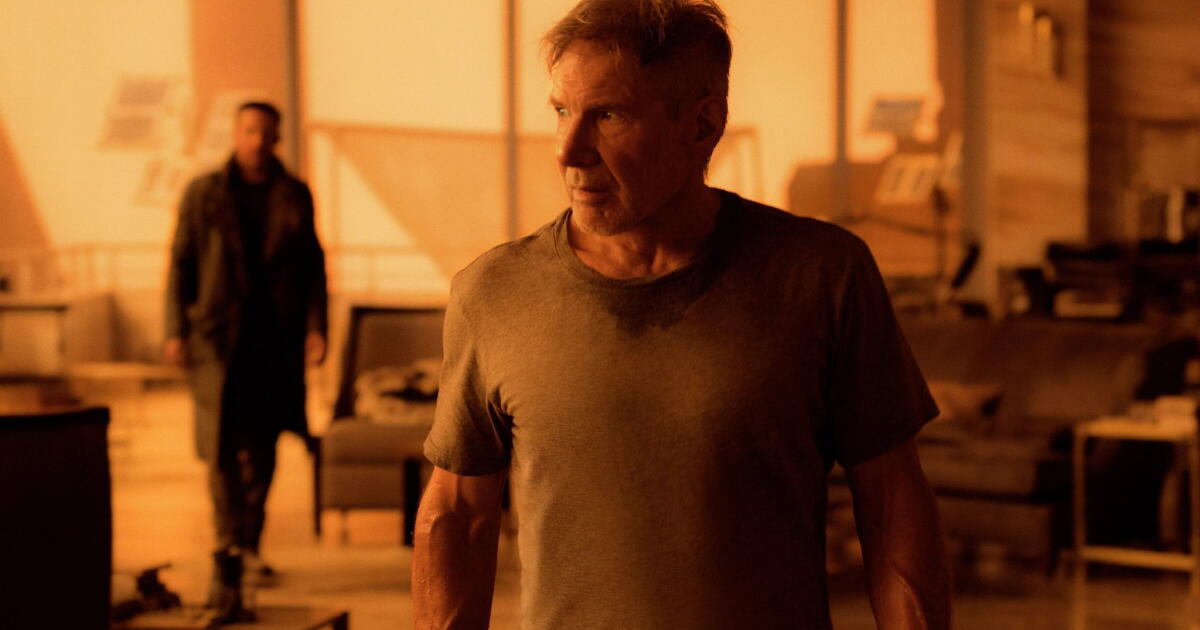
Does K die at the end of Blade Runner 2049?
The key question in any Blade Runner 2049 ending explained discussion is whether K’s final scene shows his death or leaves room for survival.
The ending strongly indicates that K dies on the steps outside Ana Stelline’s laboratory. He has suffered serious injuries during his fight with Luv and lies still as snow falls onto his face. The film does not show a medical confirmation or a funeral, but it presents the scene as the end of his journey rather than a pause before another mission.
Importantly, K dies after he has rejected the orders of both the police and the replicant resistance. Joshi wanted the child erased to preserve order; Freysa wanted Deckard killed to protect the secret. K instead saves Deckard and gives him a chance to meet his daughter. That act is his own.
Whether a replicant has a human soul is never resolved through a laboratory test. K’s sacrifice makes the question feel less important than his capacity for empathy and moral independence.
Why does K save Deckard instead of killing him?
Freysa argues that killing Deckard is necessary because Niander Wallace (Jared Leto) could force him to reveal his daughter’s whereabouts. K finds a third option. He intercepts the transport carrying Deckard, fights and kills Wallace’s enforcer Luv, then stages Deckard’s death so the authorities will stop searching for him.
Rather than using Deckard as a symbol in a revolution, K treats him as a father who deserves to see his child. This is where the film’s idea of humanity becomes most direct: K is not biologically special, but he chooses compassion when other characters choose control.
What does the snow mean in Blade Runner 2049?
Another important detail in a Blade Runner 2049 ending explained analysis is the contrast between simulated snow and the real snow K experiences.
Snow is the final visual contrast in a movie filled with artificial light, toxic rain and manufactured memories. Inside Ana’s sterile enclosure, snow is something she can simulate. Outside, K experiences real snow falling on his face. The parallel links two characters whose lives intersect through memory but who have never shared the same childhood.
The image is also a moment of stillness after a story of constant pursuit. K no longer needs to prove he is Rachael’s son, pass a baseline test or obey someone else’s definition of his purpose. The falling snow can be read as a symbol of freedom, mortality and the difference between experiencing the world and merely reproducing its appearance.
There is no single spoken explanation for the snow, and it should not be treated as a hidden code. Its emotional effect comes from the contrast between the artificial world and a simple, fleeting natural experience.
What does the giant Joi advertisement mean?
Earlier in the film, K’s holographic companion Joi (Ana de Armas) calls him “Joe,” encouraging him to believe he has a personal identity beyond his serial number. After Joi’s portable emitter is destroyed, K encounters an enormous advertisement for the same AI product. The commercial version uses the same intimate language, exposing how a seemingly unique relationship can be mass-produced.
The scene does not necessarily prove that every feeling Joi expressed was fake. It does, however, challenge K’s belief that affection alone confirms his specialness. He must decide who he is without relying on a lover, an implanted memory or a prophecy to tell him.
That realization helps prepare his final decision: he can do something meaningful even if no one has chosen him to do it.
Is Deckard a replicant or a human?
Blade Runner 2049 deliberately leaves Deckard’s nature ambiguous. Niander Wallace raises the possibility that Deckard and Rachael’s relationship was engineered, but he does not provide definitive proof that Deckard is a replicant. The sequel is more interested in what Deckard does as a father than in giving viewers a laboratory answer about his biology.
For the story’s central themes, the uncertainty matters: a father’s love and a daughter’s existence carry emotional weight regardless of how the father was made.
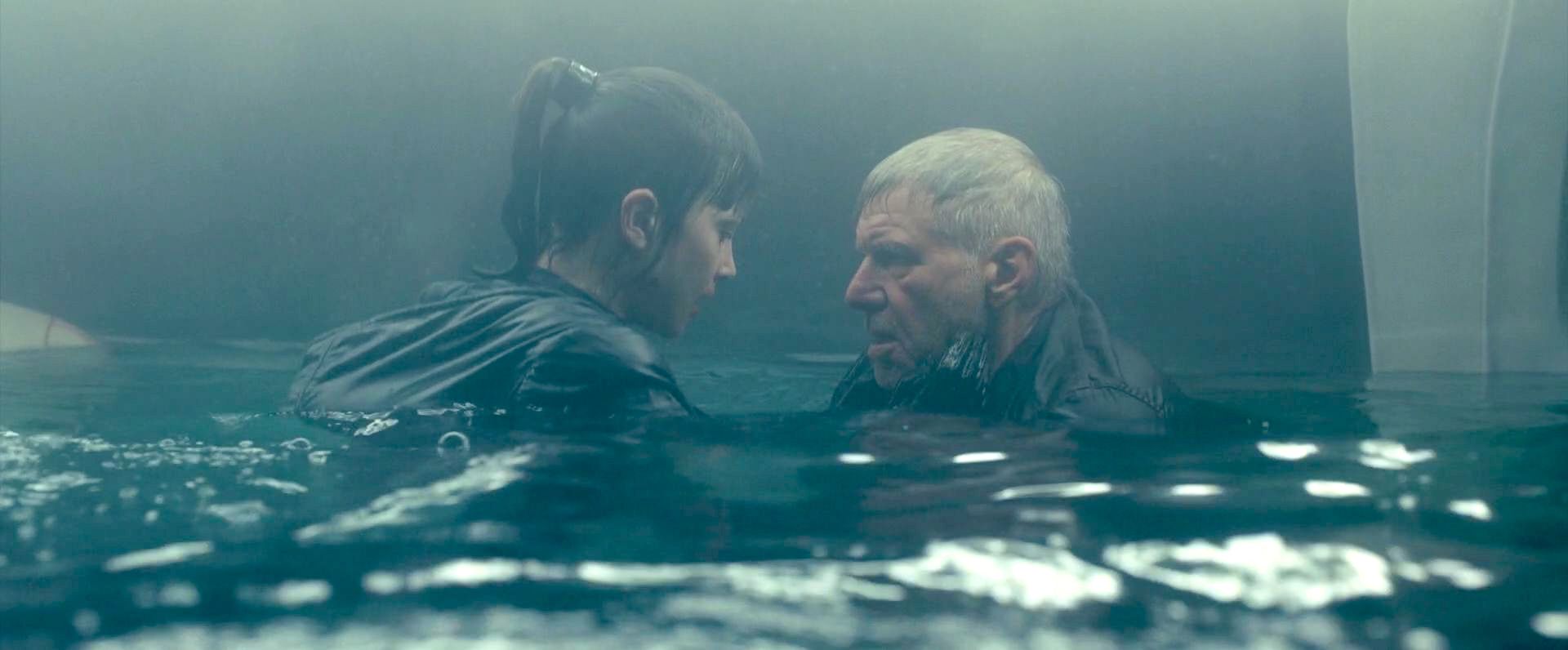
Why is Ana Stelline so important?
Ana is living evidence that replicants can reproduce, a discovery with enormous consequences for the world’s power structures. Wallace wants to reproduce the process at scale, while the replicant resistance sees the child as proof that their people are more than manufactured labor. Both sides risk reducing Ana to what she represents.
K’s decision restores something more personal: she is also a daughter, and Deckard is a father. Their reunion matters not because it settles the political conflict, but because it allows a human relationship to exist beyond that conflict.
Blade Runner 2049 official trailer
Watch the official Blade Runner 2049 trailer from Sony Pictures Releasing UK. The 2017 film was directed by Denis Villeneuve and stars Ryan Gosling, Harrison Ford, Ana de Armas, Sylvia Hoeks, Robin Wright and Jared Leto.
Blade Runner 2049: frequently asked questions
Is K a human in Blade Runner 2049?
No. K is a Nexus-9 replicant. His moral choices, rather than his biological origin, are the center of the film.
Is K the child born to Rachael?
No. Rachael’s child is Ana Stelline. K carries one of Ana’s real childhood memories.
Who made the wooden horse?
The horse belongs to Ana’s childhood memory and is a clue to her identity. K finds the object at the orphanage, mistakenly believing the memory proves he lived there.
Does Deckard meet his daughter?
Yes. K brings Deckard to Ana’s laboratory, and the final sequence shows Deckard entering to meet her.
Does Joi really love K?
The film leaves the question open. The advertisement reveals that Joi’s intimate language is part of a commercial product, but viewers can still debate whether genuine attachment can emerge from programming.
Is there a Blade Runner 2049 post-credits scene?
No major post-credits scene is needed to understand the ending. The final image of K in the snow is the movie’s conclusion.
Final interpretation: why the ending matters
The meaning of the Blade Runner 2049 ending is that identity is not the same as destiny. K spends much of the film believing he is the one extraordinary child who could change the world. When he learns he is not, he finally acts freely. He chooses to save a father, protect a daughter and let someone else’s story continue. That choice makes him heroic without requiring him to be human — or even uniquely born.
For the official film synopsis and production details, see Sony Pictures. For more English-language movie reviews and explanations, explore our Reviews section.