
Saving the world does not necessarily give someone back the home they lost. Avatar Aang: The Last Airbender (2026) returns to a hero whose responsibility to others exists alongside a deeply personal need: preserving the culture of the Air Nomads. The film’s announced quest brings those two concerns together.
This detailed guide covers the confirmed story, the returning team, the film’s place in the animated franchise and legitimate viewing options. It is an analysis of official story and publicity materials, rather than a scene-by-scene recap or a claim to have reviewed the full film.
Contents
Avatar Aang: The Last Airbender — essential facts
Avatar Aang: The Last Airbender is an animated feature directed by Lauren Montgomery, with Steve Ahn and William Mata as co-directors. Paramount+ lists a runtime of 98 minutes and a US PG classification. Its current release title differs from the earlier The Legend of Aang: The Last Airbender branding.
The title belongs to the animated Avatar world, not James Cameron’s science-fiction franchise. It is also distinct from Netflix’s live-action television adaptation. Knowing which version you are choosing avoids misleading expectations about format and continuity.
Story: a power that could restore a culture
Aang learns of an ancient power that could save his culture from extinction. His friends join a global quest to find it before someone else can use it to threaten the peace they fought to achieve. That is the confirmed starting point supplied by Paramount; the publicity synopsis does not establish the ending.
The premise gives the search both an intimate and a public purpose. Aang has a personal reason to want the discovery, but the consequences extend beyond him. A promising adventure can emerge from the gap between what a hero hopes to recover and what everyone else might risk.
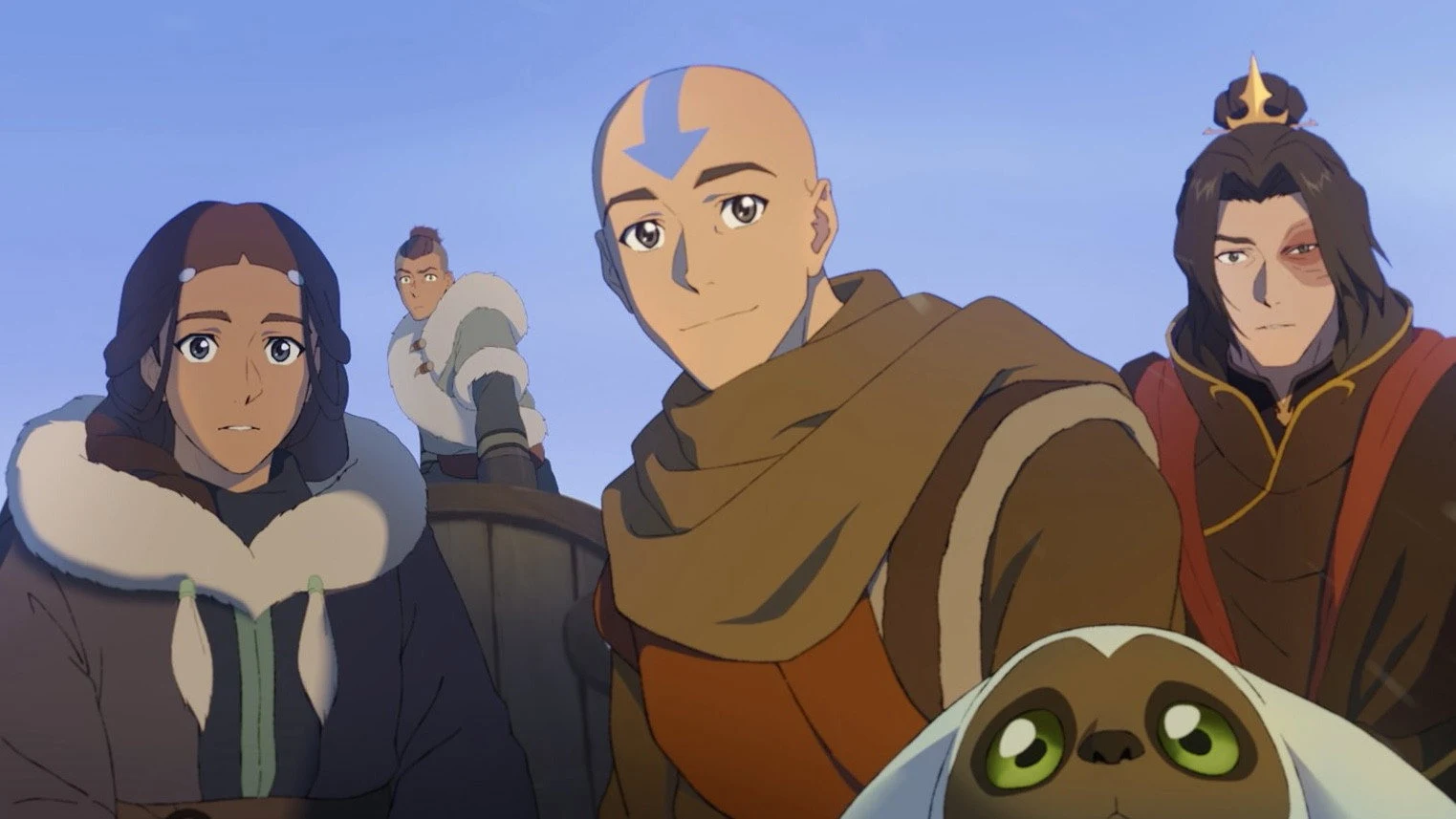
Why the Air Nomad legacy matters
A culture is more than a power someone can demonstrate. It includes memory, habits, teaching and the possibility of passing something on. Reading the announced quest through that distinction makes Aang’s goal more specific than a generic search for a stronger weapon.
Survival and restoration are different ideas. A person may keep a tradition alive without being able to rebuild everything that was lost. The official premise opens space for that question, although it does not tell us how the film resolves it. Treating the possibility as a theme keeps interpretation separate from an invented plot summary.
The team and the meaning of shared responsibility
The returning group matters because an emotionally charged goal can narrow one person’s perspective. Friends may share the commitment while asking questions that the person closest to the loss finds difficult. This is a useful way to approach the ensemble without assuming a particular argument or betrayal occurs.
An ensemble adventure also creates different kinds of contribution. Combat ability is only one of them; judgement, observation and an ability to communicate can be equally important. After watching, it is worth asking whether each character changes the course of the search, rather than simply recognising familiar faces.
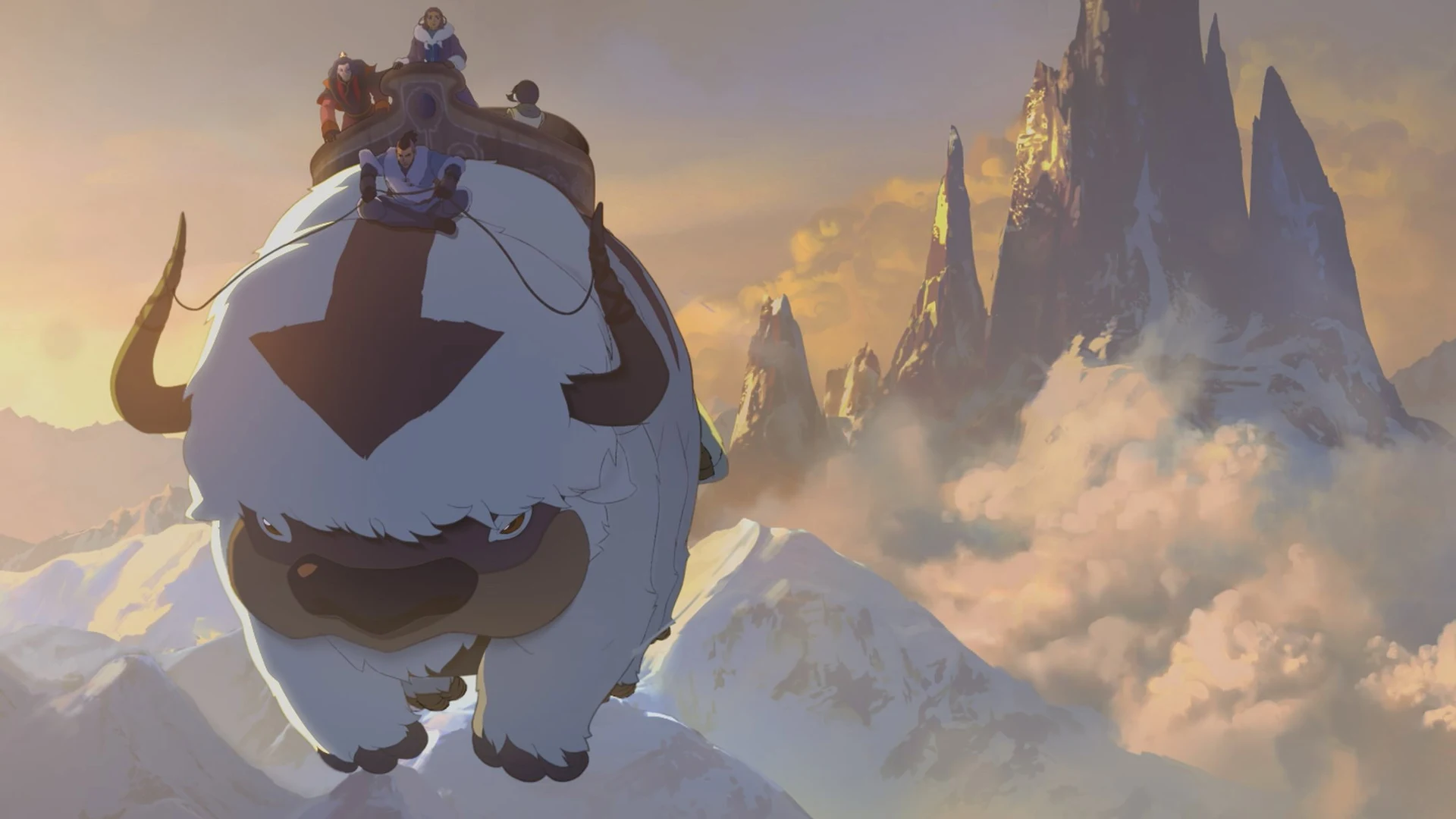
How this fits the animated Avatar universe
The feature is based on the animated series created by Michael Dante DiMartino and Bryan Konietzko. Familiarity with that series provides the background for Aang’s cultural loss and the group’s shared history. It is a stronger starting point than treating this as a remake of the first television season.
New viewers can understand the basic quest from the synopsis, but understanding a goal is not the same as understanding its emotional weight. Watching the original series first gives the returning characters more context. No precise year in the in-universe timeline is asserted here without a corresponding official source.
Animation and the official images
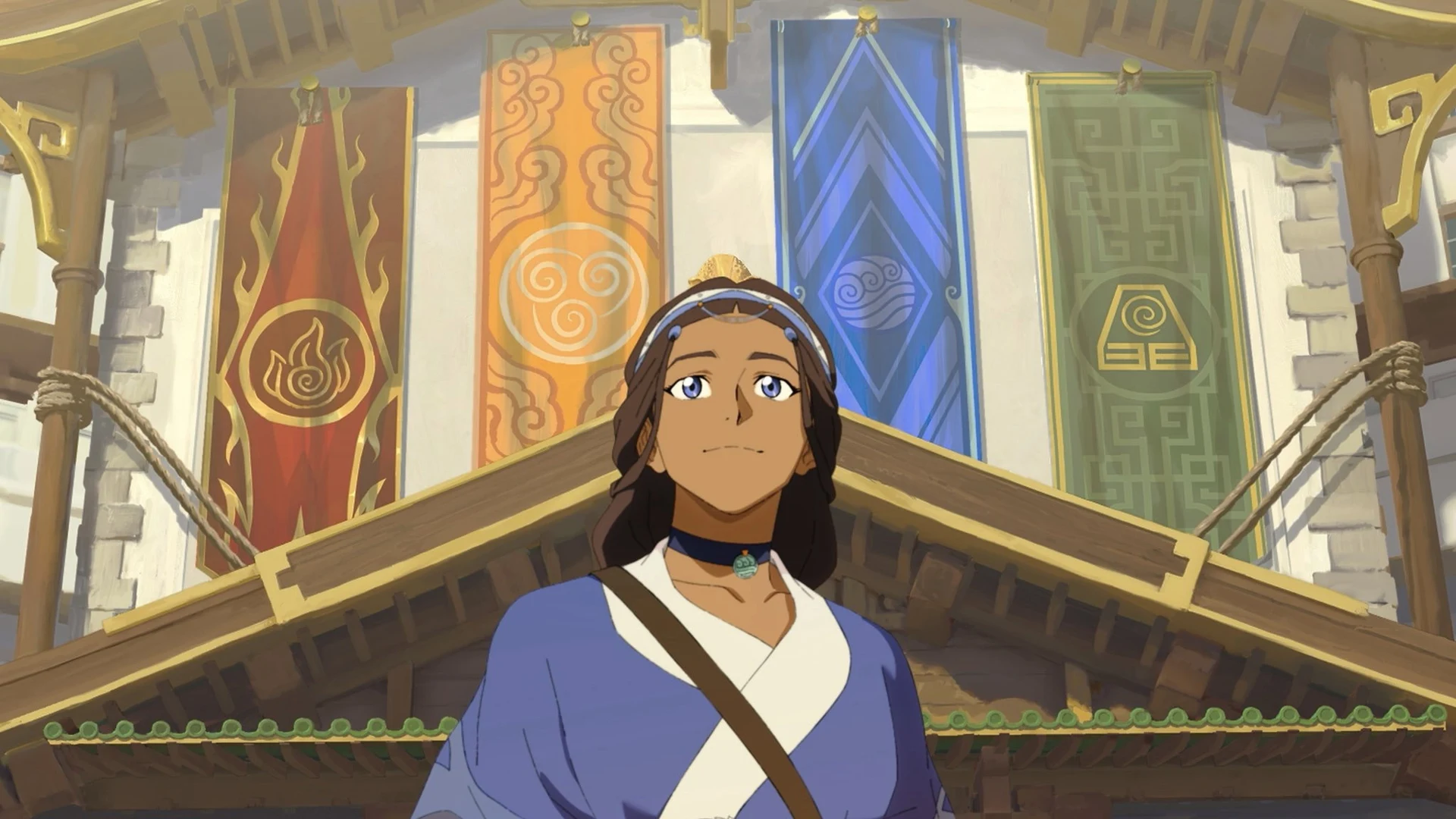
The images accompanying this guide introduce the feature’s visual world: characters are presented through clear silhouettes, varied settings and group compositions. A still is useful for observing colour and framing, but cannot establish the rhythm of an action sequence or the quality of a complete performance.
A useful viewing question is whether bending remains readable as an action: can you follow a character’s intention and the effect on the environment? Spectacle becomes easier to engage with when each movement has a purpose. This is a criterion for watching, not a pre-written verdict about the completed film.
Voice cast and creative team
The official cast includes Eric Nam as Aang, Jessica Matten as Katara, Román Zaragoza as Sokka, Dionne Quan as Toph, Steven Yeun as Zuko and Dave Bautista as Tagah. Dee Bradley Baker returns as Appa and Momo. Additional voices include Freida Pinto, Ke Huy Quan, Taika Waititi and Geraldine Viswanathan.
Lauren Montgomery directs, with Steve Ahn and William Mata co-directing. Tim Hedrick and Christopher Yost are credited for the screenplay. Bryan Konietzko and Michael Dante DiMartino are among the producers, preserving a direct creative connection to the original animated property.
Release date and where to watch
The Paramount+ premiere took place on July 25, 2026. A July press announcement confirms that date, while the current service page offers the complete 98-minute film. Earlier October release references should not be treated as the current premiere date.
Paramount Movies also lists digital retail options. Availability, subscription terms, audio tracks and prices vary by territory. A Paramount+ account in one market does not guarantee that the same catalogue is available elsewhere; consult the local title page before subscribing or buying.
Questions to discuss after watching
Does the search change what Aang considers a successful outcome? Do the friends have room to challenge him while remaining loyal? Does the film distinguish recovering a power from preserving a community? These questions connect action to meaning without assuming an answer before a viewing.
For a family conversation, start with a concrete moment each viewer remembers. Asking why a choice mattered often leads further than asking whether a character was simply right or wrong. The franchise’s appeal offers an opportunity to discuss how care for one’s own group can coexist with responsibility to others.
For another film about inherited identity and relationships, read the Practical Magic 2 guide.
Frequently asked questions
Why the Air Nomad legacy matters?
A culture is more than a power someone can demonstrate. It includes memory, habits, teaching and the possibility of passing something on. Reading the announced quest through that distinction makes Aang’s goal more specific than a generic search for a stronger weapon.
How this fits the animated Avatar universe?
The feature is based on the animated series created by Michael Dante DiMartino and Bryan Konietzko. Familiarity with that series provides the background for Aang’s cultural loss and the group’s shared history. It is a stronger starting point than treating this as a remake of the first television season.
Sources
Checked October 14, 2026: Paramount Press Express, Paramount+, Paramount Movies, Avatar Legends — official trailer.
1 thought on “Avatar Aang: The Last Airbender (2026): Movie Guide, Story and Where to Watch”