
A movie star’s attempt at a comeback collides with a group that treats saving the world as a literal, violent mission. Sacrifice (2026) brings Chris Evans and Anya Taylor-Joy into Romain Gavras’s darkly comic thriller. Netflix confirms an October 16 streaming release in the United States and France.
This preview explains the verified premise, regional release details, principal cast and the ideas suggested by the official publicity. It includes three genuine Netflix images. The film’s ending and specific outcomes are left untouched, and the discussion is not presented as a verdict from a complete viewing.
Contents
Sacrifice at a glance
Sacrifice is a feature film directed by Romain Gavras and written by Gavras and Will Arbery. Netflix lists it across comedy, drama and thriller categories. That combination matters: the hostage premise is promoted alongside satire and mythic imagery, rather than as a straightforward account of an ordinary criminal operation.
| Format | Feature film |
| Director | Romain Gavras |
| Screenplay | Romain Gavras and Will Arbery |
| Genres | Dark comedy, drama, thriller |
| Netflix release | October 16, 2026 — United States and France |
| Principal stars | Chris Evans and Anya Taylor-Joy |
| US-facing rating | R |
The release announcement is regional. October 16 is explicitly confirmed for Netflix in the United States and France; it should not be silently converted into a worldwide availability claim. Check the title page in your own country before planning a viewing outside those markets.
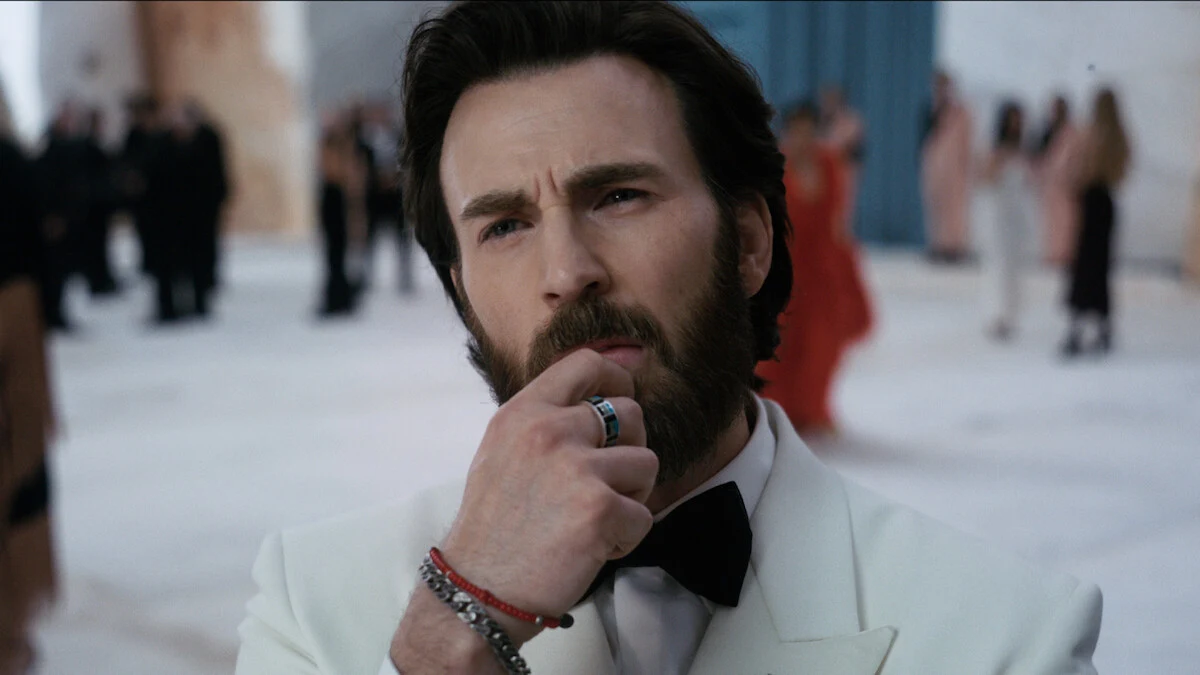
Sacrifice release date and where to watch
Netflix’s official Tudum feature confirms October 16, 2026, for the US and French streaming release. The information in this preview was checked on October 14. A title appearing in an October calendar is useful confirmation of the planned launch, but it is not evidence that playback is already available beforehand.
Sacrifice carries an R rating on the US-facing Netflix listing. That is a regional classification, not a universal age label. If you are arranging a group viewing, check the local maturity information and playback page rather than relying on a rating displayed for another territory.
The official materials checked here do not provide a single unambiguous runtime: embedded Tudum listings have displayed approximately 100–101 minutes. This guide therefore avoids treating one minute-level figure as definitive. The current playback card is the practical place to confirm length when the film becomes available.
The plot without ending spoilers
Chris Evans plays Mike Tyler, an actor trying to recover his standing. A glamorous environmental charity event becomes a hostage situation when Joan, played by Anya Taylor-Joy, arrives with devoted followers. Their beliefs connect the threatened gathering to a volcano and an impending catastrophe. That is the broad official setup.
Sacrifice draws immediate tension from a collision between public image and conviction. A charity event asks its participants to display concern, while the intruding group brings an extreme understanding of what concern requires. The announced premise gives both sides a relationship with performance, though their purposes are radically different.
This does not establish that the film endorses the group’s beliefs or resolves the conflict in a particular way. A character’s certainty belongs to that character. Treating a fictional claim as the film’s own conclusion would close down the very questions that a satire may be exploring.
The preview also does not explain who survives, what the volcano ultimately means or how Mike responds at the climax. Those would be story outcomes, not background information. The appeal of the setup can be discussed without converting a publicity campaign into an invented ending explanation.
An actor caught between image and action
Sacrifice places a performer in circumstances where playing a convincing part may no longer be enough. That is a useful starting point for interpretation: the distinction between seeming brave and acting responsibly becomes especially interesting when a person’s career depends on creating appearances.
Mike’s announced comeback ambition also changes the meaning of attention. Public recognition can be the thing an actor wants most and a source of danger when a crowd singles him out. The premise invites viewers to consider what happens when visibility stops being something a celebrity can manage.
After watching, one question is whether the story allows him to step outside a familiar image of himself. Does he respond to other people as individuals, or interpret every event as another scene in his own career? This is a discussion prompt derived from the setup, not an assertion about his completed character arc.
The most interesting version of such a conflict would need more than embarrassment. If a film asks us to reconsider a public persona, the alternative should have consequences: choices, obligations or a changed relationship with someone else. Viewers can assess that through the complete film, without demanding a conventional redemption story in advance.
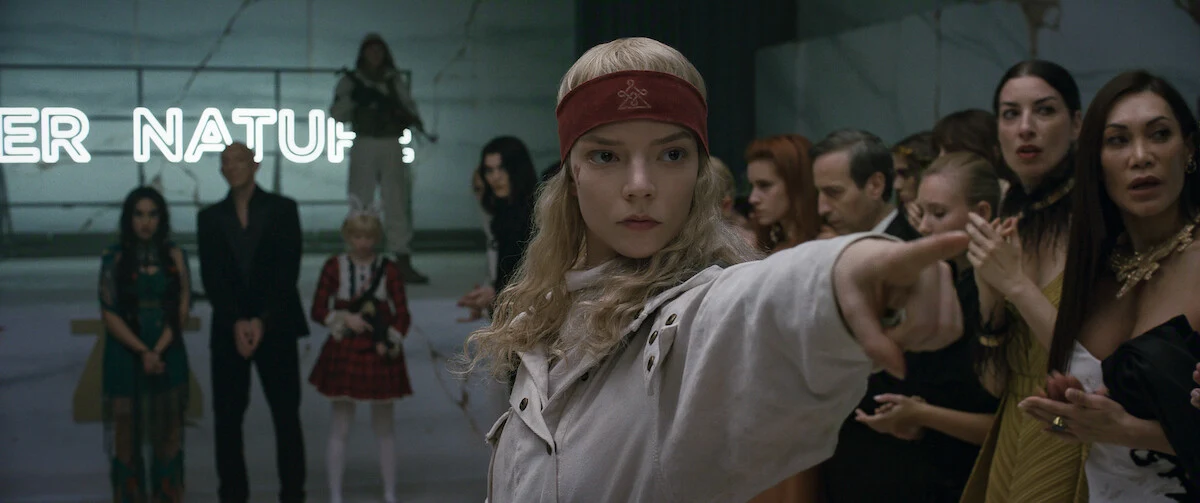
Joan, belief and the problem of certainty
Joan’s role in the official premise is to turn a polished event into an immediate crisis. Her conviction creates a stark contrast with the gathering’s social rituals. Yet intense belief and a sound moral argument are different things, and the preview does not equate one with the other.
Sacrifice offers a way to ask how certainty behaves in a group. A shared explanation of the world can make people feel connected, but it may also restrict what they are allowed to question. In a thriller, that tension can become physical: disagreement has implications for who is free to leave or speak.
When discussing Joan after viewing, consider how the film distinguishes motivation from justification. Understanding why someone acts does not require accepting the action. That distinction can preserve the complexity of a character without turning violence into a shortcut to importance.
Another question concerns the people around a forceful leader. Do they possess individual perspectives, or function mainly as extensions of a single voice? The answer would affect the relationship between the film’s ensemble and its central confrontation. Official stills alone cannot resolve it.
Cast and creative team
The principal cast includes Chris Evans, Anya Taylor-Joy, Vincent Cassel, Ambika Mod, Sam Richardson, Yung Lean, Jade Croot, Miriam Silverman, John Malkovich and Salma Hayek. Netflix’s publicity also identifies Charli xcx in the film. These names describe the announced ensemble, without implying equal screen time.
Confirmed central roles include Mike Tyler for Evans and Joan for Taylor-Joy. Gavras directs, with a screenplay credited to him and Will Arbery. Other character assignments are best taken from the official credits rather than guessed from a publicity caption, especially where different promotional descriptions use different labels.
Sacrifice’s cast brings together performers associated with different screen images. That creates an interesting possibility for satire, because the viewer arrives with expectations. But casting is a starting condition, not a completed achievement: timing, relationships and tonal control have to be judged in the finished work.
Myth, spectacle and dark comedy
Netflix’s feature discusses mythology as part of Gavras’s approach to the project. It does not identify Sacrifice as a direct adaptation of one particular ancient text. The safer distinction is between drawing on mythic ideas and reproducing a specific source story with fixed events and characters.
For a viewer, that distinction affects expectations. A mythic register can allow exaggeration, symbolic situations and striking oppositions. It does not require every moment to behave like realistic procedural drama. At the same time, symbolism becomes less useful if it removes the human stakes entirely.
Sacrifice can therefore be approached through a practical question: what is the spectacle doing to your understanding of the people? An imposing setting or a violent interruption can expose hypocrisy, produce fear or simply overwhelm. After viewing, compare the emotional effect with the argument the scene seems to make.
Dark comedy also relies on where a film places its audience. A joke about self-importance can feel very different from a joke at the expense of someone without power. Paying attention to that direction makes a discussion more precise than saying the humour is merely provocative.
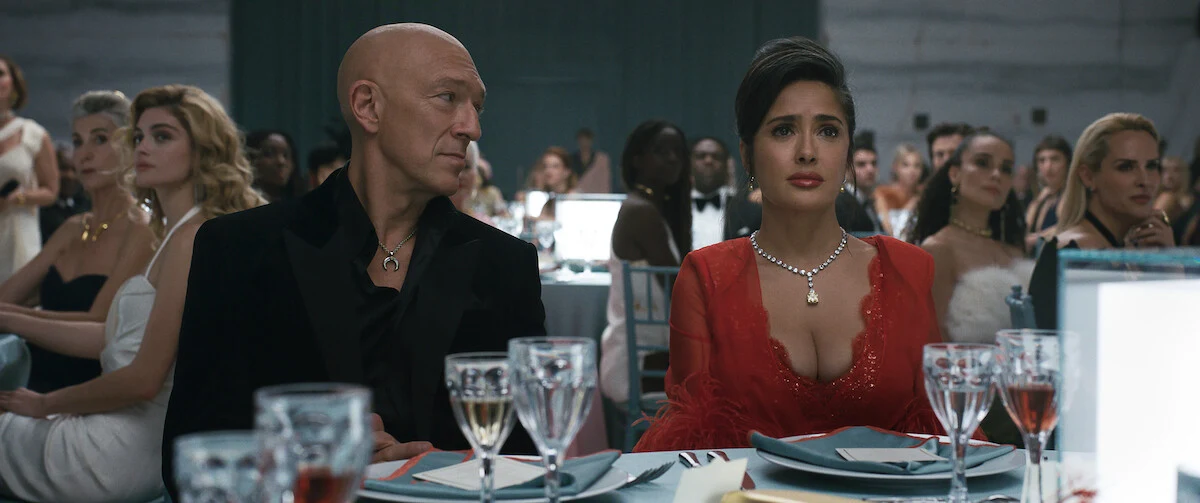
Official photographs and trailer
The images here come from Netflix’s Tudum feature. They show Evans in formal clothing at the event, Taylor-Joy addressing people in a crowded interior, and Cassel and Hayek seated among guests. They establish concrete publicity imagery without proving how these moments follow one another in the full story.
An official Sacrifice trailer is available through the same Netflix feature. It is the most direct way to assess the promoted mixture of tension, exaggeration and humour. A trailer’s tone can help you decide whether to investigate a film, even though its compressed edit cannot guarantee the complete viewing experience.
The contrast between formal dress and the disruption of the gathering is already visible in these photographs. Their restrained colour palette and crowded spaces offer a first impression of the film’s promoted visual world. Captions identify each image’s official source.
Who might enjoy Sacrifice?
Sacrifice is worth considering if you like dark comedy that places public rituals under pressure, morally uncomfortable characters and thrillers with an exaggerated or symbolic register. Viewers seeking a restrained, documentary-like hostage drama should watch the trailer first: the announced genre combination suggests a different approach.
For another upcoming Netflix title with secrets and a gathering under pressure, the Swedish The Storm offers a different premise and scale. On KINOLIST, you can also explore the Animals guide or the The Final Problem overview for other suspense-oriented viewing.
Frequently asked questions
When does Sacrifice arrive on Netflix?
Netflix confirms October 16, 2026, in the United States and France. Availability elsewhere should be checked locally.
Is Sacrifice a series?
No. This is the Romain Gavras feature film starring Chris Evans and Anya Taylor-Joy. It should not be confused with separately titled productions such as Blood Sacrifice.
Is it based on a true story?
The official feature discusses mythic inspiration rather than presenting the project as a reconstruction of a real hostage incident.
Does this guide explain the ending?
No. It covers the announced premise, release information and themes to consider, leaving outcomes for the viewing itself.
Sources and preview scope
Checked October 14, 2026. Sources: Netflix Tudum’s official feature, the Netflix title page and the official autumn film preview. Photographs: Netflix / Tudum.
Sacrifice’s clearest promise is the collision between a world accustomed to performing concern and people determined to make belief materially consequential. How the film judges that collision remains a question for the complete viewing. This article offers a sourced preview and editorial interpretation, without manufactured outcomes or a fabricated review score.
2 thoughts on “Sacrifice (2026): Complete Movie Preview, Cast and Netflix Release Date”