
Monster: The Lizzie Borden Story (2026) brings one of America’s most famous unsolved murder cases to Netflix. The fourth installment of Ryan Murphy and Ian Brennan’s anthology stars Ella Beatty as Lizzie Borden, the Massachusetts woman accused of killing her father and stepmother in 1892. This spoiler-free review introduces the cast and fictionalized story, examines the historical record and explains why the distinction between accusation and proven guilt matters.
Monster: The Lizzie Borden Story — release date and episodes
Monster: The Lizzie Borden Story premiered on September 17, 2026, on Netflix. The season contains eight episodes and is the fourth story in the Monster anthology, following installments devoted to Jeffrey Dahmer, the Menendez brothers and Ed Gein. You do not have to watch earlier seasons to understand this particular case.
| Series | Monster: The Lizzie Borden Story |
|---|---|
| Release date | September 17, 2026 |
| Episodes | 8 |
| Anthology | Monster, installment 4 |
| Genre | Historical crime drama, psychological thriller, horror |
| Creators | Ryan Murphy and Ian Brennan |
| Stars | Ella Beatty, Vicky Krieps, Charlie Hunnam, Rebecca Hall, Billie Lourd |
| Streaming platform | Netflix |
| Audience | Mature audiences, including disturbing violence |
Despite its title, this is a dramatization, not a documentary. It portrays personal relationships and imagined conversations for which there can be no complete historical record. That distinction is especially important in this case because the woman at the center of the story was acquitted at trial.
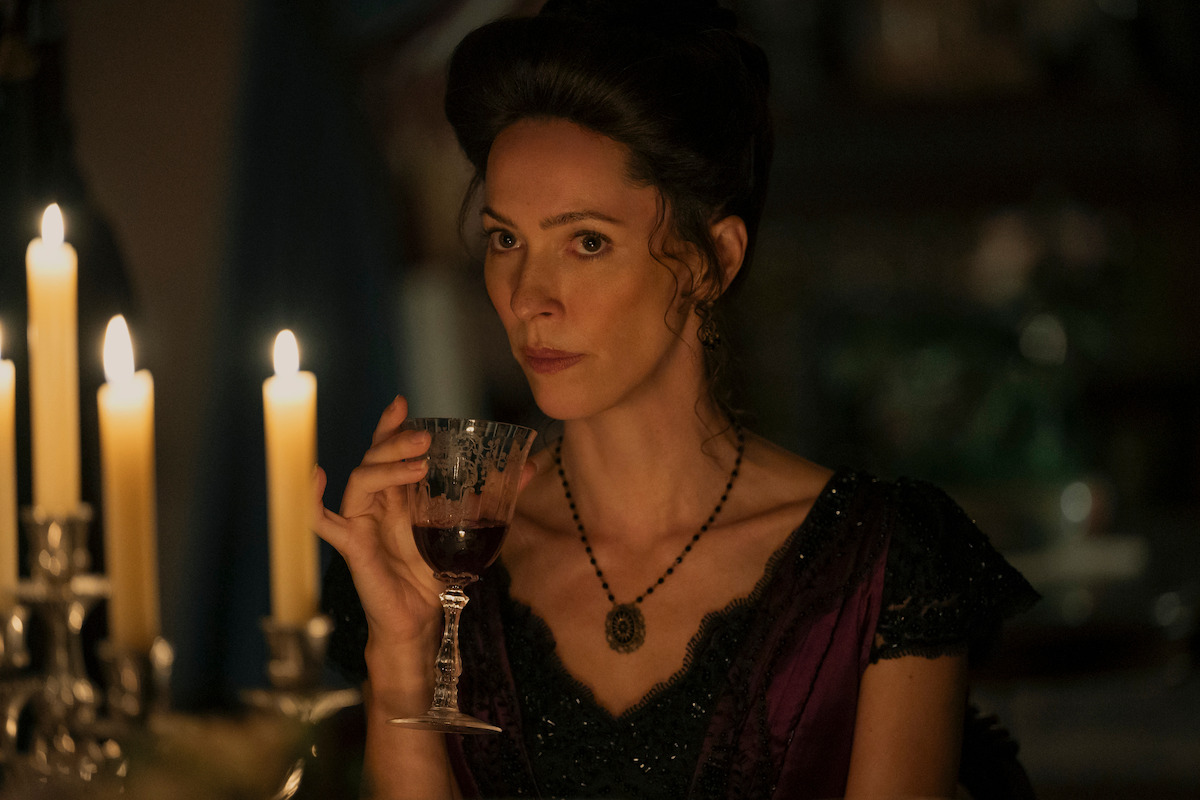
What is Monster: The Lizzie Borden Story about? Spoiler-free plot
The story begins in the social world of late-nineteenth-century New England. Lizzie Borden lives within a wealthy household governed by family hierarchy, rigid expectations and emotional tensions. From outside, the Bordens might appear to have material security. Inside, however, the series imagines an atmosphere of resentment and conflict that gradually becomes harder to contain.
An important figure in the drama is the family’s live-in maid, Bridget “Maggie” Sullivan. Her presence changes the emotional dynamics of the household. The show explores the relationship between the two women through themes of constraint, power and personal freedom, although the precise private relationship presented on screen should not be treated as established historical fact.
In the background lies an event that has haunted American popular culture for more than a century: the killings of Lizzie’s father, Andrew Borden, and stepmother, Abby Borden. The series traces possible emotional pressures before the crimes, then considers the legend that develops around the young woman accused of them.
Unlike a conventional whodunit, viewers generally know the name associated with the case before the first episode begins. The suspense arises instead from conflicting accounts, hidden relationships and the unsettling space between what the characters believe and what anyone can prove.
The true story of Lizzie Borden: what happened in 1892?
On August 4, 1892, Andrew Borden and his second wife, Abby, were murdered in their house in Fall River, Massachusetts. Andrew’s daughter Lizzie was soon the focus of the investigation. Newspapers followed the case closely, and public fascination only intensified during the proceedings.
Lizzie Borden was tried for the murders in 1893. On June 20, 1893, a jury acquitted her. The killings were never conclusively solved. This means it would be inaccurate to describe Lizzie as a convicted murderer or to say that the historical evidence definitively established that she committed the crime.
Over time, the case accumulated its own mythology. The famous nursery rhyme portraying Lizzie with an axe has been repeated in books, films and television, often more confidently than the evidence warrants. The rhyme is cultural folklore, not proof of a criminal act.
It is possible to be fascinated by the mystery while keeping an important boundary intact: dramatic storytelling is free to propose motives and reconstruct conversations, but fictional details are not primary-source evidence. Netflix’s version is an interpretation of the case, not the final word on what happened in Fall River.
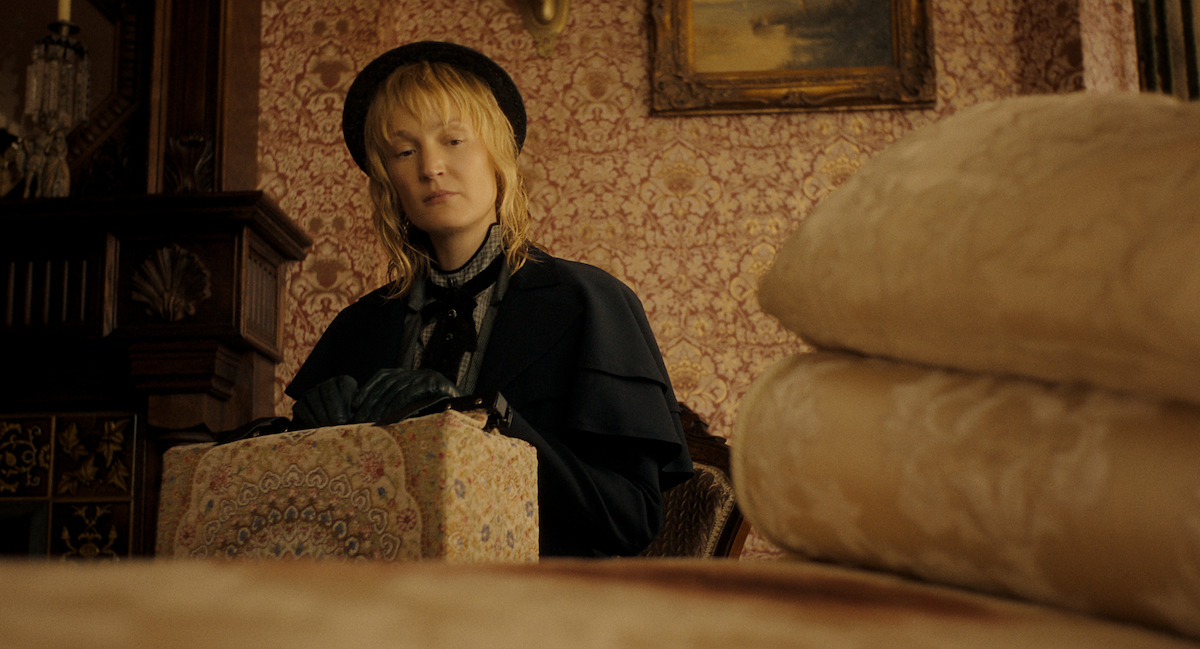
Monster: The Lizzie Borden Story cast and characters
Ella Beatty plays Lizzie Borden. The portrayal places a young woman constrained by strict social expectations at the center of the narrative. The task is more complicated than simply recreating a notorious public image: Lizzie was a real person who remains the subject of debate, and the series must balance the familiar legend with a character capable of emotional depth.
Vicky Krieps plays Bridget “Maggie” Sullivan, the family’s live-in maid. The dynamic between Maggie and Lizzie provides one of the show’s main perspectives on gender, class and dependence within the household.
Charlie Hunnam portrays Andrew Borden, Lizzie’s father. Rebecca Hall plays Abby Borden, Lizzie’s stepmother, and Billie Lourd plays her older sister, Emma. Together, the family members embody the tensions and conflicting demands that the story explores.
Additional cast members include Jessica Barden as actress Nance O’Neil and Sarah Paulson as Aileen Wuornos. The Wuornos material extends the series’ examination of how famous criminal stories echo through later generations. Wuornos did not participate in the nineteenth-century Borden case; those sequences operate on a separate timeline.
What the show changes — and why historical accuracy matters
Accounts of Lizzie Borden frequently mix official proceedings, contemporary journalism, rumors and later creative interpretations. An anthology drama adds another layer. Its creators must decide how characters speak, what they are thinking and what occurs when historical documents are silent.
That can make compelling television, but it also changes the viewer’s sense of certainty. A private conversation filmed as a scene may feel as tangible as a dated court document. In reality, the former might be invented while the latter can be independently examined. Keeping the two distinct is particularly important when interpreting relationships and alleged motives.
Lizzie’s real acquittal is not a minor footnote that can be ignored for the sake of narrative neatness. It is central to why the case remains contested. If a series appears to offer an answer, it is offering a dramatist’s theory, not automatically settling a historical dispute.
Netflix’s supporting articles provide both a guide to the series and a discussion of the real history. Readers interested in the documented background can start there before turning to court records and independent historical scholarship.
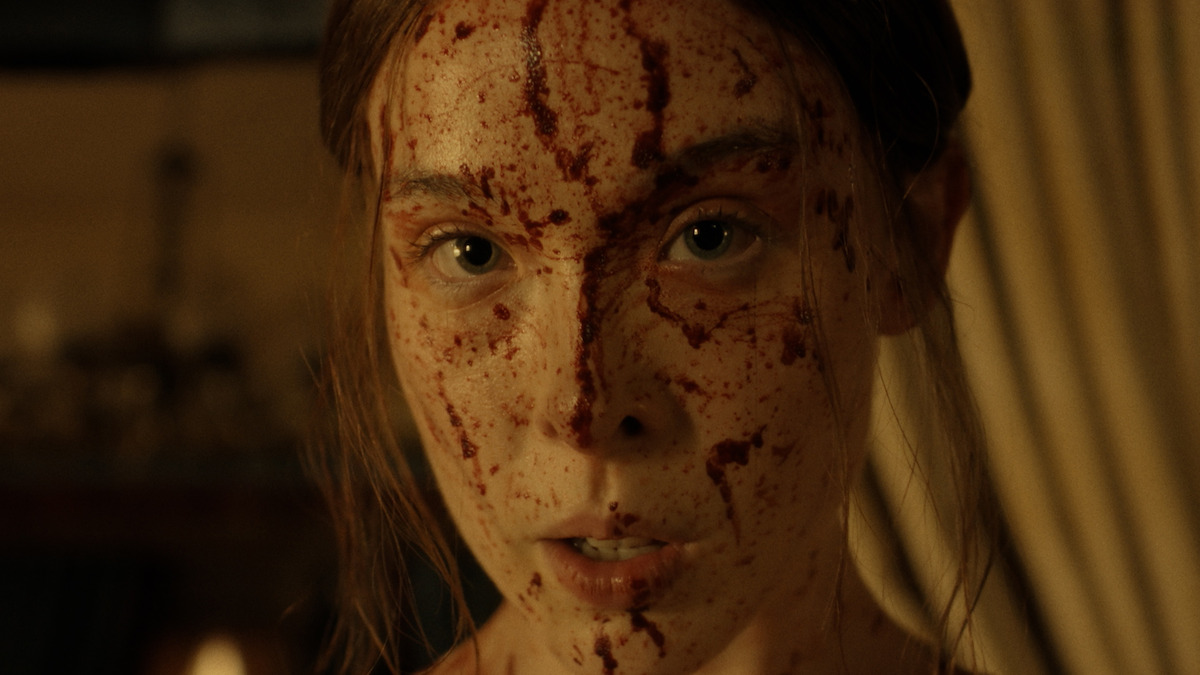
How the Lizzie Borden season differs from other Monster stories
Netflix’s Monster anthology revisits infamous cases through dramatized character studies. Previous entries concerned individuals whose circumstances, crimes and courtroom outcomes varied widely. The Borden season has an especially distinctive starting point: the woman most associated with the murders was acquitted, yet popular culture has continued to portray her as their perpetrator.
That uncertainty affects how the story should be approached. Rather than watching only for confirmation of a famous rhyme, the audience can consider how press coverage, social expectations and subsequent retellings shaped an enduring image of the accused.
The period setting also makes this installment visually different. Victorian costumes and interiors become an important part of the narrative’s concerns with social status, private lives and restrictive expectations. Horror is expressed not only through explicit violence but through the imbalance of power inside a seemingly respectable home.
Monster: The Lizzie Borden Story review — who should watch it?
From its official synopsis and cast material, Monster: The Lizzie Borden Story is best suited to viewers of historical crime dramas, unsettling psychological thrillers and mature true-crime-inspired fiction. Its greatest thematic opportunity is to explore the gap between the documented case and the stories society has chosen to tell about it.
Viewers who appreciate strong performances and period settings may find the ensemble particularly interesting. The series also offers material for debate about criminal justice, publicity and how women were represented in the nineteenth century.
However, the subject is disturbing, and Netflix’s classification indicates content unsuitable for children. Anyone looking for a purely factual documentary should understand that this is a scripted drama. Details about personal relationships and motives belong to the creative adaptation unless supported by independent evidence.
This spoiler-free overview is grounded in published production materials and historical sources. It does not claim a firsthand viewing of all eight episodes or assign a fabricated rating.
Where to watch Monster: The Lizzie Borden Story
All eight episodes are distributed through Netflix’s official Monster hub in supported regions. Language tracks, subscriptions and availability vary by country. The platform has also released a public trailer and publicity images.
Monster: The Lizzie Borden Story — frequently asked questions
When did the new Monster season premiere? September 17, 2026.
How many episodes are there? Eight.
Who plays Lizzie Borden? Ella Beatty.
Was the real Lizzie Borden found guilty? No. She was acquitted on June 20, 1893.
Do I need to watch earlier Monster seasons first? No, the seasons are separate stories.
Does the show prove what happened in 1892? No. It dramatizes a historically unresolved murder case.
Read next: UNABOMBER (2026) — Netflix historical crime drama and The Final Problem (2026) — period murder mystery review.
Discover additional stories in Reviews and TV Series.
Sources: Netflix Tudum — cast and official photos; Netflix — character guide; Netflix — historical background; HISTORY — the 1893 acquittal.
1 thought on “Monster: The Lizzie Borden Story (2026) — Netflix Review and True Story”