
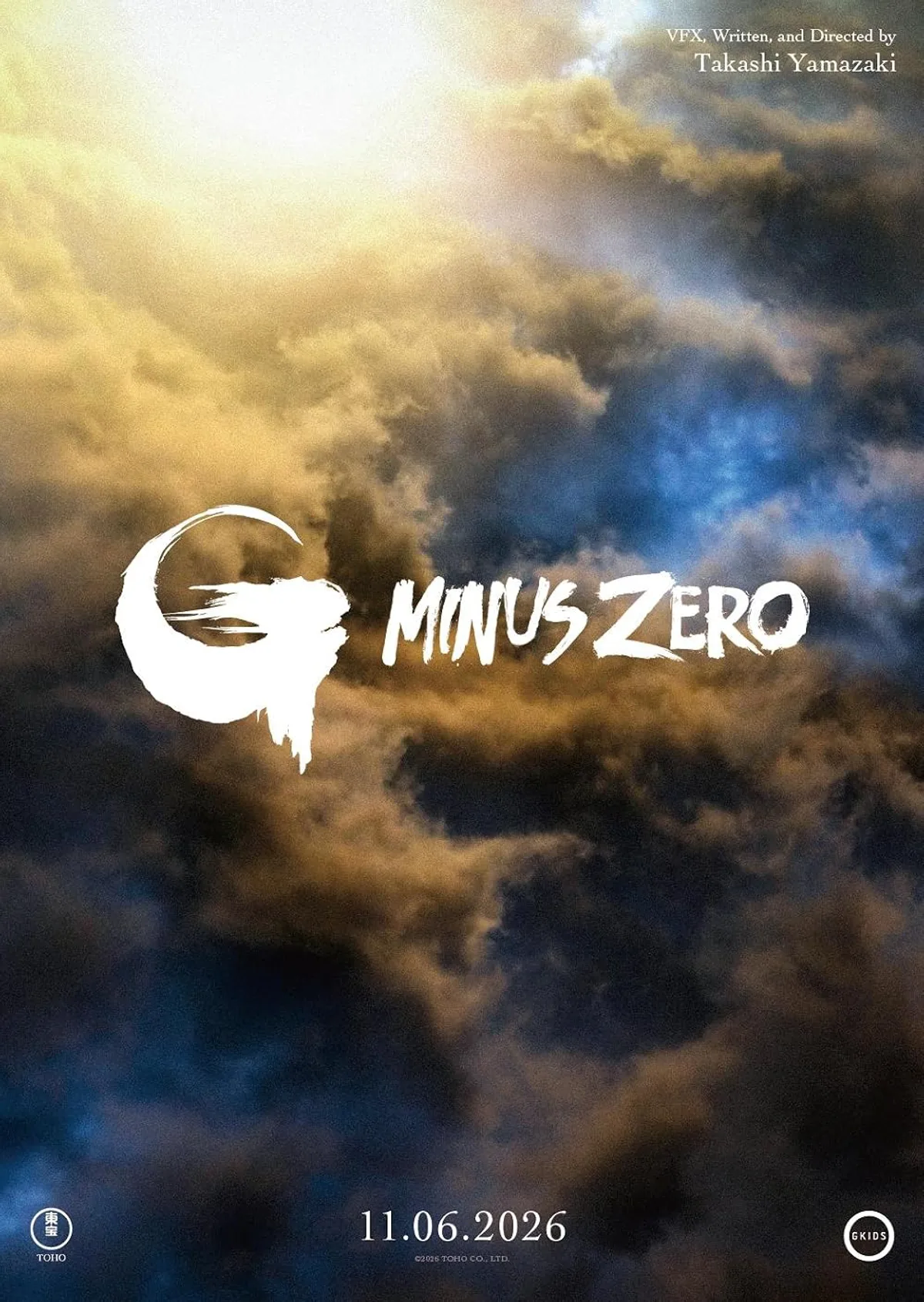
Godzilla Minus Zero (2026) is Takashi Yamazaki’s direct sequel to the Oscar-winning Godzilla Minus One. Set in 1949, it brings back the Shikishima family and a renewed monster threat. The film opened in Japan on November 3 and across North America on November 6. Here is a detailed, spoiler-conscious guide to its story, cast, IMAX production, theatrical release and official viewing options.
Godzilla Minus Zero (2026): The Story and Where It Begins
Godzilla Minus Zero is the direct follow-up to Takashi Yamazaki’s acclaimed Japanese monster film Godzilla Minus One. The sequel returns to postwar Japan in 1949, two years after the devastating events of the previous story. A population that has only begun recovering from war and the monster’s destruction must confront another catastrophic threat. The official synopsis emphasizes that rebuilding normal life has been painstaking and that another disaster risks destroying the fragile hope people have managed to regain. This context matters: the monster is not appearing in an otherwise secure society, but among families and institutions already stretched by loss.
The new film is not a Hollywood MonsterVerse installment and should not be confused with the separate American continuity. This is Toho’s Japanese production with the returning filmmaker and characters from Minus One. It continues the story of Koichi Shikishima and his household, while expanding the response to Godzilla through new specialists and returning allies. The combination of an intimate family drama and large-scale monster spectacle is the defining premise. In this guide, confirmed information is separated from analysis so that a reader can learn the essentials without having the ending invented or spoiled.
Godzilla Minus Zero Release Dates: Japan, North America, and Other Countries
Toho released Godzilla Minus Zero theatrically in Japan on November 3, 2026, the anniversary associated with the original Godzilla. GKIDS began the film’s wide theatrical rollout across North America on November 6, following November 3 IMAX early-access screenings. These dates are confirmed on the official Godzilla website and in distribution announcements. The movie also appeared at international festivals before its general theatrical release, including the New York Film Festival in September and the BFI London Film Festival in October. Those festival premieres should not be mistaken for the public opening in every country.
Availability in another territory depends on local theatrical distribution, booking arrangements and classification. In particular, a Japanese or US release date does not automatically establish an authorized streaming release or a cinema date in Uzbekistan or Russia. The most useful current step is to check a local theater’s listing or the official Godzilla Minus Zero film page. As of November 8, the theatrical run is the confirmed release format; readers should be cautious about websites presenting an unverified free digital premiere as official.
1949 Japan and the Meaning of the Minus Zero Title
The sequel takes place in 1949, a setting that helps explain why its people face Godzilla with both determination and fear. Japan is still trying to rebuild after World War II, and the prior monster attack has made recovery even harder. That makes the title more than a numerical gimmick. Minus One suggested a country pushed below its starting point; Minus Zero points toward an attempt to climb out of devastation, only to face renewed danger. The official advertising describes a hard-won peace being crushed when a new threat emerges.
This interpretation of the title is thematic rather than a claim about an undisclosed twist. Moviegoers can reasonably expect reconstruction, survival and the burdens of the past to remain important, because these themes are explicit in Toho’s synopsis. Yet the precise scientific explanation for the monster, the final outcome of the confrontation and every character’s fate should not be assumed from promotional imagery. One of the strengths of the premise is that the population’s emotional circumstances are as consequential as the scale of the kaiju’s attack.
Koichi Shikishima Returns: Ryunosuke Kamiki’s Character
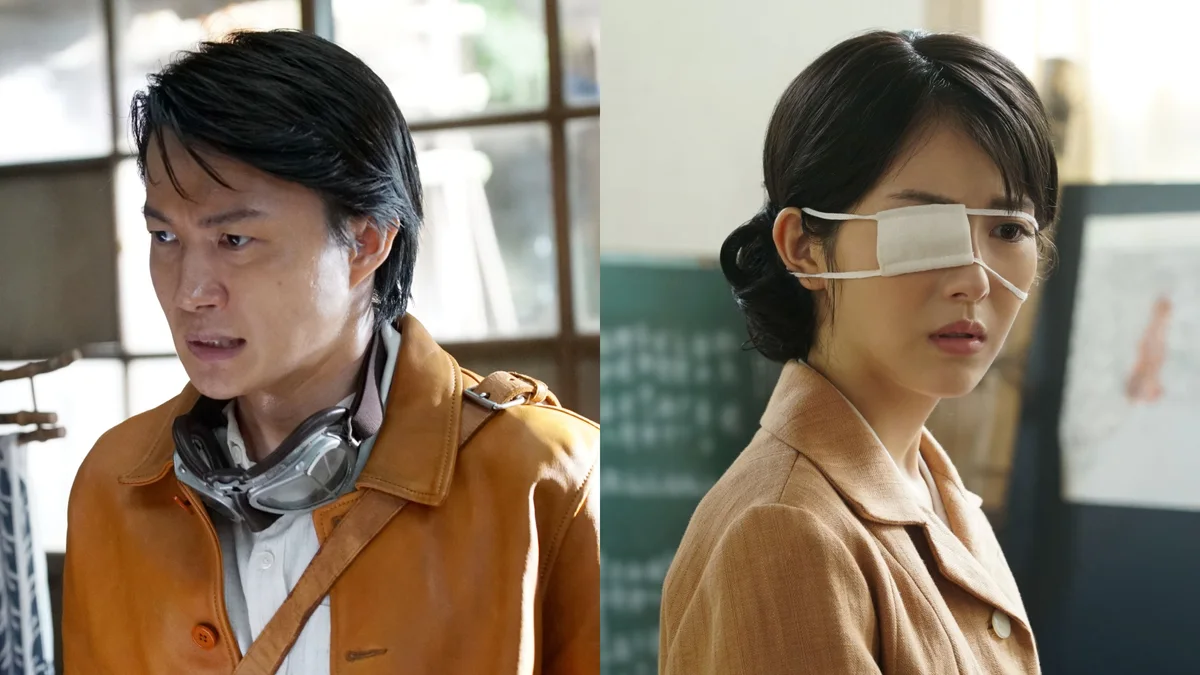
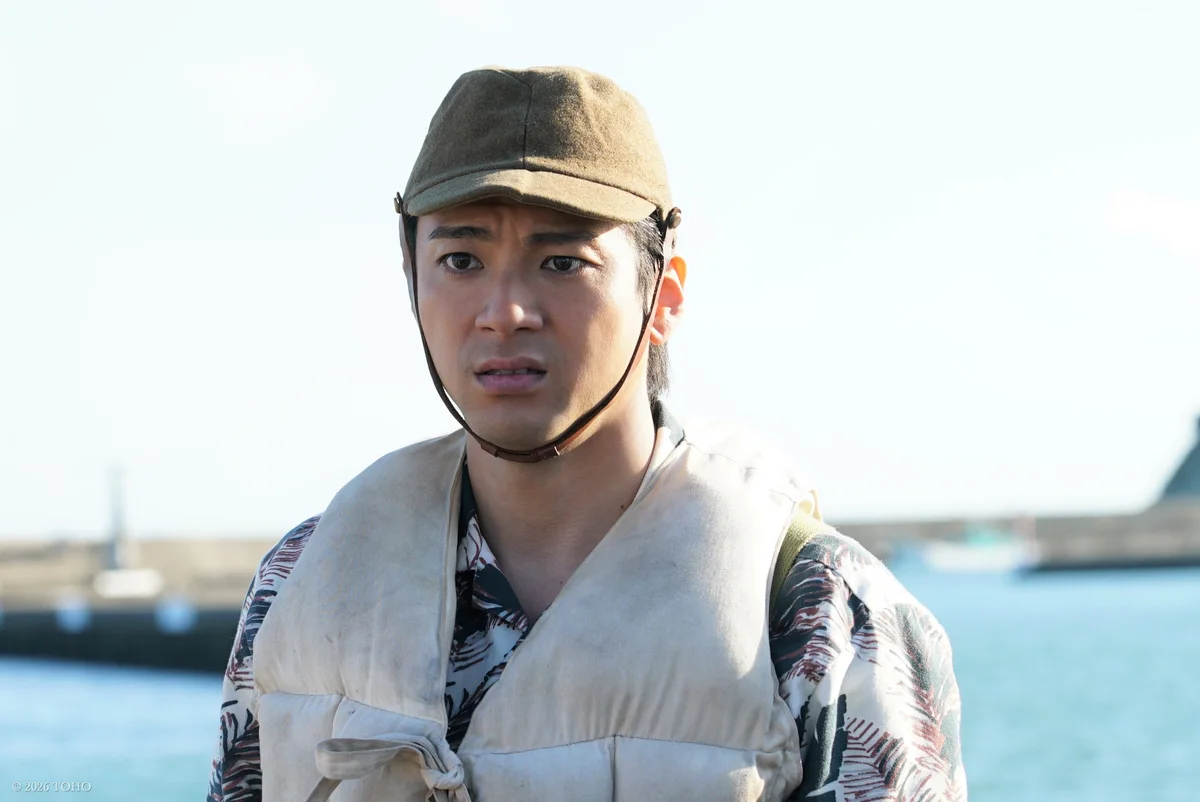
Ryunosuke Kamiki returns as Koichi Shikishima, the former pilot at the center of Godzilla Minus One. His character has already endured war, fear and the destructive consequences of encountering the monster. By locating the sequel two years later, the filmmakers can explore a person who has worked toward a more stable life but must once again confront the possibility of losing everything. The official first-look teaser shows Shikishima back in the story, and subsequent promotional photography places him in an aviation context.
It would be misleading to narrate his entire new mission from a single trailer shot. The material establishes the return of the character and an escalating disaster, but the film’s emotional impact depends on choices that a short synopsis cannot fully convey. Viewers who have not seen Minus One are advised to watch it first. Familiarity with Shikishima’s earlier struggle adds context to his relationships and explains why the renewed appearance of Godzilla is so personally significant.
Noriko Shikishima and the Family at the Heart of the Sequel
Minami Hamabe reprises Noriko, who is associated with the Shikishima family in the sequel’s official character announcements. One of the enduring questions after the earlier film concerned how the survivors would rebuild an ordinary life. The new installment continues their experience rather than starting with unrelated protagonists. This makes the domestic stakes more immediate: public catastrophe is seen through people for whom personal recovery was already an extraordinary achievement.
The official publicity establishes Noriko’s return, but it is prudent not to infer a medical explanation, a hidden transformation or her final fate from isolated trailer images. When discussing the family, the more solid observation is that Godzilla’s resurgence threatens the peace the characters worked to recover. The story’s dramatic tension lies in the relationship between an enormous national emergency and the small, human things people are trying to protect.
Returning Cast: Kenji Noda, Shiro Mizushima, and Seiji Akitsu
Hidetaka Yoshioka reprises Kenji Noda, who is now identified by the official promotional materials as director of the Disaster Response Bureau. Yuki Yamada returns as Shiro Mizushima, and Kuranosuke Sasaki reprises Seiji Akitsu. The presence of these characters offers continuity with the earlier attempt to organize ordinary people and former servicemen against a seemingly overwhelming enemy. For audiences familiar with Minus One, their return also gives the sequel an opportunity to show how wartime experience carries over into a difficult peace.
Additional returning actors include Sakura Ando as Sumiko Ota, now working at a local orphanage, and Miou Tanaka as Tatsuo Hotta. These details are particularly useful because they demonstrate that the sequel has not abandoned the civilian and community perspective. A disaster affects residents who must care for others as well as specialists who devise strategies. The official cast announcements identify these characters; they do not necessarily reveal how much screen time each receives or whether every returning person survives.
New Characters: Kanji Murakami, Dr. Ogata, and Makoto Aoyama
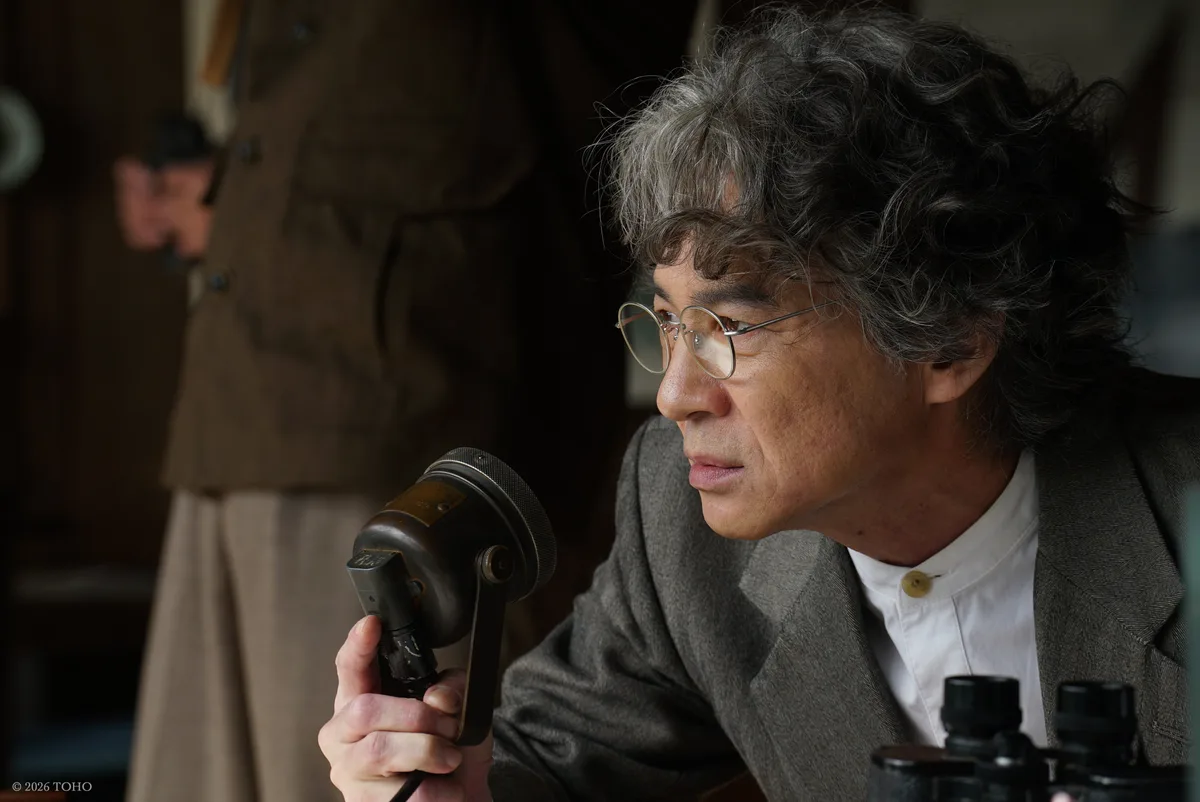
Min Tanaka joins the cast as Kanji Murakami, a biologist carrying psychological scars from the war. The character is described as important to the new film. Jun Kunimura plays Dr. Ogata, while Masami Nagasawa appears as Makoto Aoyama, a gifted weather forecaster assigned to the Disaster Response Bureau. Their occupations suggest that the response to the monster may involve science, observation and organized emergency planning alongside direct confrontation. That is a reading of confirmed roles, not proof of any secret technique or dramatic solution.
The September theatrical trailer also introduced Kou Maehara as Akira Hagiwara, an assistant to Murakami, and noted further returning and new performers. These additions expand the film’s ensemble beyond those who were present during the previous catastrophe. They may also allow the screenplay to examine competing judgments in a crisis: a scientist can focus on evidence, a disaster official on immediate safety and a survivor on the experiences they cannot forget. The actual conflicts between them should be judged from the complete film.
Takashi Yamazaki Returns as Director, Writer, and VFX Lead
Takashi Yamazaki directs and writes Godzilla Minus Zero and leads its visual effects work. That continuity is central to the film’s identity. Yamazaki previously won an Academy Award for Best Visual Effects for Godzilla Minus One, and his return gives the sequel the same guiding creative voice. The production is associated with Toho Studios and ROBOT, with effects work from SHIROGUMI. This is a Japanese Godzilla film developed within the tradition of the franchise rather than an American crossover.
A director responsible for both story and visual storytelling faces a particular challenge with a giant monster. Spectacle needs to remain legible and emotionally connected to the people below it. Godzilla’s size only matters when audiences understand what a threatened landscape means to the characters. The official materials suggest greater scale, but larger effects alone cannot establish that the sequel surpasses the original. An informed review would need to examine the completed movie’s pacing, performances and dramatic coherence rather than repeating publicity superlatives.
Filmed for IMAX: What Makes the Visual Presentation Different?
Toho and GKIDS announced Godzilla Minus Zero as the first Japanese production made under the Filmed for IMAX program. Official publicity explains that the movie used high-definition digital cameras certified by IMAX, and that selected footage takes advantage of an expanded 1.43:1 image ratio. This can reveal more vertical information in suitable theaters and make a giant creature’s relationship to buildings, aircraft and the surrounding landscape feel particularly imposing. The production also emphasizes sound design tailored to large-format presentation.
That does not mean every venue displays the same image. Different theaters have different projection systems, screens and aspect-ratio capabilities, so the experience will vary by location. Similarly, the word IMAX does not itself guarantee a better screenplay or character drama. The technical distinction is relevant for people choosing a cinema, while the artistic judgment remains separate. Viewers who care about expanded-ratio sequences should check the exact auditorium rather than assuming any large screen provides the identical presentation.
Godzilla’s New Design, Blue Energy, and the Official Trailers
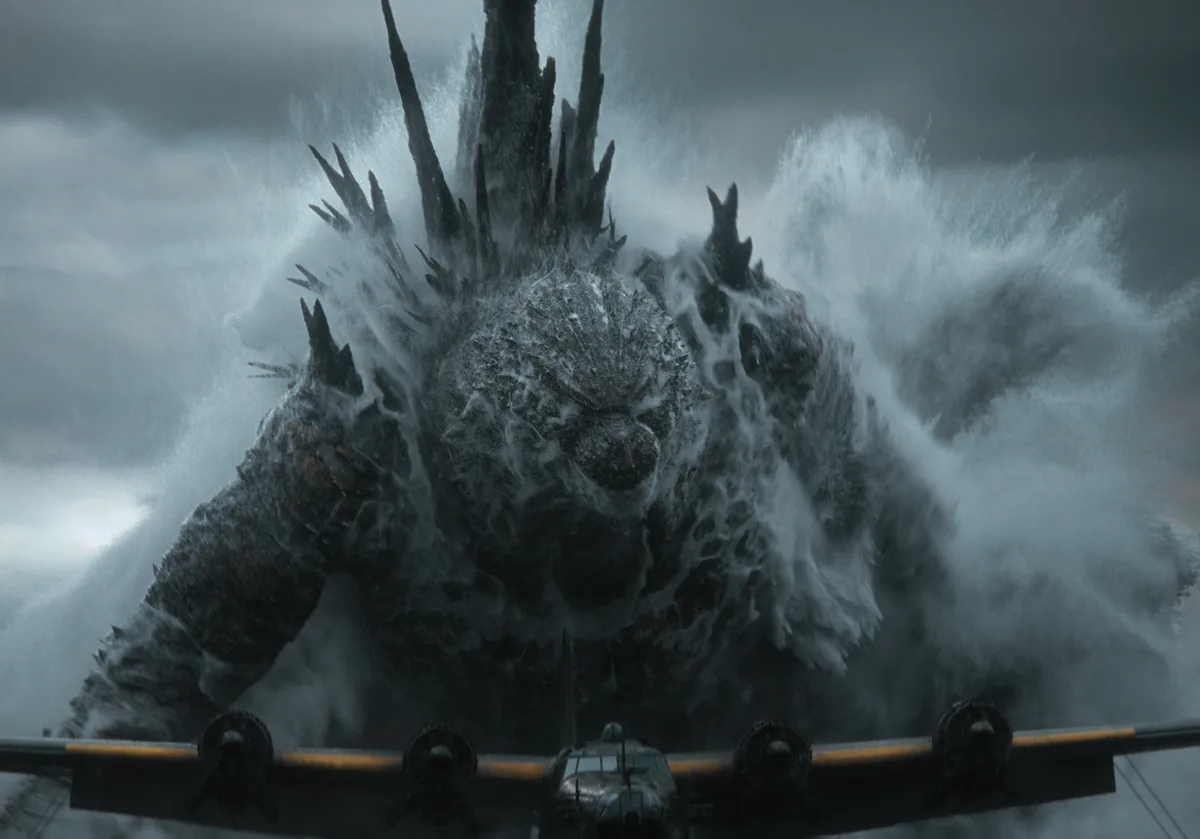
Promotional trailers and theatrical posters show Godzilla surrounded by striking blue energy, with gold beams and a renewed emphasis on destructive force. Toho confirmed in its September materials that the first theatrical trailer establishes that the monster was not fully destroyed and that a new extermination operation is being planned. An October trailer added further images of threatened civilians, scientists and dramatic action. These official pieces of advertising provide a sense of the movie’s look and tone without laying out its entire narrative.
The imagery invites discussion about what has changed since Minus One, but it does not settle the monster’s ultimate condition or reveal every escalation. A trailer’s editing can place two shots together that occur far apart in the finished film. Claims about an entirely new monster, a specific final battle, or a secret ending need a reliable source before they can appear as facts. The responsible approach is to describe the visible design changes and announced premise while acknowledging the limits of promotional footage.
How Godzilla Minus Zero Connects to Godzilla Minus One (2023)
Godzilla Minus One told a story of wartime trauma and the attempt to rebuild among survivors of a catastrophe. The monster functioned as a physical threat and as a reminder that recovery is not guaranteed. Minus Zero deliberately returns to that world in 1949, two years after the original events. The continuity is clearest in the Shikishima family, familiar supporting characters, and renewed efforts to confront the creature. Someone who begins with the sequel can follow the broad premise, but will miss much of the emotional context.
The relationship is direct rather than merely thematic. It is not a remake, a replacement for Minus One, or a sequel to Legendary Pictures’ American Godzilla and Kong story. Understanding this distinction helps audiences choose the right film and reduces confusion in search results that put every Godzilla title in one collection. The Japanese films and the MonsterVerse can both be enjoyed, but characters and continuity should not be mixed unless a particular production officially establishes the connection.
Is Godzilla Minus Zero a Horror Film or an Action Epic?
The film combines several genres: science fiction, monster action, disaster drama and elements of horror. The monster’s enormous scale creates spectacular sequences, while the possibility of civilian casualties and the vulnerability of survivors give the story a frightening edge. Irish classification authorities listed strong science-fiction violence, threat, bloody injury detail and upsetting scenes. This is a useful reminder that a giant-monster movie is not necessarily a mild family adventure simply because it features a famous creature.
The precise age rating varies between territories. A classification applied in Ireland is not identical to a US MPA rating or a local cinema policy elsewhere. Parents and viewers sensitive to intense imagery should review their country’s official guidance. For adults who enjoy Japanese disaster cinema, the emotional approach distinguishes the production from a pure effects showcase. However, the story’s success depends on how the action interacts with human decisions, which a film’s genre label cannot fully explain.
How Long Is Godzilla Minus Zero?
The IMDb listing identifies a running time of approximately two hours and fifteen minutes, and Ireland’s classification authority lists 134 minutes and 58 seconds. Together these point to a film running about 135 minutes. Cinema listings sometimes include different times because of advertising, classification entries or technical versions. The actual start and end of a visit to the theater can therefore differ from the feature’s stated runtime.
A film of this length has room to balance multiple personal storylines with major set pieces, but length is not itself a measure of quality. Readers planning a visit should allow additional time for trailers and the possibility of venue-specific delays. The runtime also helps distinguish the 2026 sequel from the shorter Godzilla Minus One. For a time-sensitive visit or accessibility needs, check the particular theater’s event information rather than relying on an approximate figure.
Where to Watch Godzilla Minus Zero in Theaters or Online
Godzilla Minus Zero is a theatrical release. Official announcements confirm the Japanese opening on November 3 and the North American wide release on November 6 through Toho and GKIDS. As of November 8, no universal worldwide subscription-streaming date has been confirmed by the film’s official announcements cited here. Readers should check the official film page and their regional cinema listings for authorized showtimes and ticket options.
An early film-festival screening, trailer upload or unofficial recording does not establish that the movie has legitimately arrived on a video-on-demand service. If a digital or subscription release is announced later, the appropriate update will identify the platform, territory and exact date from the rights holder. Until then, claiming that the full movie is available to watch online free would be misleading. The best available information concerns theatrical exhibition, not an invented home release.
What to Watch Before the Sequel and Other Japanese Sci-Fi
The essential starting point is Godzilla Minus One (2023), because Minus Zero resumes its characters and emotional consequences. Viewers interested in the franchise’s history can also explore the original Godzilla (1954), which established many of the ideas that later filmmakers revisited through new historical contexts. They are not required viewing for every plot detail, but they offer perspective on how the monster has represented different anxieties across decades.
For broader cinema coverage, browse our English-language reviews or our Forgotten Island guide for another visually ambitious genre production. These are separate films, not parts of one franchise. This article is a detailed, spoiler-conscious overview grounded in official materials, rather than a claim to have assessed every scene of the completed sequel.
Godzilla Minus Zero (2026): Frequently Asked Questions
When did Godzilla Minus Zero release?
In Japan on November 3, 2026, and widely in North America on November 6, 2026.
Is it a sequel to Godzilla Minus One?
Yes. It continues the story two years later, in 1949.
Who directed Godzilla Minus Zero?
Takashi Yamazaki, who also wrote the screenplay and led the visual effects work.
Does Ryunosuke Kamiki return?
Yes, as Koichi Shikishima. Minami Hamabe also returns as Noriko.
Is Godzilla Minus Zero part of the MonsterVerse?
No. It is a Japanese Toho sequel to Godzilla Minus One, not a Legendary MonsterVerse installment.
How long is the movie?
Approximately 135 minutes, according to IMDb and Irish film classification information.
Where can I stream the full movie legally?
Theatrical releases are confirmed, but an official worldwide subscription-streaming release date was not established as of November 8, 2026.
Sources: Godzilla official film page, Toho/GKIDS cast and story announcement, Toho/GKIDS IMAX and theatrical trailer details, Irish Film Classification Office and IMDb tt34384661. Film information checked November 8, 2026.